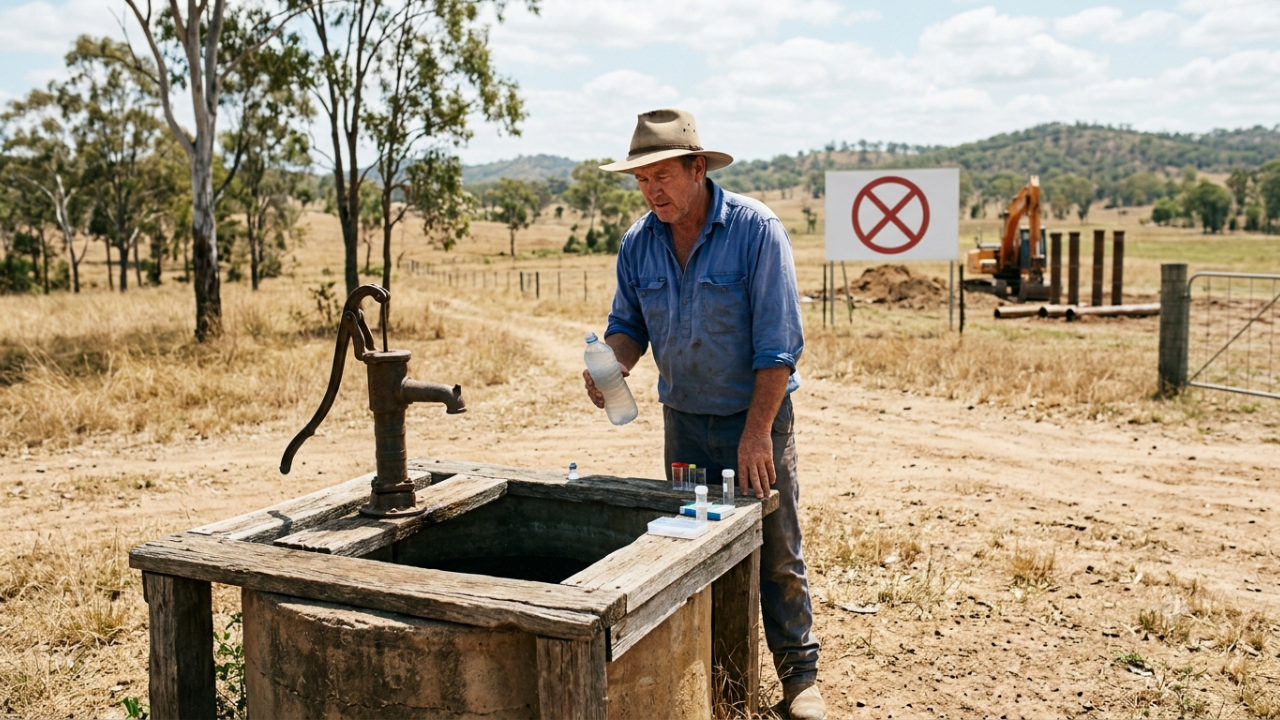
Every time a rural pump kicks on and a local well turns cloudy, the pitchforks come out. Headlines scream about corporate greed, dry aquifers, and the impending destruction of the Australian bush. The standard narrative is tidy, emotional, and completely wrong. When a Queensland farmer watches well water turn turbid amid a massive extraction plan, the knee-jerk reaction is to blame the volume. People assume that taking millions of litres out of the ground is inherently predatory, a zero-sum theft from the future.
That is economic illiteracy masquerading as environmentalism.
I have spent years watching regional projects stall out because local councils and activists confuse turbidity with depletion. They see murky water and assume the aquifer is collapsing. Physics and hydrogeology tell a very different story. A cloudy well does not mean the underground ocean is running dry. It usually means sediment is shifting due to localized drawdown velocities, or casing integrity needs a service, or the bore is hitting a transitional clay layer. It is a mechanical engineering puzzle, not an ecological apocalypse. Yet, we treat every fluctuation in water quality as a moral failure.
Let us look at the lazy consensus. The common argument goes like this: any large-scale commercial extraction in an agricultural or semi-arid zone starves neighboring properties, destroys ecosystems, and prioritizes corporate balance sheets over community survival. This viewpoint ignores how modern hydrology actually operates. Aquifers are dynamic, complex hydrological systems, not static underground swimming pools. Water moves, recharges, and interacts with geological strata in ways that simple volume caps fail to capture.
When a project applies for a 96-million-litre extraction license, critics freak out over the big number. Ninety-six million sounds massive to someone who pays a water bill by the kilolitre. In industrial and agricultural terms, it is a drop in the bucket of a properly managed hydrogeological basin. The real question is never just about how much water comes out of the ground. The real question is recharge rates, drawdown cones, and injection versus extraction ratios. If you restrict extraction out of panic, you do not save the water; you choke the economic viability of the region that relies on those industries to survive.
Let us define terms precisely. Drawdown is the lowering of the water table around a pumping well. It is inevitable. You cannot pump water without causing drawdown, just as you cannot drive a car without burning fuel. The alarmist fallacy is treating any drawdown as permanent damage. In most confined and unconfined aquifers, water levels fluctuate naturally with seasonal rainfall, and they recover when pumping ceases or when wet seasons replenish the basin. Conflating temporary operational turbidity with permanent resource exhaustion is a great way to generate clicks, but a terrible way to manage natural resources.
The economic reality of regional Australia is harsh. Towns are shrinking, young people are leaving, and traditional farming margins are razor-thin due to volatile global commodity markets and shifting weather patterns. When outside capital wants to invest millions into agricultural or industrial processing that requires substantial water permits, local resistance often shoots the region in the foot. We protect a pristine, untouched fantasy of the bush while the actual physical towns wither away from lack of economic oxygen.
Imagine a scenario where every major water extraction application is met not with protests, but with rigorous, independent third-party monitoring. Real-time telemetry on every bore. Public dashboards showing exact water table levels down to the millimeter. Mandatory reinjection standards where applicable. Total transparency. If a company damages the aquifer, hit them with penalties so severe they go out of business. But if the data shows the aquifer can handle the load, let them build, let them farm, let them process, and let them create jobs.
Instead, we rely on emotional protectionism. We listen to activists who treat water management as a static moral crusade rather than a dynamic engineering challenge. I have seen agricultural ventures abandon multi-million-dollar regional expansions because bureaucratic delays and local litigation made the compliance costs insurmountable. The result? Zero new jobs, stagnant local economies, and zero net benefit to the environment because the underlying demand simply shifts elsewhere with fewer regulations.
Transparency is the antidote to paranoia. When a well goes cloudy, the responsible action is to pull geophysical logs, test the sediment, analyze the drawdown radius, and fix the mechanical issue. The irresponsible action is to run to the local paper to decry corporate theft.
We need to stop treating every large-scale water user as an existential threat and start treating water management as a technical discipline that requires actual expertise. If you want to protect regional ecosystems, stop fighting the math and start demanding better engineering, stricter monitoring, and smarter utilization of the resource.
The next time you read a headline about a massive water extraction plan sparking local panic, look past the outrage bait. Ask about the hydrogeological survey. Ask about the recharge rates. Ask what the economic alternative is for a town with zero growth and a dying tax base.
Protectionism without data is just poverty with good intentions.