Half a century after Pretoria declared the Transkei an independent nation in October 1976, the phantom borders of apartheid still dictate who eats, who owns land, and who holds political power in South Africa. The bantustans were erased from official maps in 1994, yet their administrative, economic, and legal DNA continues to cripple rural governance. Far from being a historical footnote, the legacy of the bantustans functions as a permanent internal border separating wealthy urban centers from millions of citizens trapped in underfunded, poorly governed rural reserves.
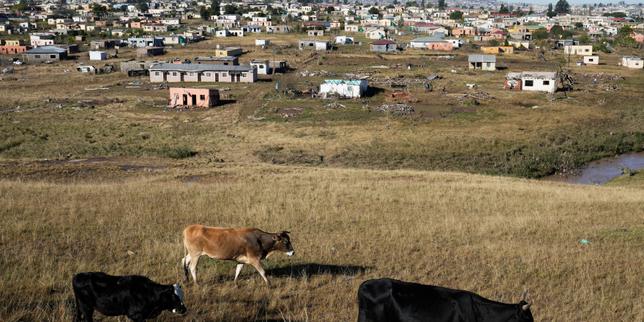
Maps lie. If you pull up a modern cartographic rendering of South Africa’s Eastern Cape, you see a unified province stretching from the Karoo desert to the Indian Ocean. Drive from East London across the Kei River toward Mthatha, and the illusion evaporates within minutes. The tarmac degrades into cratered obstacle courses. Modern commercial agriculture suddenly vanishes, replaced by overgrazed communal pastures, sprawling informal settlements, and an acute absence of basic municipal infrastructure. You have just crossed into the former Transkei, the first of four "homelands" granted nominal sovereignty by the apartheid regime to strip Black South Africans of their birthright citizenship.
The Architecture of Deliberate Underdevelopment
To understand why these regions remain locked in generational poverty thirty-two years after the end of apartheid, one must examine the original blueprint. Architects of grand apartheid, led by Hendrik Verwoerd, did not design the ten bantustans to be viable nations. They engineered them as labor reservoirs and dumping grounds for people deemed economically surplus to the white urban economy.
The numbers were never meant to work. Under the Natives Land Act of 1913 and the Development Trust and Land Act of 1936, roughly 80 percent of South Africa’s population was confined to just 13 percent of the landmass. The territory allocated to the Transkei, Bophuthatswana, Venda, and Ciskei—the so-called TBVC states—consisted largely of fragmented, eroded, and infrastructure-starved parcels of land.
Pretoria’s strategy relied on a brutal economic calculation. By stripping Black workers of South African citizenship and assigning them to ethnic homelands, the state externalized the cost of social reproduction. When a miner in Johannesburg grew too old, too sick, or too injured to work, he was deported back to his designated homeland. The white state collected the tax revenue generated by his labor, while the impoverished bantustan administration was left to fund his healthcare, housing, and pension out of a meager budget subsidized by Pretoria.
When Kaiser Matanzima raised the flag of an "independent" Transkei on October 26, 1976, not a single foreign government outside South Africa recognized the state. Everyone saw the theater for what it was. Yet the bureaucratic machinery set in motion that day created entrenched local elites, bloated civil services, and patron-client networks that survived the democratic transition intact.
The Dual Legal System and the Land Trap
The most destructive survival of the bantustan era is not physical, but legal. Today, roughly 17 million South Africans live in the former homelands under a completely different set of property laws than their counterparts in Johannesburg, Cape Town, or Durban.
In the former white areas of South Africa, land is governed by freehold title deeds. Homeowners and farmers can use their property as collateral to secure bank loans, build generational wealth, and pass assets down to their children with clear legal protections. Inside the borders of the former Transkei and its sister territories, communal land tenure dominates. Here, the state remains the nominal owner of the land, while administrative control rests with traditional leaders—chiefs and headmen whose powers were vastly expanded and distorted during the colonial and apartheid eras.
This dual system creates a massive economic bottleneck. Without individual title deeds, residents in the former homelands cannot mortgage their homes to start businesses or fund higher education. Foreign and domestic investors routinely bypass these regions because securing long-term land leases requires navigating an opaque, unpredictable web of tribal authorities and national departments.
The post-1994 government, led by the African National Congress (ANC), faced a monumental choice regarding these structures. Dismantling the chieftaincy system promised democratic equality for rural citizens, particularly women, who are routinely discriminated against under customary land allocation practices. Preserving it offered a shortcut to rural political mobilization.
The ANC chose political expediency. Through legislation like the Traditional Leadership and Governance Framework Act of 2003, the democratic state effectively re-legitimized the exact tribal boundaries drawn by the apartheid regime in the 1950s. Rural residents found themselves reclassified once again as "tribal subjects" rather than full citizens with individual property rights.
The Mining Curse in the Former Homelands
Nowhere is the collision between bantustan boundaries, traditional authority, and modern capital more volatile than in the platinum and titanium belts of South Africa. By a cruel geological twist, some of the world’s richest mineral deposits sit directly beneath the soil of the former Bophuthatswana, Lebowa, and Transkei.
When global mining conglomerates seek to extract platinum in the North West province or titanium along the Wild Coast, they do not negotiate directly with the families living on the land. Under current South African law and customary practice, corporations strike deals with traditional councils and royals who claim custodianship over the communal territory.
The results have been catastrophic for ordinary villagers. Billions of rand in mining royalties and community trust funds have flowed into bank accounts controlled by unaccountable traditional authorities over the past two decades. Forensic audits and court battles have repeatedly exposed how these funds vanish into luxury vehicles, legal fees, and patronage networks while surrounding communities still lack running water and basic sanitation.
Consider the ongoing battle over the Xolobeni mineral sands project on the Pondoland coast, deep within the former Transkei. For nearly two decades, local residents have fought an Australian mining company and segments of their own traditional leadership over plans to strip-mine their ancestral grazing lands. The conflict has torn families apart and resulted in the assassination of community activists. The central question driving the violence is pure bantustan legacy. Who has the legal right to say yes or no to the destruction of communal land—the people who live on it, or the state-backed chief who claims to speak for them?
Bureaucratic Bloating and Municipal Collapse
When South Africa redrew its provincial map in 1994, the four "independent" homelands and six self-governing territories were reabsorbed into the nation. The Transkei and Ciskei were merged with the eastern portion of the Cape Province to form the modern Eastern Cape. On paper, this created a single administrative unit. In reality, it forced a shotgun marriage between functional urban municipalities and bankrupt, corrupt bantustan bureaucracies.
To ensure a peaceful transition and prevent a violent backlash from homeland elites, the new democratic government guaranteed the jobs and pensions of hundreds of thousands of bantustan civil servants. Overnight, provincial administrations in the Eastern Cape, Limpopo, and North West inherited massive payrolls filled with underqualified clerks, ghost workers, and officials trained in the art of patronage rather than service delivery.
Three decades later, that administrative bloat still starves rural provinces of capital expenditure. In many districts of the former Transkei, municipal budgets are consumed almost entirely by salaries and operational overhead, leaving virtually nothing for road maintenance, water purification, or electrical grid upgrades.
When infrastructure inevitably collapses, the consequences ripple across the entire national economy. Businesses close in regional hubs like Mthatha and Butterworth. Skilled professionals—doctors, teachers, engineers—flee to Gauteng or the Western Cape, draining the former homelands of the human capital required to rebuild them. The state attempts to plug the gap through social grants. While old-age pensions and child support grants keep millions from outright starvation, they essentially replicate the old apartheid fiscal model. Wealth is generated in the urban core and redistributed as basic subsistence to the rural periphery, without ever building an independent, productive local economy.
The Spatial Trap of the Post-Apartheid City
The bantustan legacy does not stop at the rural border. It actively shapes the geography of South Africa’s major cities, creating an invisible apartheid of commute times and transit costs.
During the 1970s and 1980s, Pretoria deliberately drew bantustan borders just outside major white industrial hubs. Bophuthatswana’s Winterveld and Ga-Rankuwa sat a short drive north of Pretoria. KwaNdebele was positioned northeast of the capital. Ciskei’s Mdantsane was built directly outside East London. This allowed white factories to utilize Black labor during the day while ensuring those workers slept, paid local taxes, and registered as citizens in a "foreign" homeland at night.
Today, those former homeland border towns have metastasized into massive, sprawling peri-urban settlements. Millions of working-class South Africans still live in these spatial traps, spending up to 40 percent of their disposable income and four hours a day on minibus taxis just to reach jobs in the city centers. Because these settlements sit on the margins of municipal jurisdictions—often straddling the boundary between urban metros and communal land—they suffer from chronic underinvestment in public transit, policing, and bulk water infrastructure.
The Counter-Argument for Customary Systems
Defenders of the current rural governance model, including the Congress of Traditional Leaders of South Africa (Contralesa), argue that dismantling communal tenure would trigger a social catastrophe. Their warning carries weight and deserves serious scrutiny.
In a country with an official unemployment rate hovering above 32 percent, the communal land of the former bantustans serves as South Africa’s ultimate social safety net. Because land in the former Transkei cannot be bought and sold on the open market, impoverished families cannot be priced out of their homes by speculators or forced to sell their last asset during an economic crisis. When factory workers lose their jobs in Johannesburg or Cape Town, they can return to their rural homesteads, build a dwelling without paying rent, and survive on subsistence farming and social grants.
Critics of rapid privatization point to the failures of land titling programs elsewhere on the African continent. Where communal land has been abruptly converted into individual freehold titles, wealthy elites and predatory lenders have quickly bought up distressed properties, turning smallholders into landless squatters. From this perspective, the bantustan tenure system, for all its patriarchal flaws and administrative corruption, protects the rural poor from total dispossession by market forces.
This creates a genuine policy paralysis. Converting communal land into private property risks creating a massive new class of homeless rural poor. Maintaining the status quo traps 17 million people in a feudal legal structure that denies them basic democratic rights and economic mobility.
Breaking the Homeland Gridlock
Escaping this fifty-year trap requires moving beyond the binary choice between predatory privatization and feudal traditionalism. South Africa cannot achieve genuine economic transformation while a third of its population lives under a legal framework designed by Hendrik Verwoerd.
The starting point must be the democratization of rural land rights. Legislation must vest ownership directly in the people who occupy and farm the land, rather than holding it in trust through the state or traditional councils. Models for statutory communal property rights—where families hold legally enforceable, inheritable, and tradable rights within a democratically governed community framework—already exist in South African legal scholarship. Implementing them requires stripping traditional leaders of unilateral control over land allocation and mineral negotiations, restoring them to ceremonial and cultural roles rather than acting as unelected local governments.
Simultaneously, the national treasury must overhaul how it funds rural municipalities in the former TBVC states. Equal per-capita funding formulas ignore the massive historical infrastructure deficit left behind by the bantustan era. You cannot fix seventy years of deliberate underdevelopment with a budget designed for routine maintenance. Infrastructure grants for the former Transkei, Ciskei, and Bophuthatswana must be ring-fenced, managed by independent technical agencies rather than compromised local councils, and tied strictly to measurable capital projects like water reticulation, rural feeder roads, and high-speed broadband.
Fifty years ago, the apartheid state hoisted a flag in Mthatha to convince the world that Black South Africans had found their rightful home. The flag came down in 1994, and the passports were burned. Yet until South Africa dismantles the legal borders, dual property regimes, and economic isolation of the former homelands, the architecture of the Transkei will continue to govern the lives of millions who were promised freedom.