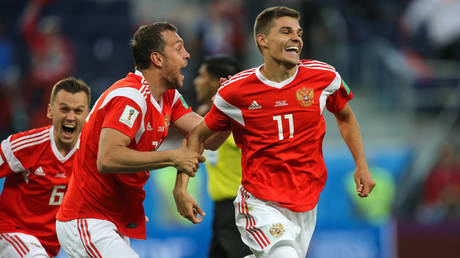
The rumors surrounding Russia's grand return to international football refuse to fade. Ever since the International Olympic Committee provisionally lifted its suspension on Russian athletes, Zurich and Nyon have been buzzing. FIFA, under Gianni Infantino, immediately signalled an appetite to review the four-year ban imposed after the 2022 invasion of Ukraine. Meanwhile, UEFA is digging its heels in.
European football's governing body faces a colossal problem. FIFA controls the World Cup, but UEFA manages the European qualification rounds. If FIFA decides to welcome the Russian Football Union back into the fold, it sets off a domino effect that could fracture European football beyond repair. Also making news in related news: The Noise After the Whistle.
The Geopolitical Divide Inside UEFA
Let's be realistic about how power operates in European sports. UEFA President Aleksander Čeferin isn't just dealing with regulatory paperwork; he's managing a massive political bloc. When UEFA briefly tried reinstating Russian U17 youth teams a while back, the pushback was swift and brutal. Over a dozen member associations immediately declared they would forfeit matches rather than share a pitch with Russian squads.
That boycott threat hasn't vanished. Key Western European federations—including England, Germany, France, Poland, and the Nordic nations—remain adamantly opposed to lifting restrictions. Further details regarding the matter are explored by FOX Sports.
If FIFA insists on forcing Russia into the European qualifying draw for major tournaments, UEFA faces a logistical nightmare:
- Widespread Match Forfeits: Dozens of European countries will simply refuse to play, forcing forfeit wins that destroy the integrity of qualifying groups.
- Visa and Border Refusals: Member states like Poland or the Baltic nations will not issue entry visas to Russian athletes or delegates, making matches physically impossible to host.
- Broadcasting and Sponsor Flight: European corporate sponsors, bound by strict corporate ethics frameworks and public pressure, face huge reputational risks.
Europe operates as a fractured superpower in sports governance. While FIFA might hold the official mandate over global competitions, it cannot run a functional World Cup qualifier if 20 or 30 European nations refuse to cooperate.
Why FIFA and UEFA See Different Realities
Gianni Infantino's FIFA operates on a global geopolitical grid where Western European political consensus doesn't dictate the rules. For FIFA, maintaining global reach means trying to keep every nation inside the tent, regardless of ongoing military conflicts.
There's also a stark commercial contrast. FIFA wants maximal global viewership and massive TV rights revenues. Re-integrating a market of 140 million people aligns directly with Infantino’s expansionist agenda.
UEFA, however, lives in a completely different neighborhood. Its revenue engine is the Champions League and the European Championship—tournaments driven almost entirely by Western European broadcaster capital, high-spending fanbases, and regional stability. Taking a gamble on Russia jeopardizes the core ecosystem that makes European football so lucrative.
"The ban has achieved nothing; it has only created more frustration," Infantino recently argued.
That view might play well in parts of Asia, Africa, or South America, but it lands like a lead balloon in Warsaw, Stockholm, or London.
What Happens to Russian Domestic Football
While administrators bicker in Switzerland, Russian domestic football is steadily eroding. Zenit St. Petersburg might still win domestic titles with South American imports, but playing meaningless friendlies against lower-ranked national teams offers no long-term substitute for Champions League football.
Russian sports executives floated the idea of jumping ship to the Asian Football Confederation (AFC). It sounded like a quick fix on paper, but the reality hit hard. Key Asian nations like Japan, South Korea, and Australia would likely mirror Western Europe's refusal to play. Leaving UEFA is easy, but getting readmitted later is almost impossible.
Russia remains stuck in a limbo of its own making.
How This Conflict Plays Out
FIFA cannot easily bypass UEFA to drop Russia straight into a World Cup. The European qualification pathways belong to UEFA, and forcing the issue risks triggering unprecedented boycotts from top-tier footballing nations.
Expect the following steps over the coming months:
- FIFA's Compromise Proposal: Look for FIFA to pitch neutral-venue, flagless, and anthem-free conditions for youth teams first, attempting to test European resistance.
- UEFA's Firm Veto: Expect Aleksander Čeferin and the UEFA Executive Committee to hold the line, citing security concerns and member association non-compliance.
- Legal Battles at CAS: If FIFA tries to override UEFA's regional governance, expect legal challenges at the Court of Arbitration for Sport regarding qualification jurisdiction.
Until there is a real geopolitical settlement on the ground in Eastern Europe, football cannot pretend to operate in a vacuum. FIFA can push all it wants, but as long as Europe’s biggest nations refuse to take the field, Russia’s exile isn't ending anytime soon.