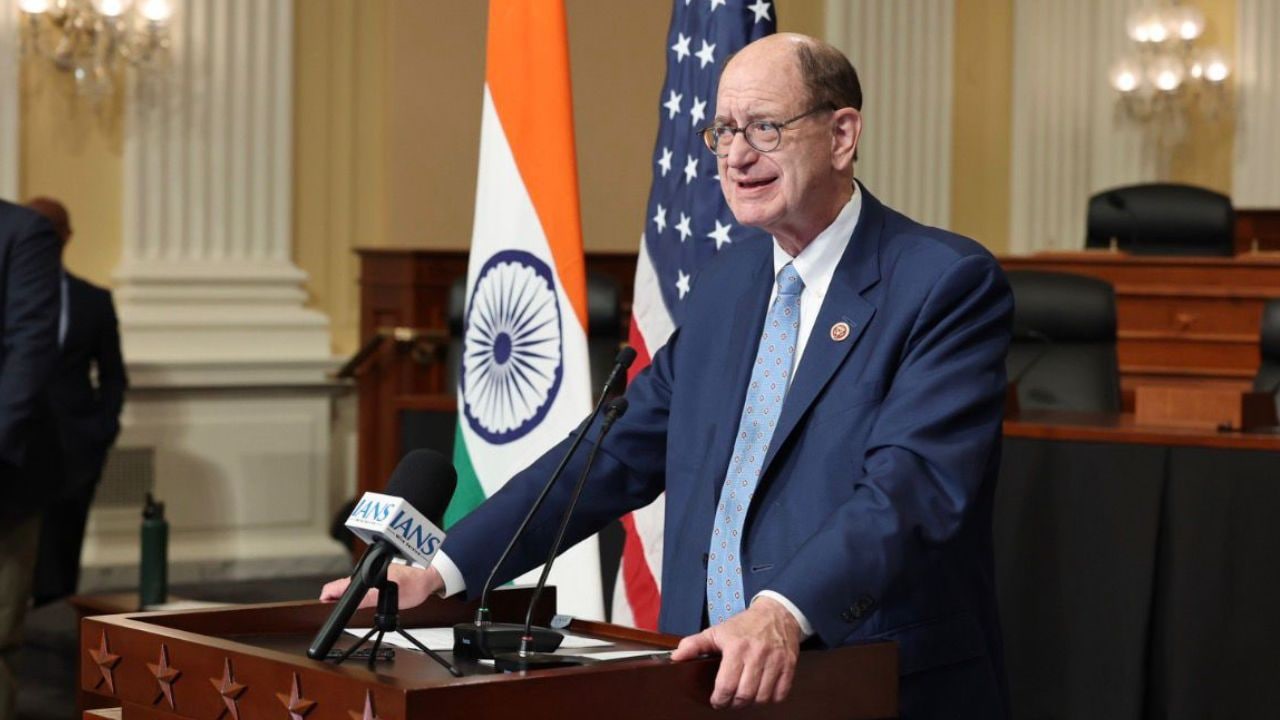
The Indian Embassy in Washington D.g. is currently patting itself on the back for hosting an exhibition. The theme? The anniversary of the Pahalgam attack. The intent is clear: remind the Western world of the scars left by cross-border terrorism. The execution, however, is a masterclass in screaming into a void that has already been soundproofed.
We need to stop pretending that photo galleries in secure diplomatic enclaves change the needle on global policy. They don’t. While officials sip tea and look at curated frames of tragedy, the actual mechanics of geopolitical leverage are moving in the opposite direction. If the goal is to dismantle the infrastructure of terror, art shows are the equivalent of bringing a toothpick to a drone fight.
The Echo Chamber of Empathy
Soft power is the most overused and misunderstood concept in modern Indian foreign policy. There is a persistent, naive belief that if we just show the world how much we have suffered, the world will finally "understand" and act.
This is a fundamental misreading of how the United States—and the broader West—operates. The U.S. State Department does not craft policy based on empathy; it crafts policy based on utility. Washington knows exactly what happened in Pahalgam. They have the satellite imagery. They have the intelligence briefs. They have the body counts.
Adding a high-res photo of a grieving family in a D.C. hallway doesn’t provide new information. It provides a PR moment for people who already agree with you. You aren’t converting the skeptics; you’re just boring the bureaucrats.
Why Awareness is a Dead End
The "People Also Ask" sections of the internet are filled with queries like "How can the international community stop cross-border terrorism?"
The premise is flawed. The "international community" is a ghost. It doesn't exist. There are only sovereign interests. When India hosts an exhibition to "raise awareness," it assumes that the bottleneck to action is a lack of knowledge.
It isn't. The bottleneck is a misalignment of incentives.
For decades, the West has viewed South Asian stability through the lens of a "balancing act." To them, a bit of friction is manageable as long as it doesn't go nuclear. An exhibition doesn't change that calculus. It actually reinforces the "victim" narrative, which is the weakest position a rising power can occupy.
Stop asking for the world to notice your bruises. Start making it too expensive for the world to ignore your demands.
The High Cost of Aesthetic Diplomacy
I have watched diplomatic missions spend hundreds of thousands of dollars on these "cultural outreach" events. They fly in speakers, print glossy brochures, and hire catering.
What is the ROI?
- Policy shifts? Zero.
- Sanctions on terror financiers? Negligible.
- Media coverage? Usually confined to ethnic press or the "World News" snippet on page A14.
This is "busy work" for the diplomatic corps. It feels like action. It looks like "doing something." But in reality, it’s a distraction from the harder, grittier work of economic statecraft and intelligence deep-linking.
If you want to move the needle in D.C., you don't talk to the art critics. You talk to the people who control the semiconductor supply chains. You talk to the people who manage the SWIFT system. You make Indian security a prerequisite for Western economic growth. That is the only language that translates without a subtitle.
The Counter-Intuitive Truth About Memorials
There is a psychological phenomenon where repeated exposure to images of distant suffering leads to "compassion fatigue." By constantly centering the diplomatic narrative on past tragedies, we are inadvertently training Western policymakers to associate India with "insoluble regional baggage" rather than "dynamic global partner."
We are effectively branding the nation with its trauma.
Imagine a scenario where, instead of a somber photo exhibit on the Pahalgam attack, the Embassy hosted a closed-door, technical briefing for tech CEOs on how regional instability threatens their specific offshore R&D centers.
One appeals to the heart; the other appeals to the wallet. In Washington, the heart is a fickle organ, but the wallet is remarkably consistent.
The Data Gap in the Narrative
The competitor’s coverage focuses on the "solemnity" of the event. It uses words like "tribute" and "honor." This is language for a funeral, not a foreign ministry.
Security isn't maintained through tributes. It is maintained through the credible threat of overwhelming consequence. When the U.S. wants to send a message about an attack on its interests, it doesn't hold an art show in New Delhi. It moves a carrier strike group or freezes a central bank’s assets.
India’s insistence on "moral high ground" via exhibitionism is a relic of a non-aligned past that no longer serves a billion-plus people. We are trying to win a debate that ended twenty years ago. The world has moved on to transactional realism. It’s time our diplomacy did the same.
Stop Trying to "Mark" Anniversaries
The obsession with anniversaries is a bureaucratic trap. It creates a predictable cycle where the "enemy" knows exactly when you will be most vocal and least effective. It turns national security into a calendar event.
Real influence is exercised when it is unexpected.
Instead of an annual exhibition that everyone expects, why not a rolling series of aggressive legislative pushes? Why not fund chairs at major universities that focus specifically on the mechanics of terror financing, rather than the "culture" of the region?
The Brutal Reality of the Beltway
I’ve spent enough time in the rooms where these decisions are made to know that "awareness" is a polite word for "we’re listening but we aren’t doing anything."
When an Indian diplomat shows a Congressman a photo of a terror site, that Congressman is thinking about his next re-election or the trade deal that affects his district. If you can't link that terror site to his district's economic health, you’ve lost him before the second slide.
The Pahalgam attack was a tragedy of immense proportions. Treating it as a "display" is an insult to the memory of those lost because it reduces their sacrifice to a talking point that has failed to produce a shift in global alignment.
Moving Beyond the Gallery
The shift we need is from Narrative Diplomacy to Incentive Diplomacy.
We need to stop asking "How do we make them care?" and start asking "How do we make them comply?"
This involves:
- Weaponizing Interdependence: Make it so that a disruption in Indian security is a direct hit to the NASDAQ.
- Aggressive Lobbying: Move the budget from "exhibitions" to hard-nosed K Street firms that don't care about art but do care about legislative language.
- Intelligence Transparency: Share enough actionable data with private sector stakeholders that they become the ones demanding action from the government.
The exhibition in D.C. is a comfort blanket for the diaspora and a checklist item for the embassy. It is not a tool of power. It is a scream in a hurricane.
If you want to honor the victims of Pahalgam, stop making posters. Start making it impossible for the world to profit from the instability that killed them.
The era of the "wounded civilization" seeking global sympathy must end. The era of the "indispensable power" demanding global alignment must begin.
Burn the brochures. Build the leverage.