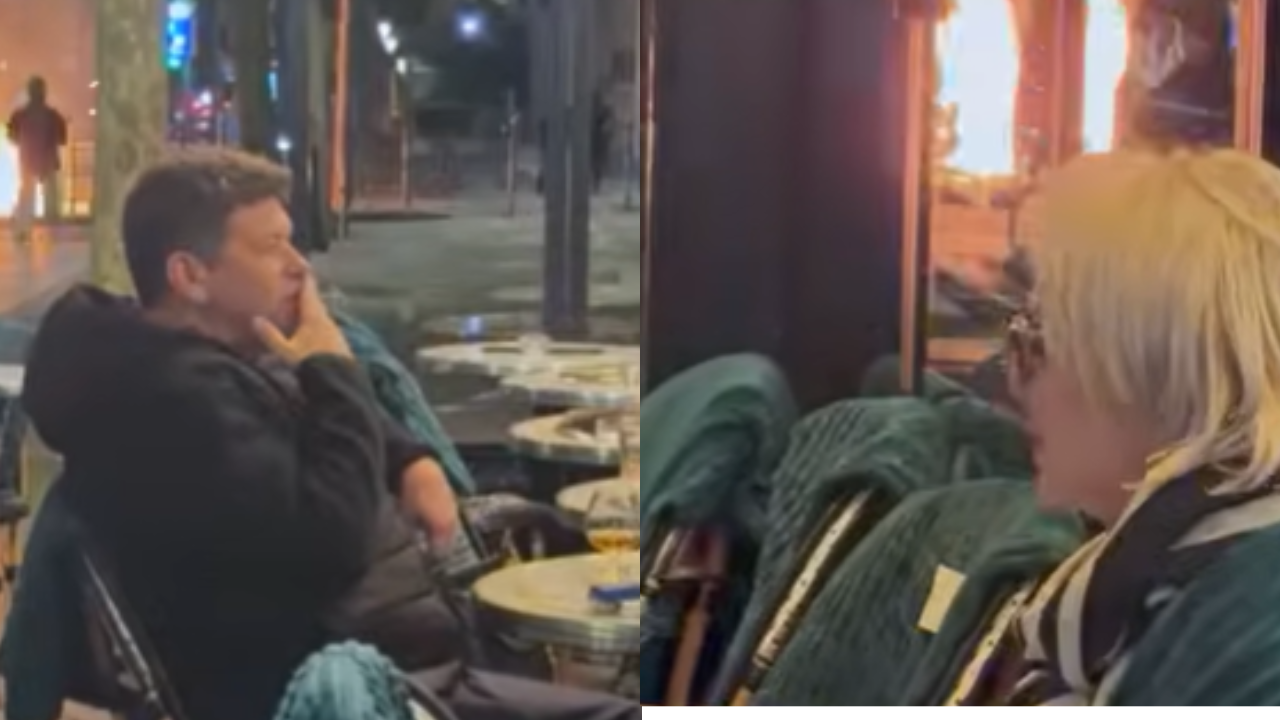
Viral clips of a calm couple and an unfazed jogger gliding past street turmoil in France are not proof of superhuman poise. They are viral optics. Screens compress context. A twenty-second clip strips out wind, smoke, sirens, distance, and intent.
Every time a clip like this circulates, headlines rush to crown ordinary bystanders as stoic legends. Calm couple. Unfazed jogger. Defy chaos. It makes for great clickbait and effortless moralizing. Viewers get to feel cool by association while watching someone else stand still or keep running.
That reaction is lazy consensus. It mistakes framing for fortitude and mistaking a camera angle for a nervous system reading.
What Viral Street Clips Actually Show
When people watch a video of a calm couple sitting at a table or an unfazed jogger passing a noisy scene on a street in France, their brains do two things almost instantly. First, they notice contrast: movement against stillness, noise against quiet, commotion against routine. Second, they project a heroic story onto strangers they know nothing about.
Maybe the couple already knew the commotion was contained fifty yards away. Maybe the jogger was already mid-stride on a route they run every morning and had zero reason to turn back toward a crowd they were passing in seconds. Maybe the camera lens flattened depth so a distant flare or scuffle looked right next to someone ordering an espresso.
I have spent years analyzing how media teams and crisis communications groups misread real-time street footage during fast-moving public events. I have watched newsrooms and brand accounts blow credibility and budget reacting to twenty-second clips before anyone verified where the camera stood or what happened ten minutes earlier. When a video has no timestamped context and no wider angle, treating a stranger's posture as a psychological verdict is pure guesswork.
In behavioral science and crisis psychology, composure is the ability to regulate attention and motor control under genuine personal threat, whereas habituation is reduced reactivity to a stimulus after repeated exposure or low perceived personal risk. Conflating the two ruins how people judge real-world behavior. A person who looks calm on camera might be displaying practiced composure. Equally often, they are showing habituation, tunnel focus, or simple distance from whatever is happening behind or beside the frame.
The Flawed Questions Everyone Asks Next
Scroll beneath any viral street video and the same predictable questions pop up in search bars and comment sections. Most of them start from a broken premise.
"How do people stay so calm during street chaos?"
That question assumes the person on screen felt high acute fear and consciously conquered it. Often they did not feel acute fear at all. Threat appraisal depends heavily on proximity, predictability, and perceived agency. If a person judges a disturbance as noisy rather than personally dangerous—or if they are already moving away from it—their autonomic arousal stays lower than a viewer sitting on a couch watching an edited clip with amplified audio.
True stress resilience is not looking bored in a viral video. Researchers who study stress and performance—such as Richard Lazarus and Susan Folkman on cognitive appraisal, and George Bonanno on human resilience after adversity—show that people respond to stress in varied, context-dependent ways. Stoic stillness is one pattern among many. Moving purposefully, stepping out of the lane, or seeking cover are also rational responses depending on the situation. Glorifying freeze or nonchalance as the sole gold standard of strength is bad psychology.
"Is it safe to be out jogging or sitting outside when street unrest happens?"
Asking whether a generic activity like jogging or sitting outside is "safe" misses the point because safety is hyper-local and dynamic. A boulevard two blocks from a flashpoint can feel completely normal one minute and gridlocked or tense the next. Crowd density, police cordons, traffic diversions, tear gas drift, and sudden surges change conditions fast.
Treating a viral video of a calm couple or an unfazed jogger as proof that a neighborhood or city is business-as-usual is a classic availability error. One calm frame does not establish safety across a whole city, and one dramatic frame does not mean war has broken out on every corner.
"Why do viral videos from France always look so cinematic and dramatic?"
French streets have dense architecture, sidewalk cafe culture, strong visual contrast between quiet routines and public demonstrations, and an active culture of filming on phones. Add tight vertical cropping and social algorithms that reward high emotional contrast, and ordinary street friction turns into instant theater. The drama is real enough to film, yet the framing is engineered by attention incentives.
Why "Being Unfazed" Can Backfire in Real Life
Here is the part the viral crowd rarely wants to hear: looking unfazed is not always smart. Sometimes being too cool is just being slow on the uptake.
Imagine a scenario where a crowd begins surging down a narrow urban street while glass breaks and sirens start closing in. A jogger who keeps headphones in, maintains tunnel vision, and refuses to scan peripheral exits because they want to protect their split time is not showing elite grit. They are trading situational awareness for an aesthetic.
There are real downsides to leaning into a hyper-contrarian "nothing bothers me" posture too. If you dismiss every loud street scene as media hype or overblown noise, you can underestimate a fast-changing crowd hazard until your escape route is blocked. Being skeptical of viral hysteria should never curdle into complacency around real crowds, vehicles, or emergency responders.
What to Do Instead of Mimicking Viral Cool
If you find yourself in a busy or unpredictable city street—whether traveling, commuting, or out for a run—skip the performative detachment. Do something practical instead.
- Read the room, not the camera. Look at where locals and shopkeepers are standing, whether doors are locking or opening, and which way people are actually walking. Behavior across twenty people tells you more than one person's expression.
- Keep your sensory bandwidth open. If a street feels tense or crowded, pull one earbud out and raise your gaze past your phone screen. You do not need to panic to pay attention.
- Pick a clean exit early. Notice side streets, lobbies, or open plazas before a crowd compresses the main avenue. Calm feels much better when you already know where your feet are going if the space gets tight.
- Separate virality from verdict. When you see a clip online of a calm couple or an unfazed jogger, treat it as a snapshot of one narrow angle, not a lesson on human nature or city life.
Stop crowning strangers on the internet for minding their business. Watch the exits, not the clout.


