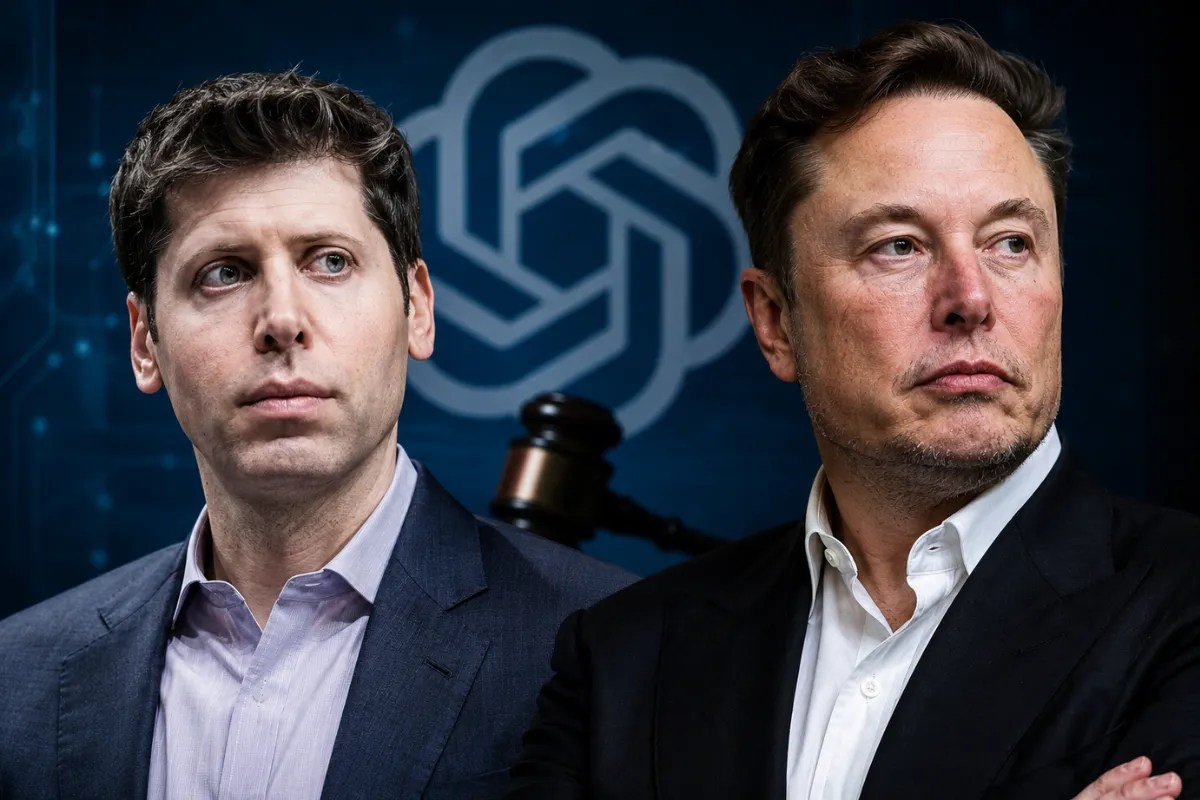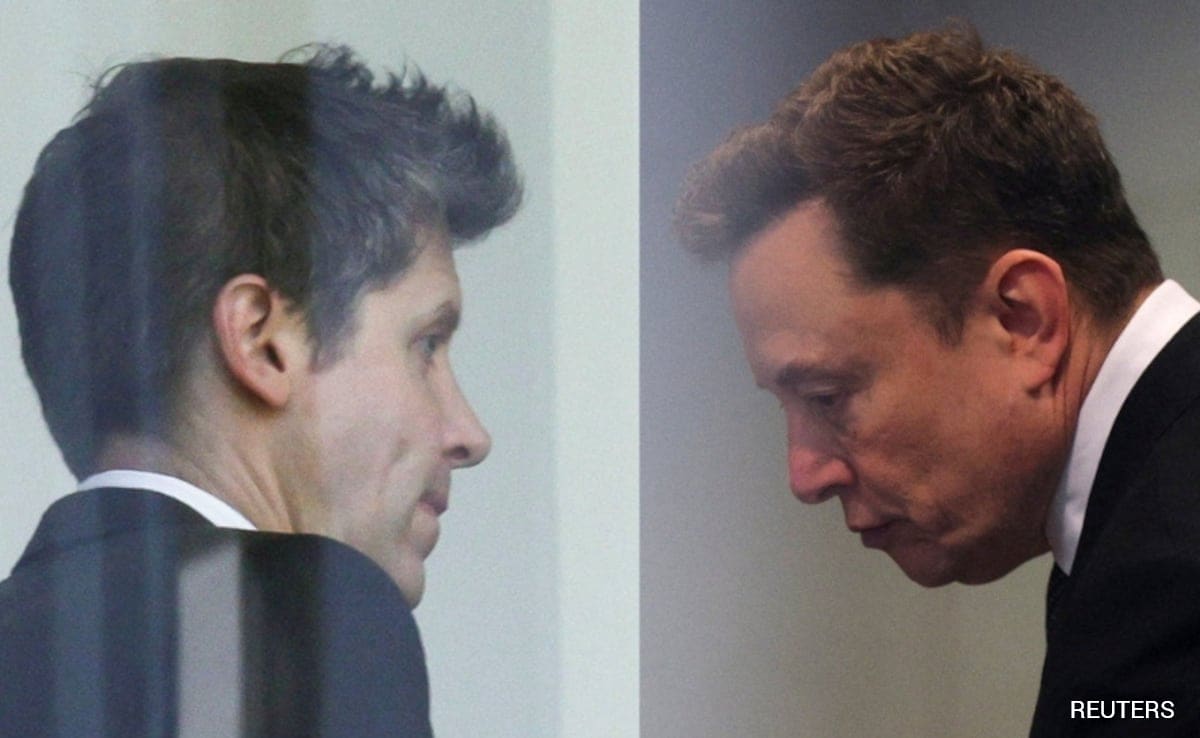
The mainstream media missed the real story of the federal court trial in Oakland. They focused on a soap opera between billionaire egos. They tracked every smirk from Sam Altman, every defensive tweet from Elon Musk, and treated a massive corporate war like a tech-bro reality show. When the nine-person jury took less than two hours to throw out Musk’s lawsuit on a statute-of-limitations technicality, the business press immediately ran the lazy headline: Sam Altman wins, Elon Musk loses.
That conclusion is completely wrong. It fundamentally misunderstands the mechanics of modern Silicon Valley warfare.
I have watched tech founders blow tens of millions of dollars on ego-driven litigation that accomplishes absolutely nothing. This trial was entirely different. To evaluate who actually won the battle in Oakland, you must stop looking at the formal legal verdict and start looking at the structural collateral damage. Musk did not lose. OpenAI did not win. The entire legal circus was an expensive, highly calculated exercise in corporate sabotage designed to achieve three specific strategic objectives. It hit every single mark.
The Myth of the Stolen Charity
The core narrative of the lawsuit was beautiful, cinematic, and completely fraudulent. Musk claimed he was swindled out of $38 million by slick operators who promised to build an altruistic open-source AI utopia, only to turn it into a closed-source monopoly backed by Microsoft. The press bought this David-and-Goliath framing hook, line, and sinker.
The open-source savior narrative is pure fiction. I have worked alongside these executives for a decade. Nobody at the founding level of OpenAI in 2015 was operating on pure, unadulterated altruism. They were hyper-ambitious operators trying to centralize control over the most powerful technology on earth.
During the eleven days of grueling testimony, the defense laid out the real timeline. Musk did not walk away because OpenAI abandoned its non-profit roots; he walked away because he could not have 90% unilateral equity control of the organization. He wanted to absorb the entity into Tesla's autonomous vehicle division to act as an internal cash and compute engine. When Sam Altman and Greg Brockman refused to hand over the keys to his personal empire, he choked off their funding, hoping they would starve in infancy.
They did not starve. They adapted, built a commercial engine, and left him behind. The lawsuit was not a noble defense of humanity. It was the retaliatory strike of a jilted co-founder who realized he mistakenly walked away from a company now targeting a $1 trillion valuation.
Sabotage Disguised as Litigation
If Musk knew the legal merits of his case were thin enough to get buried by a three-year statute-of-limitations rule, why did he push it to a full federal trial?
Because the courtroom is the only place where corporate secrecy goes to die.
The true objective of the trial was a forced extraction of proprietary data, internal emails, and architectural timelines to weaponize Musk's competing enterprise, xAI. In corporate litigation, this is known as asymmetric discovery warfare. You do not sue to win a judgment; you sue to force your competitor to dump their internal dirty laundry onto the public record.
Look at what happened on the very first day of the trial. To mitigate their legal exposure and protect their partnership from claims of anti-competitive monopolization, Microsoft and OpenAI were forced to abruptly amend their core partnership agreement. They made Microsoft’s intellectual property license non-exclusive, terminated Microsoft’s revenue-share payments, and freed OpenAI to deploy its models on rival cloud infrastructure.
The very next morning, Amazon seized on the chaos to bring OpenAI’s advanced models onto its own cloud platform.
[OpenAI / Microsoft Monopoly]
       │
       ▼ (Day 1 Trial Pressure)
[Non-Exclusive IP License] ──► [Amazon Cloud Integration Available]
By forcing that single structural shift through legal pressure, Musk fractured the exclusive computing monopoly that Microsoft enjoyed over the world's leading generative models. He opened the floodgates for his own suppliers, partners, and cloud providers to scramble the competitive board.
While the press was busy writing articles about whether Altman looked tired on the witness stand, the actual architecture of the AI landscape was being forcefully rewritten to benefit OpenAI's direct competitors. That is not a loss for Musk; it is a masterclass in operational disruption.
The Trillion-Dollar IPO Tax
The consensus view claims this swift verdict clears a smooth runway for OpenAI to launch its highly anticipated initial public offering later this year. Commentators argue that with the legal cloud lifted, institutional investors can confidently pour billions into the newly restructured public benefit corporation.
This view ignores the structural damage done to OpenAI's core asset: its talent density.
Advanced artificial intelligence is not a software game; it is a human capital game. There are perhaps a few hundred people on earth capable of pushing the frontier of large-scale foundation models. For years, OpenAI’s primary recruitment advantage was a carefully cultivated aura of messianic purpose. They were the chosen ones building safe AGI for the collective benefit of mankind.
The trial completely shattered that myth.
The testimony unreeled weeks of ugly, cynical, backroom bickering. It exposed an environment where executives traded board seats like poker chips, debated how to maximize personal equity stakes, and actively misled the public about their open-source commitments. Witness after witness questioned Altman’s transparency, with Musk’s legal team proving that OpenAI’s own board members had previously branded their CEO a liar during the brief 2023 coup.
Imagine a scenario where a brilliant, idealistic Stanford PhD student is choosing between working at OpenAI, Anthropic, or xAI. In 2023, OpenAI was the default moral choice. In 2026, the trial transcripts have laid bare that it is just another knife-fighting corporate tech company wrapped in a public benefit bow.
By stripping away OpenAI’s moral shield, Musk leveled the recruiting playing field. The cultural tax of this trial will be felt in OpenAI’s retention rates long after the jury's verdict is forgotten.
Dismantling the Wrong Questions
If you want to understand the actual state of play, you have to stop asking the superficial questions found in standard tech reporting.
- Did OpenAI break a binding contract? This is the wrong question because it assumes the existence of a formal document that never existed. The trial proved that the "founding agreement" was a series of idealistic emails and philosophical handshakes. In the real world of venture capital and high-stakes corporate law, if it isn't encoded in an executed certificate of incorporation, it does not exist.
- Is Sam Altman vindicated? Hardly. Winning a case because your opponent waited too long to sue is not an endorsement of your ethics; it is an escape on a procedural calendar technicality. The trial did not prove Altman acted with integrity; it proved he acted with superior legal counsel.
- Will this stop Musk's xAI? Absolutely not. Musk used the three-week trial as a massive, free marketing engine for his own AI products, framing Grok as the only true open-source alternative left on the market.
The Cost of the Counter-Attack
There is a glaring downside to Musk's aggressive strategy that his supporters refuse to acknowledge. By weaponizing the legal system to slow down a rival, he has established a highly dangerous precedent for his own sprawling portfolio of companies.
Musk's entire empire—Tesla, SpaceX, xAI, xAI’s massive compute clusters—relies on a fluid, rapidly changing definition of corporate boundaries. He routinely moves top-tier engineering talent from Tesla to xAI, shifts hardware allocations between companies, and uses his personal social media platform as a megaphone for his private ventures.
By dragging OpenAI into court for shifting from a non-profit foundation to a commercial vehicle, Musk has handed a blueprint to his own activist shareholders. The exact arguments his lawyers used to attack OpenAI’s corporate restructuring are currently being studied by corporate governance attorneys looking for vulnerabilities in Tesla’s relationship with xAI. He has validated the weaponization of corporate trust lawsuits, and sooner or later, that weapon will be turned back on him.
But if you think Elon Musk is sitting in a room feeling defeated because nine jurors in Oakland decided he missed a filing deadline, you are entirely blind to how power operates in Silicon Valley. He did not care about the $38 million donation. He did not care about getting Sam Altman fired.
He wanted to break Microsoft’s exclusive grip on the leading AI models, extract internal competitive intelligence under oath, and tarnish OpenAI’s moral authority right before their historic IPO.
He accomplished all three in less than a month. The jury signed a piece of paper, the lawyers packed up their boxes, and OpenAI went back to work—but they are walking onto a competitive battlefield that Musk thoroughly re-engineered while they were busy defending themselves.