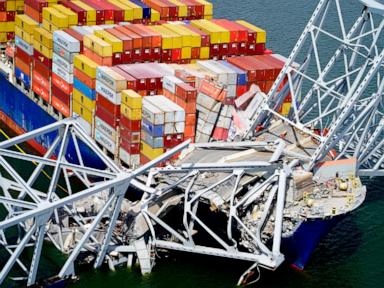
The Francis Scott Key Bridge didn't just fall. It was wiped out in seconds by a vessel so massive it shouldn't have been able to lose power in such a tight spot. On March 26, 2024, the city of Baltimore woke up to a skyline that looked broken. A critical piece of American infrastructure was gone. Six lives were lost. For anyone looking at the footage, the math doesn't seem to add up. How does a modern cargo ship lose total control in a high-stakes channel?
If you’re trying to wrap your head around the timeline, you have to look at the minutes leading up to the impact. This wasn’t a slow-motion accident where people had hours to react. It was a series of catastrophic system failures that left a massive ship drifting like a dead weight toward a concrete pillar.
The Deadly Three Minute Window
The Dali, a 984-foot container ship, was scheduled for a long journey to Sri Lanka. It left the Port of Baltimore’s Seagirt Marine Terminal around 12:44 a.m. Everything looked routine. By 1:24 a.m., things went sideways. Fast.
The ship suffered a total blackout. This means everything went dark—the lights, the electronic navigation, and most importantly, the engines. When a ship that size loses propulsion, it doesn't just stop. It keeps moving because of its immense momentum. Imagine a skyscraper sliding across the ice. That’s what the pilots were dealing with.
At 1:25 a.m., the crew managed to get a backup generator running, but they couldn't regain engine power. They were drifting at about 8 knots. The pilots did the only thing they could. They called in a Mayday. They also ordered the crew to drop the port anchor to try and swing the ship away from the bridge support. It wasn't enough.
Why the Mayday Saved Dozens of Lives
We talk a lot about the tragedy, but we don't talk enough about the police officers who acted in seconds. Because the pilots called in that Mayday at 1:27 a.m., dispatchers were able to stop traffic on both ends of the bridge.
"Hold all traffic on the Key Bridge," one dispatcher said over the radio. "There’s a ship approaching that just lost their steering."
If those cars hadn't been stopped, we’d be talking about dozens or even hundreds of deaths. The bridge collapsed at 1:29 a.m. The gap between the Mayday and the collapse was less than two minutes. That's the difference between a tragedy and a massacre.
The Human Cost on the Span
Six men died that night. They weren't travelers or commuters. They were construction workers from Mexico, Guatemala, Honduras, and El Salvador. They were doing the kind of grind most of us avoid—filling potholes in the middle of the night on a freezing bridge.
They were part of a crew for Brawner Builders. When the bridge went down, their vehicles went with it. We spent weeks watching divers pull bodies from the wreckage submerged in 50 feet of dark, debris-filled water. It's a reminder that infrastructure isn't just about steel and concrete. It's about the people who keep it running while the rest of us sleep.
Structural Vulnerability and the Dolphin Problem
People ask why the bridge crumbled like a toy. The Key Bridge was "fracture critical." That’s engineering speak for "if one main part fails, the whole thing goes." It was built in the 1970s. Back then, cargo ships were a fraction of the size of the Dali.
Modern bridges use "dolphins"—huge concrete buffers—to protect the piers. The Key Bridge had some protection, but it wasn't designed to stop a 95,000-ton ship. The Dali hit the "pylon," the main support. Once that pillar moved, the physics of the truss meant the entire span had to follow.
The National Transportation Safety Board (NTSB) has spent months looking at the ship’s electrical system. They found two power failures occurred while the ship was still in port. Then two more happened on the water. This suggests a chronic issue with the ship's breakers. Why was it allowed to sail? That's the multi-billion dollar question.
Clearing the Channel and Restarting the Economy
Baltimore is a car port. It's the biggest in the country. When the bridge fell, it didn't just block a road; it corked the bottle of the entire regional economy. Thousands of dockworkers were suddenly out of a job.
The U.S. Army Corps of Engineers had to pull 50,000 tons of steel and concrete out of the Patapsco River. They used the "Chesapeake 1000," the largest crane on the East Coast. They even had to use precision explosives to break apart sections of the bridge that were pinned across the Dali’s bow.
By June 2024, the channel was fully reopened. It was a massive feat of engineering, but the scar on the horizon remains.
What Happens Now
The FBI has opened a criminal investigation. They're looking at whether the crew knew the ship had serious power issues before they left the dock. If they did, the legal fallout will be historic. Grace Ocean Private Ltd, the owner of the ship, tried to limit its liability to $43.7 million shortly after the crash. The city and the state of Maryland are fighting that tooth and nail.
Rebuilding will take years. We're looking at a price tag of $1.7 billion to $1.9 billion. The goal is to have a new bridge by 2028. It’ll have better pier protection. It’ll be higher. It’ll be built for the world we live in now, not the world of 1977.
If you live in the area or rely on East Coast logistics, stay updated on the Maryland Transportation Authority's (MDTA) project milestones. Watch the NTSB's final report closely. That document will change how maritime safety is handled globally. Don't just wait for the new bridge to appear—demand transparency on how the next one will be protected from a repeat of this nightmare.
The debris is mostly gone, but the investigation into the "why" is just getting started. It’s a long road back for Baltimore.