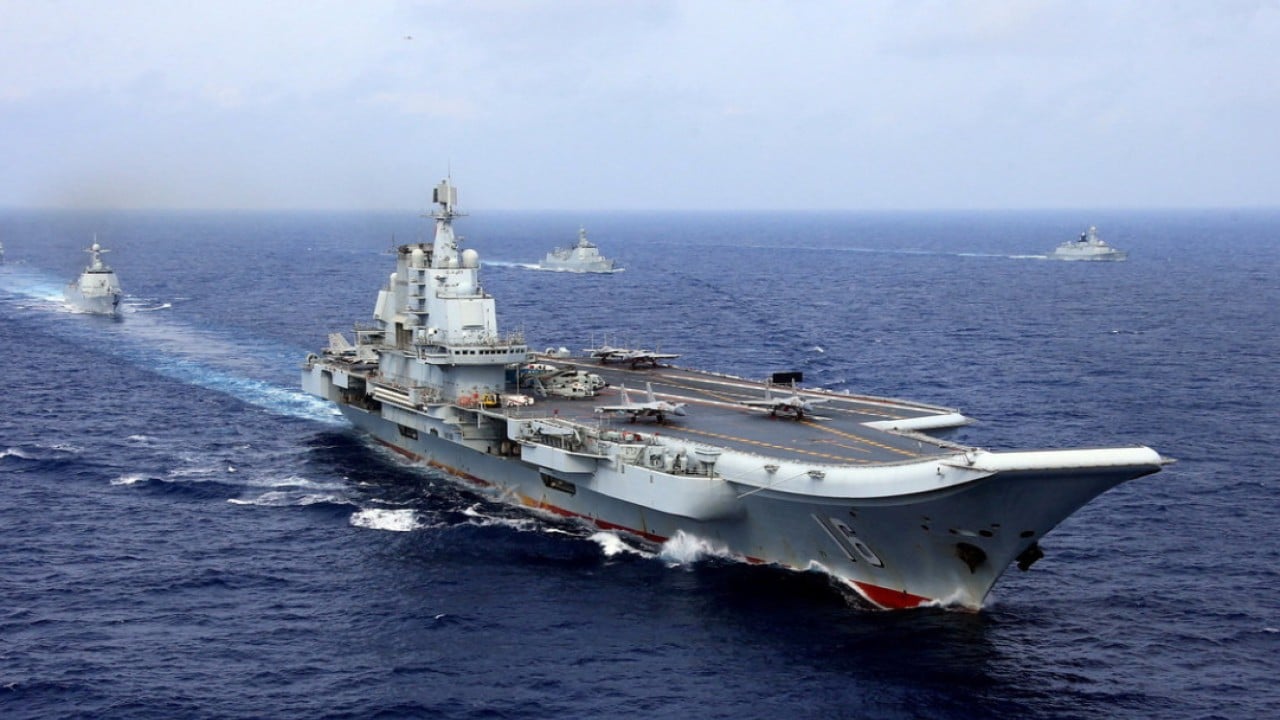
Every time the Liaoning clears the First Island Chain and Washington or Tokyo schedules a fresh round of missile drills, the headline machine hits autopilot. Escalation. Showdown. Flashpoint.
Lazy. Lazy thinking. Recently making news in related news: When the Wires Go Cold Before Winter.
That is the lazy consensus you get from breathless cable segments and boilerplate wire reports. Whenever a carrier group moves through blue water while allied batteries run live-fire or simulated intercepts, pundits treat the calendar like a fuse burning down toward a grand naval clash. They match hull numbers against launcher counts, draw arrows across maritime maps, and act as if two fleets are politely lining up for an 18th-century broadside.
They have the chessboard upside down. Further details regarding the matter are covered by Al Jazeera.
The Liaoning sailing out into the Pacific while the United States and Japan run missile drills is not a rehearsal for a cinematic slugfest between carrier strike groups and surface combatants. It is a stress test of logistics, sensor fusion, airspace management, and political signaling under conditions where nobody actually wants the shooting to start. If you analyze this as "carrier versus missile," you are already losing the argument before the first radar sweep finishes.
The Lazy Consensus vs. What Actually Moves in the Pacific
Conventional commentary loves binary matchups. Carrier versus anti-ship missile. Offense versus defense. Washington and Tokyo versus Beijing. That framing makes for tidy graphics and loud television. It also misses almost everything that matters about modern maritime power projection.
A short-takeoff-but-arrested-recovery (STOBAR) carrier like the Liaoning is not a nimble, high-sortie supercarrier built to steam unbothered into the teeth of dense coastal strike complexes and launch waves of heavy strike fighters at maximum payload. Naval analysts—from figures like Norman Friedman on warship design evolution to veteran surface warfare officers who have spent decades watching carrier air wings operate—have pointed out for years that ski-jump carriers carry real operational trade-offs in aircraft payload, fuel margins, and sortie generation compared to catapult-equipped decks. Knowing those limits does not make the ship a paper target. It tells you what the ship is actually for when it leaves the East China Sea.
When the Liaoning pushes past the First Island Chain into the wider Pacific, its value is not that it can single-handedly bully an allied task force out of the Philippine Sea. Its value is presence, endurance, sea-room, and training tempo. Inside tight littoral waters, a large surface group operates under intense surveillance and compressed timelines. Out in broader waters, the crew practices long-range logistics, aviation cycles away from home-port comforts, and command-and-control over wider distances. It forces allied surveillance assets—patrol aircraft, destroyers, satellites, and submarines—to track, classify, and shadow a moving node across hundreds of miles of ocean.
Meanwhile, when the United States and Japan conduct missile drills, the knee-jerk reaction is to read every launch or tracking exercise as a direct counter-punch to a specific ship movement. Sometimes drills are scheduled months in advance to validate interceptor readiness, test command links between US and Japan Self-Defense Forces units, or exercise theater air and missile defense doctrines. Treating every simultaneous naval deployment and allied drill as a synchronized duel confuses parallel operations with direct combat.
I have watched defense consultancies, corporate risk teams, and political commentators blow millions of dollars misreading military maneuvers because they confused visibility with intent. Years ago, I worked with commercial supply-chain leaders who treated every naval exercise near major shipping lanes as an imminent blockade. They panicked, rerouted freight at obscene cost, and burned executive credibility when routine maritime windows closed without a single shot fired. The mistake was simple: they mistook high-visibility posturing and routine readiness drills for the final act of a crisis.
Redefining the Search: You Are Asking the Wrong Questions
If you search for news around carrier transits and missile drills, you usually end up staring at the same recycled "People Also Ask" questions:
- Does China’s Liaoning carrier threaten US and Japanese forces in the Pacific?
- Are US and Japan missile drills a direct response to Chinese naval deployments?
- Could these movements spark an accidental clash in the Pacific?
Let us dismantle the premise on two of those, and give a straight answer on the third.
First: Does the Liaoning "threaten" US and Japanese forces? That question is too vague to be useful. Every major warship with embarked aircraft, sensors, and escorts complicates an opponent's planning picture. That is the baseline definition of a military asset. The real question is where it complicates planning, for how long, and at what cost in fuel, maintenance, and escort allocation. A carrier operating in the open Pacific demands intelligence, surveillance, and reconnaissance (ISR) coverage and contingency planning, yes. It does not magically erase allied submarine advantage, land-based strike reach, or combined naval air power. Framing the question as "does it threaten" invites exaggeration in both directions.
Second: Are US and Japan missile drills a direct response to a single carrier transit? Usually, no. Modern missile defense and strike readiness require continuous, calendar-driven testing—software updates, radar calibration, interceptor reliability checks, and bilateral interoperability reps. A carrier transit may sharpen the political backdrop or give commentators a convenient hook, but defense calendars run on maintenance cycles, test ranges, and training directives, not just daily news cycles.
Third: Could these movements spark an accidental clash? Brutally honest answer: yes, friction always carries risk, though probably not the way movies depict it. A clash does not usually begin with a grand strategic decision to start World War III over a carrier transit. It begins with miscalculation, unsafe maneuvers at close quarters, faulty identification, or communication breakdowns during high-tempo shadowing. The danger is tactical friction colliding with rigid rules of engagement—not a sudden master plan coming off the rails.
What People Miss About Carrier Operations and Missile Drills
To see past the noise, separate the hardware myth from the operational reality.
1. A Carrier Is a System, Not a Lone Hero
People talk about a carrier as if it were a single knight riding across the sea. In reality, a carrier is the center of a carrier strike group or task group—supported by surface combatants for air defense and anti-submarine warfare, logistics oilers, and shore-based intelligence support. Its aircraft need fuel, ordnance, spare parts, and deck cycles. Its escort ships burn fuel and rack up hull hours.
Consider a thought experiment. Imagine a scenario where a carrier group steams deep into the Pacific for a two-week out-of-area deployment. To keep that deck flying and its escorts fueled without straining replenishment lines, planners have to balance transit speed, underway replenishment timing, weather windows, and escort availability. That unglamorous math—fuel burn per nautical mile, spare parts inventory, and crew fatigue—governs far more of what happens at sea than dramatic speeches in capitals.
2. Missile Drills Are About Networks, Not Just Warheads
When casual observers hear "missile drills," they picture a single rocket screaming skyward and hitting a target. In modern military operations, the missile is the tip of a much larger kill chain or air and missile defense network.
A credible defense or strike architecture depends on:
- Sensors: Radars, satellites, maritime patrol aircraft, and early-warning nodes that spot and track targets without getting blinded or spoofed.
- Command and Control: Links that pass tracking data fast enough for shooters to act while staying resilient against jamming.
- Magazines and Logistics: How many interceptors or strike rounds exist, how fast they can be reloaded, and how well supply lines hold up under strain.
- Allied Integration: Whether US and Japanese command structures can share data and coordinate responses smoothly under pressure.
A drill that tests data links, radar tracking, or command handoffs without firing dozens of live interceptors can be far more revealing than a flashy live-fire clip designed for public consumption.
3. Deterrence Is a Moving Target, Not a Static Scoreboard
Many analysts treat deterrence like a spreadsheet: add one carrier here, subtract one interceptor battery there, total the column, and declare who "wins." Deterrence does not work like a static ledger. It lives inside decision-makers' heads—weighing costs, escalation ladders, domestic politics, alliance cohesion, and uncertainty about how an adversary might react.
A deployment can project strength in one room and look overextended in another. A drill can reassure an ally while prompting an adversary to study sensor habits and response times. Anyone claiming a single transit or exercise "proves" dominance is selling certainty where none exists.
Where My Contrarian Take Can Go Wrong
Honesty matters if you want sharp analysis rather than cheerleading. Pushing back against alarmist headlines has its own blind spots, and I will own them outright.
First, skepticism can slide into complacency. Pointing out that routine transits and scheduled drills are not an immediate invasion does not mean tensions are harmless. Over time, repeated close encounters, gray-zone pressure, and escalating rhetoric erode guardrails. What looks routine on Tuesday can turn ugly on Wednesday if two commanders misread a signal.
Second, focusing on mechanics can underplay politics. Analysts love talking about logistics, sortie rates, and radar timelines because those feel measurable. Yet political miscalculation—domestic pressure, misreading red lines, or assuming an opponent will back down—has tripped up smart strategists throughout history. Technical reality checks do not immunize leaders against bad judgment.
Third, outsiders rarely see every classification tier. Open-source analysis, historical analogies, and defense doctrine give us strong frameworks, not x-ray vision into real-time intelligence or classified readiness numbers. Anyone who claims total certainty about what happens behind closed doors is bluffing.
Practical Moves for People Who Actually Have to Act on This
If you run a business with Pacific supply chains, manage geopolitical risk, or simply want to read news without getting played by sensationalism, stop reacting to every headline and start tracking better signals.
- Audit exposure by chokepoint and dependency, not by scary headlines. Map where your suppliers, shipping routes, components, or energy inputs rely on specific sea lanes or single-source hubs. A carrier transit is noise; single-point supply fragility is a real business risk.
- Watch multi-week patterns, not one-day movements. One ship crossing a line or one announced drill tells you very little on its own. Sustained deployment tempo, logistics activity, diplomatic rhetoric, and repeated operational patterns tell you much more.
- Separate routine readiness from crisis behavior. Look for genuine anomalies—unusual mobilization, sudden airspace or maritime closures, evacuation warnings, or sharp shifts in diplomatic channels—rather than treating standard military training as a five-alarm fire.
- Build operational slack before you need it. Diversify suppliers, hold sensible buffer inventory on critical inputs, and stress-test communication and contingency plans when waters are calm. Panic buying during a headline spike is usually the most expensive way to manage risk.
Stop letting breathless headlines dictate how you think about the Pacific. Watch the logistics, watch the patterns, and leave the melodrama to the cable panels.