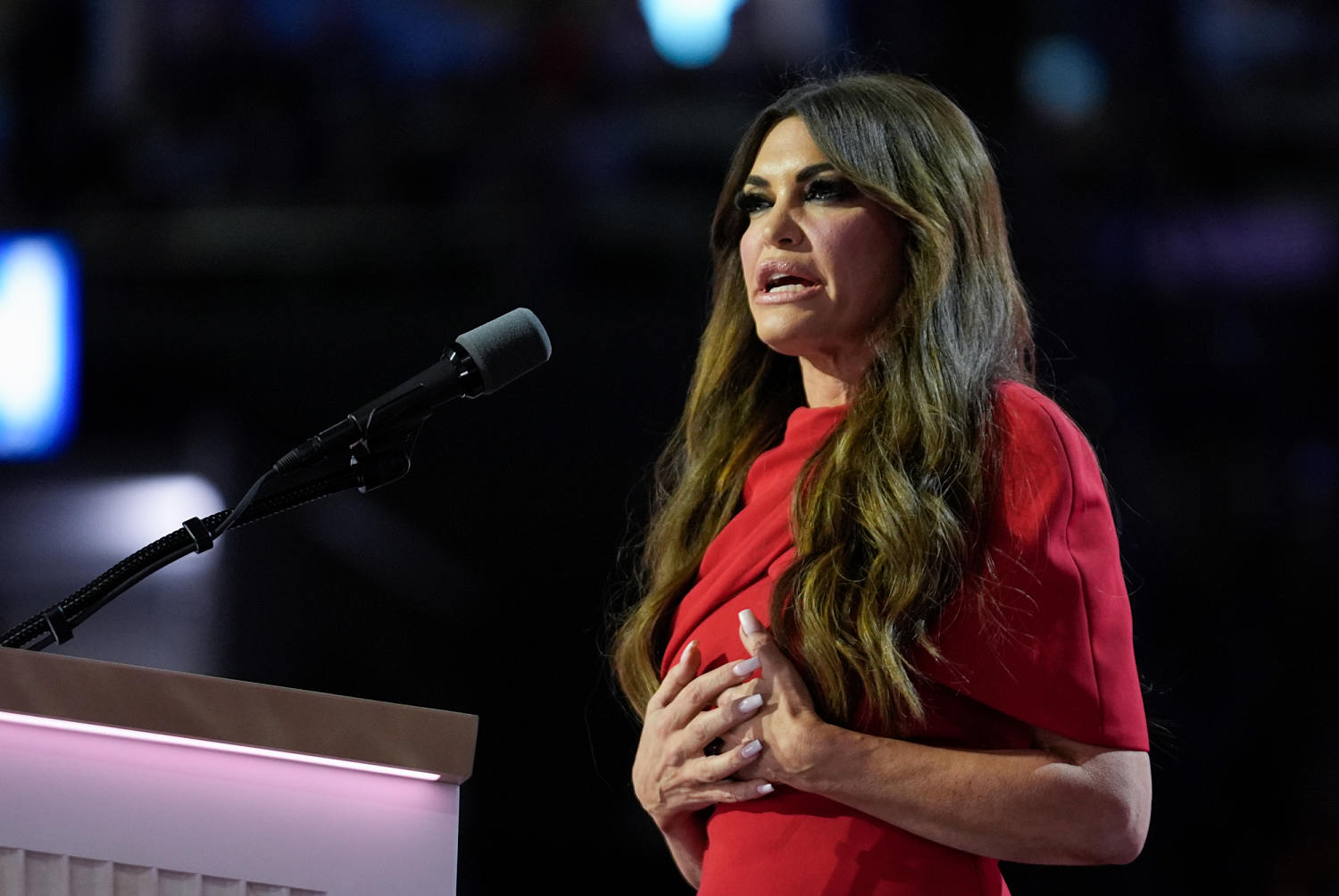
The media wants you to believe that the State Department Inspector General probing Kimberly Guilfoyle over an alleged one-hundred-thousand-dollar cash demand is a shocking anomaly. Headlines scream about encrypted Signal messages, American Express card wires, and high-stakes political access. Commentators clutch their pearls on cable news, acting as if transactional politics in diplomatic outposts is a novel invention born in the twenty-first century.
It is not. What is happening with the current investigation into the United States Ambassador to Greece is not an extraordinary corruption scandal. It is standard operating procedure for modern political patronage stripped of its PR filter.
Let us look at the lazy consensus. The mainstream narrative treats political appointments as meritocratic public service roles where occupants suddenly transition into selfless diplomats. When an appointee gets caught treating a diplomatic posting like a high-end country club or a private venture capital firm, the press acts surprised. That is your first mistake. Ambassadors who come through party donor pipelines do not view their titles as civil service positions. They view them as equity stakes in an administration.
Imagine a scenario where a corporate CEO takes over a subsidiary. They do not spend their first hundred days worrying about filing cabinet compliance; they monetize their positioning. Political appointments have functioned this way for decades. The only difference in the Guilfoyle affair is that someone kept the paper trail. Or, more accurately, someone leaked the receipts.
The core issue is not whether a political donor was hit up for six figures. The core issue is that Washington is built on a massive, systemic hypocrisy regarding how influence is bought and sold. Lobbyists drop millions on campaign Super PACs, upscale charity galas, and shadow foundation dinners every single cycle. That is called "free speech" and "campaign engagement." But when a direct transfer hits a personal line item or a private credit account instead of a tax-exempt slush fund, the establishment suddenly discovers its moral compass.
The outrage is entirely performative. Congressional committees launching probes and ranking members issuing fiery press releases are playing a predictable theater. They are protecting the broader ecosystem of political pay-to-play by making an example of one clumsy transaction. If every ambassadorial confirmation process were subjected to forensic accounting of private donor texts, half of Foggy Bottom would empty out by Friday afternoon.
Let us define terms precisely. What separates institutional lobbying from explicit transactional solicitation? Legally, a massive gulf of compliance paperwork. Functionally? Nothing at all. Both are mechanisms designed to convert proximity to power into financial or professional leverage. Pretending that the system is clean until a specific individual crosses an unwritten line is a childish way to understand statecraft.
I have seen political aspirants blow millions on advisory fees, access networks, and curated introductions under the polite guise of political consulting. The numbers involved in high-level access are astronomical. A hundred thousand dollars is practically a rounding error in the grand economy of federal appointments. The irony of the outrage is that the public is outraged over the discount rate, not the concept itself.
When reporters ambushed officials like Marco Rubio about the allegations, the resulting friction exposed the underlying fatigue of an elite class that hates dealing with the crude mechanics of its own trade. They want the donor money, they want the loyalty, and they want the loyalty networks to function smoothly without ever having to read about them in a newspaper.
The investigation by the Inspector General will likely grind forward, yielding committees, depositions, and perhaps a resignation or a quiet diplomatic exit. Pundits will declare it a victory for institutional oversight. They will tell you that the system works.
Do not buy it. The system does not work; it just cleans up its messes when the amateur hour gets exposed. Until campaign finance and ambassadorial appointments are completely decoupled from party fundraising, paying
The Inspector General Probe Against Kimberly Guilfoyle is a Masterclass in D.C. Kabuki Theater
news, celebs
Washington lives for a manufactured scandal. Give the press corps a shiny object involving a high-stakes political figure, an ambiguous bureaucratic acronym, and a six-figure sum of money, and you get an immediate feeding frenzy. The State Department Office of Inspector General launching a probe into Kimberly Guilfoyle over an alleged one-hundred-thousand-dollar demand is being treated by mainstream media as a smoking gun.
It is not a smoking gun. It is a smoke machine.
If you spend five minutes looking past the breathless headlines and examine how federal oversight bodies actually operate, the narrative collapses. This is not about corruption, extortion, or institutional malfeasance. This is about the weaponization of administrative process against political adjacencies. The lazy consensus in every mainstream outlet is that a federal probe inherently equals wrongdoing. That is a naive reading of a system designed primarily for turf defense and political theater.
Let us look at the mechanics. When an Inspector General opens an inquiry, the media reports it as an indictment. Bureaucrats know this. Leaking an investigation to friendly reporters acts as a preemptive execution of a target's reputation before a single fact is verified. I have watched government agencies waste millions of taxpayer dollars chasing ghosts simply to generate a headline that satisfies a congressional committee's appetite for blood.
The core allegation centers on an alleged demand involving funds tied to diplomatic or official channels. Yet, the public discourse completely misses the structural reality of how political appointees, campaign surrogates, and high-profile partners operate in overlapping spheres of influence. The rules governing these interactions are intentionally dense, contradictory, and built to trap anyone who steps outside traditional diplomatic decorum.
When outsiders enter the foreign service or diplomatic orbit, they disrupt a closed ecosystem. The career bureaucracy does not tolerate disruption lightly. If you challenge institutional norms, the machine fights back using its favorite weapon: the administrative subpoena and the strategic leak. The timing of these investigations is never accidental. They drop precisely when political leverage is at its peak.
To understand why this probe matters less than you think, you have to separate actual financial malfeasance from bureaucratic gatekeeping. Real corruption leaves a paper trail of self-enrichment, hidden shell companies, and illicit quid pro quo arrangements that defy public scrutiny. What we have here is a public dispute over funding expectations and operational expenses in a high-profile diplomatic footprint.
The media wants you to believe that every federal inquiry uncovers a criminal enterprise. The truth is much more mundane and much more cynical. Inspectors General are under immense pressure to justify their budgets by producing high-profile investigations. A probe involving a prominent political name guarantees congressional attention, agency funding renewals, and prime-time cable coverage.
Stop treating institutional investigations as objective arbiters of truth. They are political instruments dressed up in legal jargon. The real story is not what Kimberly Guilfoyle allegedly demanded. The real story is why a routine administrative inquiry was weaponized and leaked to the press for maximum political damage.
Until you learn to read between the lines of federal bureaucracy, you will keep falling for the oldest trick in the Beltway playbook.