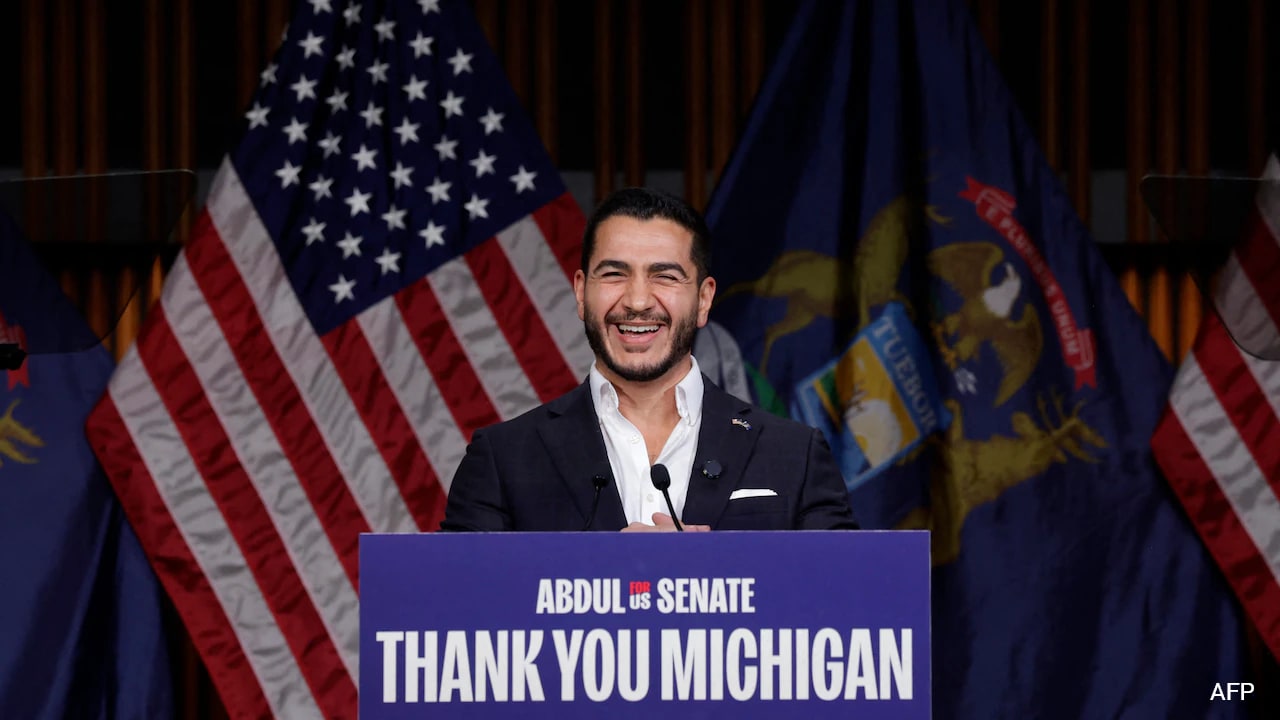
Have you seen the headlines claiming Abdul El-Sayed is the first Muslim elected to the U.S. Senate?
Pump the brakes. That claim is flat-out wrong, and it's spreading fast across social media.
If you're searching for Abdul El-Sayed, you probably want the real story behind the viral chatter. Maybe you saw a misleading post on X or TikTok celebrating a historic Senate victory that didn't happen the way people think. Let's clear the air right now. Abdul El-Sayed is a prominent Michigan physician, former public health director, and progressive political figure, not the first Muslim elected to the United States Senate. In fact, no Muslim has ever served in the U.S. Senate as of November 2026.
That doesn't make his actual career any less fascinating. Honestly, his real track record in Michigan politics and public health is way more compelling than a fabricated viral headline.
Why The Rumor Started And Why It Matters
Misinformation in politics rarely comes out of thin air. Usually, someone mashes two real facts together until they morph into a completely false narrative.
With Abdul El-Sayed, the confusion stems from two things. First, he ran a high-profile, Bernie Sanders-endorsed campaign for Governor of Michigan in 2018. Second, Michigan did make Muslim political history around that exact same time—just in the House of Representatives, not the Senate, when Rashida Tlaib won her seat in Detroit.
Throw in the 2026 midterm election cycle, where open Senate seats in battleground states like Michigan have dominated political chatter, and suddenly low-effort content farms start recycling old photos with brand-new, inaccurate captions. People share them without checking. Algorithms reward the engagement. Before you know it, thousands of readers think history was made in the upper chamber of Congress.
Here's the actual reality of Muslim representation in Congress. While multiple Muslim Americans have been elected to the U.S. House of Representatives—starting with Keith Ellison in 2006, followed by André Carson, Ilhan Omar, and Rashida Tlaib—the U.S. Senate remains completely without a Muslim member. Even high-profile Senate campaigns by Muslim candidates, like Dr. Mehmet Oz's 2022 Republican run in Pennsylvania, ended in defeat.
So when you see an article calling Abdul El-Sayed the first Muslim U.S. Senator, you're looking at sloppy clickbait.
Who Is Abdul El-Sayed Actually
Strip away the fake headlines, and you're left with one of the sharpest public health minds in the Midwest.
Born in Detroit in 1984 to Egyptian immigrant parents, Abdul El-Sayed grew up in Bloomfield Hills, Michigan. He didn't take the traditional lawyer-to-politician pipeline that defines most of Washington. Instead, he went heavy into medicine and epidemiology.
He graduated with highest distinction from the University of Michigan, where he played lacrosse and delivered a commencement speech alongside former President Bill Clinton. From there, he earned a Rhodes Scholarship to study at Oxford University, picking up a doctorate in public health before returning stateside to finish his medical degree at Columbia University.
By age 30, he wasn't chasing cable news hits. He was teaching epidemiology at Columbia.
Then Flint happened.
When the Flint water crisis exposed systemic failures in Michigan's public health infrastructure, Detroit Mayor Mike Duggan tapped El-Sayed in 2015 to rebuild the city's shattered health department. At just 30 years old, El-Sayed became the youngest health commissioner of a major American city.
Rebuilding Detroit's Health Department From Scratch
You have to understand how broken Detroit's health system was before El-Sayed arrived. During the city's bankruptcy, Detroit had basically outsourced its public health functions to a private nonprofit. It wasn't working.
El-Sayed walked into a department with minimal staff and massive public distrust. Over roughly two years, he brought public health services back under city control. He didn't just push paper from a downtown office either.
- Fighting industrial pollution: He went toe-to-toe with Marathon Petroleum over air quality permits in Southwest Detroit, a predominantly working-class neighborhood suffocating under industrial emissions.
- Vision care for kids: Recognizing that thousands of Detroit schoolchildren were failing classes simply because they couldn't see the chalkboard, he launched a program providing free eye exams and glasses directly in public schools.
- Lead testing: Following the Flint disaster, he pushed aggressive lead testing in Detroit public schools, uncovering elevated lead levels in dozens of buildings and forcing immediate water shutoffs and remediation.
I've covered local government long enough to know that most municipal agency heads spend their days dodging blame. El-Sayed actually picked fights with major corporations and entrenched bureaucrats to protect residents' lungs and drinking water. That's rare.
The 2018 Michigan Gubernatorial Run
In early 2017, El-Sayed resigned from his Detroit post to run for Governor of Michigan.
At the time, political insiders in Lansing laughed him off. He had never held elected office. He was 32 years old. And he was running in a state where no Muslim had ever won statewide office, facing off against Gretchen Whitmer, a seasoned former Senate Minority Leader with deep ties to Michigan's Democratic establishment.
El-Sayed didn't care about the conventional wisdom. He built a grassroots campaign modeled directly on Bernie Sanders' 2016 presidential run—rejecting corporate PAC money, championing single-payer healthcare at the state level, and calling for bold environmental regulations.
Things got weird fast.
During the primary, questions surfaced about his eligibility to run under Michigan's state constitution, which requires gubernatorial candidates to be registered voters in Michigan for at least four years prior to the election. Because El-Sayed had lived and voted in New York while earning his medical degree at Columbia, critics argued he was disqualified. Michigan's Bureau of Elections eventually cleared him, ruling that his temporary move for school didn't break his residency, though the media storm burned precious campaign oxygen.
Despite massive rallies featuring Bernie Sanders and Alexandria Ocasio-Cortez, El-Sayed finished second in the August 2018 Democratic primary. He pulled in roughly 30 percent of the vote—over 340,000 ballots—falling short against Whitmer's 52 percent.
Even in defeat, he shifted the political center of gravity in Michigan. Whitmer adopted more aggressive stances on clean water and infrastructure during the general election, riding a blue wave into the governor's mansion.
What He Did After Leaving The Campaign Trail
Most failed political candidates either fade away or immediately start plotting their next run for office. El-Sayed took a different route, carving out an influential niche in media, academia, and local government.
He wrote books, including Healing Politics in 2020, which examined how empathy and public health policy could fix America's political divisions, and Medicare for All: A Citizen's Guide in 2021, co-authored with Micah Johnson. He launched a popular podcast called America Dissected with Crooked Media, breaking down complex medical and policy issues during the height of the COVID-19 pandemic without talking down to listeners.
When CNN needed an on-air public health analyst to explain epidemiological data in plain English, they put him on contract.
Then, in 2023, he returned to the trenches of local government. Wayne County Executive Warren Evans appointed El-Sayed to lead the Wayne County Department of Health, Human, and Veterans Services—putting him in charge of public health for roughly 1.7 million residents across Detroit and its surrounding suburbs.
In that role, he tackled medical debt relief on a massive scale. Partnering with the nonprofit Undue Medical Debt (formerly RIP Medical Debt), El-Sayed helped spearhead an initiative using federal pandemic relief funds to wipe out hundreds of millions of dollars in medical debt for tens of thousands of Wayne County families.
Think about that for a second. Instead of just tweeting about healthcare costs, he used county-level policy levers to erase actual bills sitting on people's kitchen tables.
Why His Name Keeps Popping Up In Senate Conversations
If he isn't a U.S. Senator, why do political pundits and voters constantly link Abdul El-Sayed to the Senate?
Because Michigan is the ultimate swing-state chessboard, and open Senate seats don't come around often.
When longtime Democratic Senator Debbie Stabenow announced she wouldn't seek reelection in 2024, El-Sayed's name immediately surfaced on every progressive wishlist. He ultimately passed on the 2024 Senate race, throwing his weight behind other Democratic priorities while focusing on his Wayne County health post.
Then came the speculation around Michigan's other Senate seat—held by Gary Peters—heading into the 2026 midterm cycle. Whenever a progressive vacancy opens up in the Rust Belt, El-Sayed's name is automatically thrown into the mix. He has name recognition, proven fundraising chops from his 2018 run, and a fiercely loyal base in Washtenaw County (Ann Arbor) and Wayne County (Detroit).
Content aggregators and automated news sites exploit that speculation. They take a real headline like "Could Abdul El-Sayed Run for US Senate?" and twist it into "Abdul El-Sayed First Muslim Elected to US Senate" just to bait clicks from people scrolling their feeds too fast.
How To Spot Fake Political Milestones Online
You don't need a journalism degree to avoid falling for recycled political clickbait like the El-Sayed Senate rumor. Whenever you see a breathless headline claiming a politician just broke a major barrier, run it through three quick filters before hitting share.
- Check the date and the chamber. Congressional elections happen in November of even-numbered years, and new senators are sworn in the following January. If a viral post claims someone was just elected to the Senate in the middle of an off-month, or confuses a House race with a Senate race, it's bogus.
- Look at the website's domain and layout. Legitimate outlets like the Detroit Free Press, The Detroit News, Bridge Michigan, or the Associated Press have clear bylines, publication dates, and editorial standards. Sites with generic names, missing author bios, or recycled stock photos are almost always scraping old news to farm ad revenue.
- Verify against Congress.gov. Every sitting member of the U.S. House and Senate is listed publicly on the official congressional directory. A ten-second search tells you immediately who actually holds a seat.
If you want to follow Abdul El-Sayed's real work, skip the viral rumor mills. Look up his public health initiatives in Wayne County, read his policy breakdowns on medical debt and single-payer healthcare, or check out his writing on how local government impacts life expectancy. His actual resume doesn't need fake Senate titles to stand on its own.


