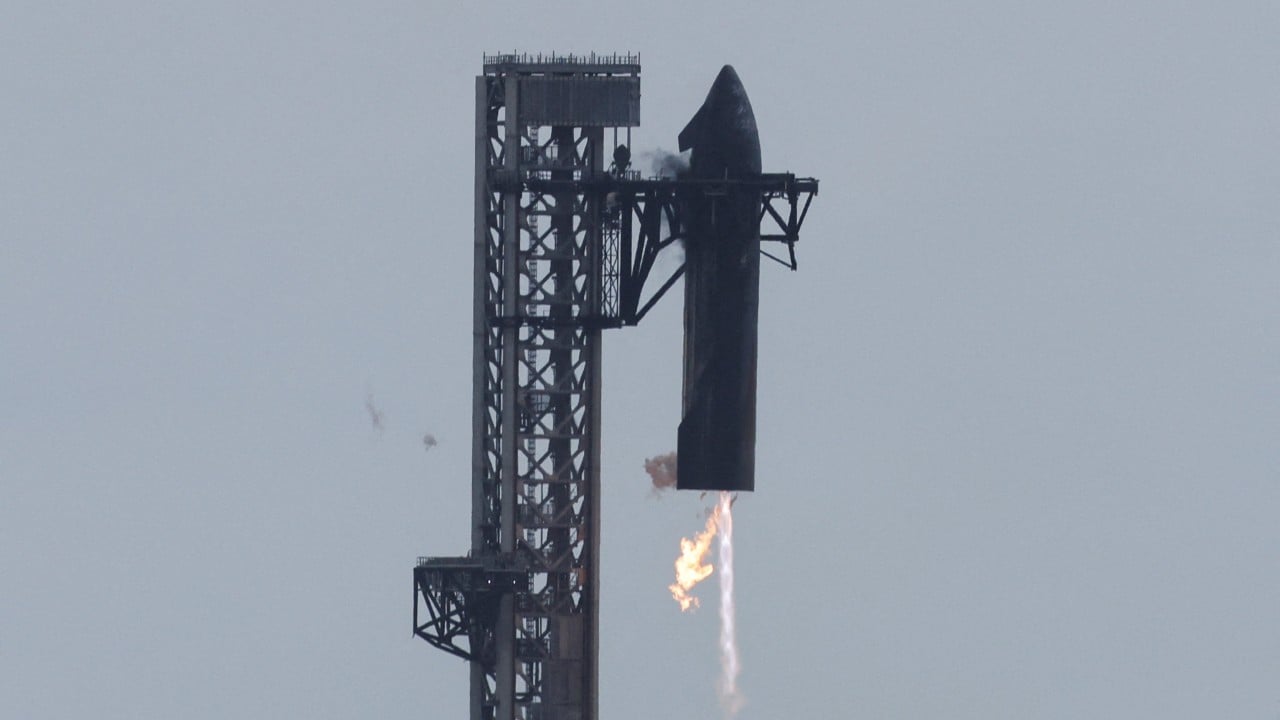
You saw the video. The massive, 232-foot stainless steel booster drops out of the sky, ignites its Raptor engines, hovers over a launch tower in South Texas, and gets snatched out of mid-air by two giant mechanical chopsticks. The mainstream press lost its collective mind. Headlines screamed about a historic triumph, declaring that humanity had just unlocked cheap, routine access to the stars.
They missed the point entirely.
I have spent years watching aerospace hardware programs burn through billions of dollars on glamorous milestone demonstrations that mask brutal unit-economics failures. Catching the Super Heavy booster with the Mechazilla launch tower is a staggering feat of guidance, navigation, and control. Nobody with an ounce of respect for physics can deny that. Yet the lazy consensus forming around this event—that catching a booster equals rapid, airline-style reusability—is dangerously naive.
The catch was not the finish line. It was the starting gun for the hardest, dirtiest, and most expensive part of rocketry.
The Illusion of the Mid-Air Catch
When legacy news outlets report on SpaceX catching part of its Starship rocket on return to Earth, they treat the mechanical grab like a magic trick that instantly deletes launch costs. They look at a booster sitting intact in the tower arms and assume you can just top off the methane and liquid oxygen tanks, slap a new upper stage on top, and fly again before dinner.
That assumption ignores basic thermodynamics and structural fatigue.
During ascent and atmospheric reentry, a Super Heavy booster endures violent acoustic vibrations, extreme thermal gradients, and massive aerodynamic loads. Thirty-three Raptor engines fire simultaneously at liftoff, generating over 16 million pounds of thrust. When those engines relight for the boostback and landing burns, they ingest hot, turbulent exhaust gases while decelerating a 200-ton dry mass from supersonic speeds down to zero in seconds.
Why Removing Landing Legs Creates a New Trap
SpaceX eliminated landing legs from the Super Heavy booster for one simple reason: mass fraction. Every kilogram of landing gear bolted to the bottom of the first stage is a kilogram of payload subtracted from low Earth orbit. By transferring the landing hardware from the rocket to the ground—specifically, onto the launch tower's catching arms—engineers saved tons of dry mass.
Smart trade-off? On paper, yes. In practice, you just traded flight mass for ground infrastructure fragility.
When Falcon 9 lands on an autonomous spaceport droneship hundreds of miles downrange, an engine flameout or a hydraulic hiccup destroys a booster and scorches a steel barge deck. When Super Heavy comes home to Starbase, it aims directly at Stage Zero—the single most complex, expensive piece of ground support equipment on the pad.
If a guidance sensor glitches during the final three seconds of descent, you do not just lose a rocket. You wipe out the launch mount, the propellant farm, the orbital tower, and your ability to launch anything for nine to twelve months. I have seen ground-support failures stall launch manifests for over a year while teams untangle twisted steel and melted umbilicals. Centralizing risk onto your primary launch pad is the exact opposite of operational resilience.
What Everyone Gets Wrong About Rocket Reusability
To understand why the SpaceX Starship booster catch is only 20 percent of the battle, you have to look at the history of the Space Shuttle. NASA built a reusable orbiter in the 1970s. It flew 135 missions. It also cost roughly $1.5 billion per launch in adjusted dollars and required tens of thousands of technicians spending months inspecting, replacing, and waterproofing individual thermal protection tiles after every single flight.
Reusability without rapid turnaround is just refurbishment with extra steps.
Right now, the aerospace world is asking: Can SpaceX catch a rocket? That is the wrong question. They already proved they can. The real question—the only one that determines whether Starship revolutionizes spaceflight or becomes a hyper-expensive science project—is: How many man-hours of invasive inspection does it take before that caught booster can fly again?
The Dirty Secret of Methane-Fueled Engines
Raptor engines run on subcooled liquid methane and liquid oxygen using a full-flow staged combustion cycle. In plain English, that means two separate preburners—one oxygen-rich, one fuel-rich—drive turbopumps at insane pressures and temperatures before dumping gas into the main combustion chamber.
Full-flow staged combustion delivers unmatched specific impulse and minimizes coking (soot buildup) compared to the kerosene-burning Merlin engines on Falcon 9. That makes Raptor theoretically superior for reuse.
Here is the catch nobody outside propulsion test stands talks about: extreme chamber pressure destroys turbopump bearings, injector plates, and seals at an accelerated rate. When you run 33 of these engines inches apart inside a tightly packed engine bay, thermal radiation and acoustic resonance turn the aft skirt into a torture chamber.
Even if the booster lands gently in the chopsticks, technicians still have to verify:
- Micro-cracking in the weld seams of the 30X stainless steel propellant tanks.
- Fatigue limits on the load-bearing catch pins that just absorbed hundreds of tons of dynamic deceleration force.
- Internal erosion across 33 sets of turbopump blades and preburner injectors.
- Delamination or structural warping on the chines and grid fins exposed to plasma during reentry.
Until SpaceX proves it can fly the exact same booster twice within 48 hours without pulling engines off the skirt for borescope inspections and component swaps, the tower catch remains a spectacular hardware recovery method—not an operational airline model.
The Upper Stage Elephant in the Room
Notice how the headlines carefully specify that SpaceX caught part of its Starship rocket. They caught the booster. The upper stage—the actual Starship spacecraft—splashed down in the Indian Ocean.
Catching the booster is elementary geometry compared to catching the ship.
Super Heavy only reaches altitudes of roughly 65 to 70 kilometers and speeds around Mach 6 before stage separation. It falls back through the atmosphere mostly upright, shielded by a relatively gentle thermal environment. The upper stage, however, accelerates all the way to orbital velocity—roughly 28,000 kilometers per hour.
To survive reentry from orbit, the Starship upper stage relies on roughly 18,000 hexagonal ceramic heat shield tiles. During test flights, those tiles have repeatedly cracked, shaken loose, and burned through near the forward flaps, forcing steel hinges to melt in the plasma stream.
You cannot catch a ship with the launch tower if its aerodynamic control surfaces are half-melted and its thermal protection system requires three months of manual tile replacement after every reentry. Orbital reentry heating scales roughly with the cube of velocity. Every engineering headache SpaceX solved to catch the booster multiplies by an order of magnitude when applied to the upper stage.
Brutal Answers to the Questions People Actually Ask
If you are trying to make sense of what this milestone actually means for the space industry, strip away the fanboy hype and look at the cold operational realities.
Does catching the booster immediately lower launch costs?
No. In the short term, developing, testing, and repairing Stage Zero infrastructure actually increases burn rate. Launch costs only drop when amortization kicks in—meaning a single vehicle flies dozens of times with minimal ground labor between flights. Catching one booster saves hardware scrap value, which matters, but it does not reduce standing army payroll costs at Starbase.
Why did SpaceX use chopsticks instead of a giant net or a drone ship?
Nets tear, deform, and offer zero precision for placing a 232-foot cylinder back onto a launch mount. Drone ships require cranes, tugs, port transit times, and weather windows that ruin rapid turnaround. By catching the booster directly on the launch tower, SpaceX eliminates transport logistics entirely. Once the arms close, the tower simply lowers the booster back onto the orbital launch mount. It is ruthless vertical integration.
Could competitors like Blue Origin or Rocket Lab copy this approach?
Blue Origin’s New Glenn uses traditional deployable landing legs on a downrange recovery vessel—a proven, lower-risk architecture modeled directly on Falcon 9. Rocket Lab’s Neutron uses a fixed-leg architecture for return-to-launch-site landings. Neither company is rushing to build giant catching arms because the failure penalty on the launch pad is too high unless you have SpaceX’s appetite for hardware-rich, destructive iteration.
Admit the Flip Side Where the Contrarians Are Wrong
I will give credit where it is due, because blind cynicism is just as lazy as blind hype. There is one massive flaw in doubting SpaceX’s timeline: they iterate faster than any aerospace organization in human history.
Traditional defense contractors—think Boeing, Lockheed Martin, or Northrop Grumman—spend five years running computer simulations and writing safety reviews before bending a single sheet of metal. By the time they test hardware, the design is obsolete and the budget is blown.
SpaceX builds rockets out of rolled stainless steel water-tower rings in open-air tents, blows them up on test stands, reads the telemetry, and welds a revised prototype together three weeks later. When I critique the operational bottlenecks of the Starship catch, I am evaluating where the engineering stands today. Betting against a team that treats multi-million-dollar rocket prototypes as disposable data-gathering tools is a losing wager over a ten-year horizon.
Even with their breakneck pace, however, physics does not negotiate. You cannot software-patch your way around metal fatigue or thermal tile ablation.
How to Actually Evaluate Starship Progress From Here
Stop watching the livestream explosions and celebratory cheers. If you want to know when Starship transitions from an impressive experimental prototype into a genuine commercial monopoly, track four hard metrics over the next 24 months:
- Reflight Turnaround Time: Ignore the first catch. Watch the calendar between a booster’s catch and its next liftoff. When that gap drops from months to weeks, and then to days, the economics officially flip.
- Engine Swap Count: Pay attention to how many of the 33 Raptor engines have to be unbolted and replaced after a flight. If SpaceX has to swap ten engines per catch, rapid reuse is dead in the water.
- Tile Integrity on the Ship: Watch the hinge joints on the upper stage flaps during reentry video. Until Starship survives orbital reentry with zero burn-through and minimal tile loss, the upper stage remains expendable in practice, regardless of whether it gets caught.
- Orbital Propellant Transfer: Everything NASA’s Artemis lunar lander and SpaceX’s Mars ambitions depend on requires docking two Starships in orbit and pumping hundreds of tons of cryogenic liquid oxygen and methane between them in zero gravity. Nobody has ever done cryogenic fluid transfer at that scale in space.
The media loves a spectacle, and two giant steel arms plucking a skyscraper out of the sky makes for unbeatable television. Let them celebrate the magic trick. Real engineers are looking at the scorch marks on the hull, counting the hours on the inspection logs, and waiting to see if that rocket can actually fly again before the paint dries.