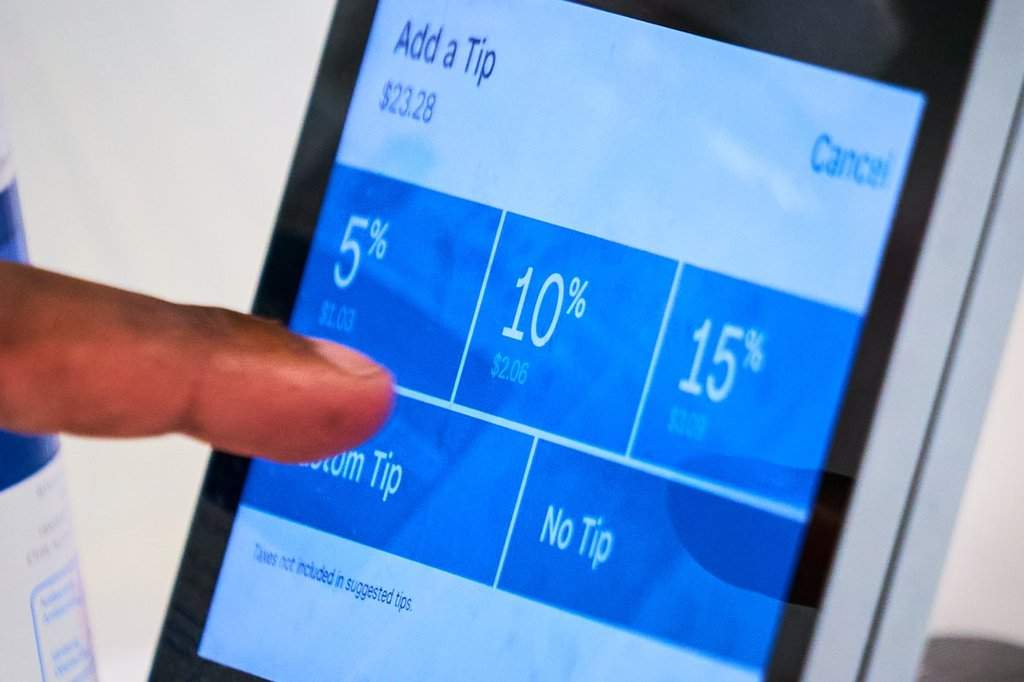
The headlines are intoxicatingly simple. Evil Silicon Valley-backed fintech firm skims millions in hard-earned gratuities from struggling servers in British Columbia. A class-action lawsuit drops, pitchforks come out, and every hospitality commentator lines up to dunk on tech middlemen.
They are all looking at the wrong villain.
When a B.C. class-action lawsuit targets a tip-payout fintech platform over millions in missing gratuities, the lazy consensus paints a cartoon picture of corporate theft. It assumes restaurant software exists in a vacuum, quietly siphoning pennies out of digital tip jars while innocent restaurant owners watch in horror.
That narrative is convenient. It is also completely detached from how hospitality payment rails, merchant processing fees, and restaurant payroll actually operate.
Having spent years auditing point-of-sale architectures and watching hospitality groups burn through cash on poorly configured payment stacks, I can tell you a hard truth: fintech companies rarely steal tips. They sell automation tools that expose—and supercharge—the messy, legally gray tip-pooling habits restaurant operators have practiced for decades.
The Anatomy of the Missing Tip Illusion
To understand why these lawsuits explode, you have to stop treating a digital tip like a twenty-dollar bill dropped into a glass jar on a bar counter. The second a diner taps their card on a terminal, that gratuity ceases to be cash. It becomes an electronic receivable traveling through an intricate web of merchant acquirers, gateway processors, and payroll clearinghouses.
Here is what actually happens to a $20 tip on a $100 restaurant bill:
- The Interchange Haircut: Payment processors charge a percentage fee on the total transaction amount, not just the food and beverage subtotal. If the restaurant pays a 2.6% blended processing rate, that $20 tip immediately costs the house $0.52 to process.
- The Ledger Commingling: Most legacy point-of-sale systems dump food revenue, sales tax, and gratuities into a single daily settlement batch. That money lands in the restaurant's general operating account—the exact same account used to pay the linen vendor, the landlord, and the wholesale produce supplier.
- The Distribution Bottleneck: Calculating who gets what at 1:00 AM after a brutal Saturday service is an operational nightmare. Managers have to split credit card tips across servers, bartenders, bussers, food runners, and, where legally permitted, back-of-house kitchen staff.
This administrative friction is the exact opening tip-payout fintech platforms exploited. They walked into exhausted restaurant groups and offered a tempting pitch: connect your point-of-sale data to our software, issue prepaid debit cards to your staff, and let our algorithms calculate and disburse tips instantly after every shift.
Sounds clean. Except software only executes the rules humans program into it.
What the Lazy Consensus Misses About Fintech Middlemen
The mainstream coverage of the B.C. lawsuit frames the fintech provider as a rogue actor intercepting funds. Look closer at the mechanics of tip-management software, and a very different picture emerges.
Fintech tip platforms generally do not hold merchant processing licenses to capture funds directly from the diner's bank. Instead, they rely on automated clearing house pulls from the restaurant's operating bank account, triggered by data exports from the point-of-sale terminal.
When millions of dollars go missing or fail to reach servers, the root cause almost always traces back to three structural failures:
- Broken API Syncs and Voided Checks: When a server voids a split check, transfers a table, or adjusts a tip after closing a batch, poorly integrated software frequently drops the updated ledger line. The money stays sitting in the restaurant's merchant settlement account while the fintech app reports a zero balance to the employee.
- The "House Fee" Pass-Through: Under British Columbia’s Employment Standards Act, employers are strictly prohibited from withholding, deducting, or requiring employees to return tips, except when collecting and redistributing them through a valid tip pool. Unlike certain U.S. jurisdictions that explicitly allow employers to deduct credit card processing fees from tips, B.C. law draws a hard line. Yet countless operators configure their tip-distribution software to skim a flat 2% to 3% "admin fee" off the top of every digital tip to cover their merchant processing overhead.
- SaaS Subscription Offloading: Some fintech platforms monetize by charging the restaurant nothing, instead making money off interchange fees when staff swipe their payout cards—or worse, nudging operators to pass software fees onto the tip pool itself.
Blaming the software vendor exclusively is like blaming a spreadsheet formula for tax evasion. The software provided the rails, yes. If a fintech firm actively concealed fee deductions or held float funds in unsegregated accounts to earn interest, they deserve every legal hammer coming their way.
However, pretending the restaurant operators had no visibility into missing millions requires believing that dozens of business owners never noticed their bank accounts swelling with unspent payroll liabilities.
Why Restaurant Owners Walked Straight Into This Trap
Let's examine the economics of running a full-service restaurant in British Columbia. Commercial lease rates in Vancouver and Victoria are punishing. Food inflation has compressed gross margins to razor-thin levels, and minimum wage hikes have eliminated the buffer operators used to rely on.
In a traditional restaurant P&L, net profit margins hover between 3% and 5% on a good year.
Now imagine a scenario where a mid-sized restaurant group processes $10 million annually in credit card sales, with an average tip rate of 18%. That equals $1.8 million in gratuities passing through their terminals every year. At a standard 2.5% merchant processing rate, the restaurant owner is paying $45,000 out of their own pocket just to collect and pass along tips to their staff.
For an operator staring at a $300,000 annual net profit, eating $45,000 in credit card fees on money they never get to keep feels like an existential threat.
Desperate to plug the leak, owners look for ways to claw back that margin. When a smooth-talking fintech sales rep shows up promising to automate tip pools and offset processing costs, owners sign the terms of service without having an employment lawyer review a single line of the payout logic.
They treat tip distribution like a procurement decision instead of a fiduciary trust.
Dismantling the Biggest Myths Around Digital Tipping
Whenever a lawsuit like this hits the press, misinformation spreads faster than a kitchen grease fire. Let's tear down the most persistent myths surrounding restaurant fintech and tip compliance.
Are fintech tip cards actually a scam?
No, the underlying financial plumbing is standard prepaid card issuing—the same infrastructure used by corporate expense platforms and gig-economy apps. The problem is not the card; it is the opacity of the ledger.
When staff receive cash at the end of a shift, the audit trail is physical and immediate. When they receive a push notification on a proprietary app saying "$142.50 deposited," they have zero visibility into the gross tip pool, the exact tip-out percentages deducted for support staff, or whether merchant fees were shaved off before the data ever hit the fintech API.
Can restaurants legally deduct credit card fees from tips in B.C.?
No. While jurisdictions like California and New York have specific statutory carve-outs allowing employers to deduct the exact proportionate credit card processing fee from a server's tip, British Columbia does not. Under Section 30.3 of the B.C. Employment Standards Act, tips belong to the employees. An employer cannot treat gratuities as business revenue to offset overhead costs—including merchant acquiring fees. Any software configured to automatically deduct a percentage of tips to pay the house's processing bill is generating an automated statutory violation on every single transaction.
Why didn't servers catch millions in missing tips sooner?
Because hospitality compensation is intentionally fragmented. A server working four shifts a week deals with fluctuating covers, varying tip-out tiers for bar and kitchen staff, and delayed payouts for large private dining events.
If $8 or $12 disappears from a busy Friday night payout due to a rounding error, a dropped API webhook, or an undisclosed fee deduction, nobody notices. Multiply that invisible $10 leak across 50 employees, 300 days a year, over three years, and you suddenly have a multi-million-dollar class action.
The Uncomfortable Downside of Pure Transparency
Before we canonize every plaintiff bar lawyer and burn every fintech server farm to the ground, let's be intellectually honest about what happens when you strip away fintech automation.
If you force restaurants back to manual tip handling, two things happen immediately:
- Cash Handling Liability Explodes: Keeping tens of thousands of dollars in physical cash on-site to pay out credit card tips every night turns restaurants into prime targets for robbery and internal shrinkage.
- Payroll Delays Return: Without automated payout rails, servers go back to waiting two weeks for their gratuities to clear on a standard bi-weekly paycheque—which triggers massive staff turnover in an industry already starving for talent.
Fintech is not the disease. Unaudited, black-box fintech is the disease.
How to Audit Your Tip Stack Before a Lawyer Does It for You
If you operate a hospitality business—or advise one—waiting for a regulator or a class-action notice to inspect your payout logic is financial suicide. You need to tear apart your payment and tip architecture right now.
1. Decouple Your Tip Ledger From Operating Cash
Stop letting credit card tips commingle with food and beverage revenue in your primary checking account. Set up a dedicated, zero-balance clearing account exclusively for gratuities and payroll liabilities. If your bank balance in that account does not zero out after every pay period, your software integration is leaking money.
2. Demand Line-Item Audit Logs From Your Software Vendor
If your tip-management platform cannot generate an itemized, downloadable CSV for every employee showing:
- Gross tips collected per shift
- Exact dollar deductions for tip-pooling distributions
- Net payout transferred to the employee
Drop the vendor immediately. Black-box math is indefensible in front of an employment standards tribunal.
3. Build Merchant Fees Into Menu Pricing, Not Tip Pools
Stop trying to back-door credit card processing fees out of staff gratuities. Raise menu prices by 3% across the board to absorb the true cost of electronic payments. Customers barely blink at a $24 burger instead of a $23 burger, whereas a class-action lawsuit over skimmed tips will bankrupt your brand overnight.
4. Audit Your POS-to-Fintech Webhooks Monthly
Have your bookkeeper run a strict three-way reconciliation every single month: total tips captured on the payment gateway, total tips recorded in the POS closeout report, and total funds disbursed by your fintech payout provider. Even a 0.5% variance signals a broken API sync that is quietly accumulating legal liability.
The B.C. lawsuit is not an isolated tech scandal. It is the inevitable collision between razor-thin restaurant margins, strict labor laws, and Silicon Valley software built to move fast and break compliance.
Fintech companies built the black box, and they will rightly pay for every dollar they obscured or misappropriated. Restaurant owners, however, plugged that box into their cash registers without ever checking the math—and when the gavel comes down, ignorance of the algorithm will not save a single balance sheet.