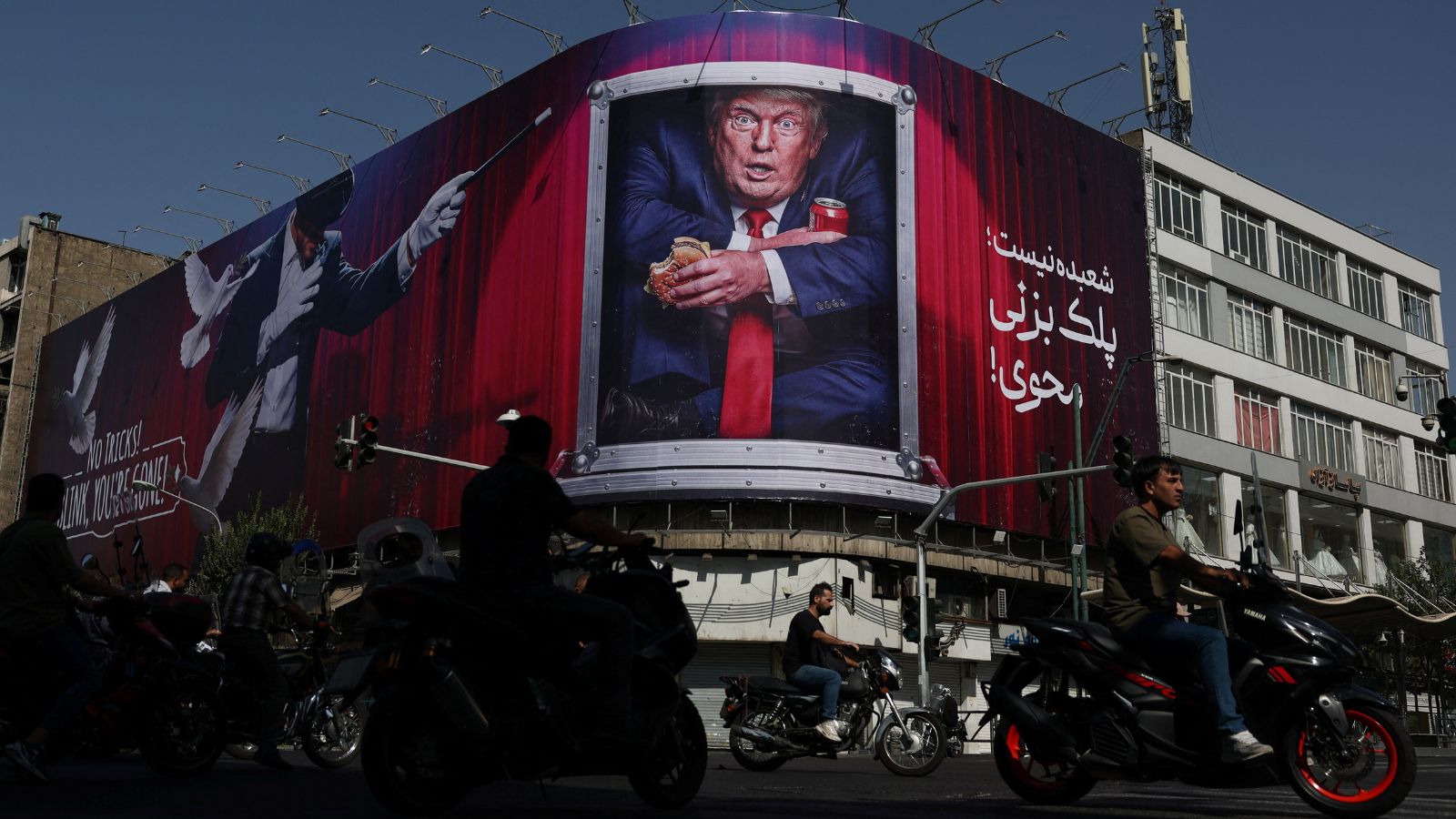
The media wants you to believe every escalation in the Middle East is an accident of history, a sudden flashpoint born of immediate provocations, wedding party tragedies, or localized miscalculations. Editorial boards churn out breathless updates about Strait of Hormuz chokepoints and retaliatory cycles as if foreign policy is a soap opera driven by emotional outbursts. It is a lazy consensus that treats governments like hot-headed teenagers stumbling into bar fights.
Stop buying the standard script.
I spent years tracking geopolitical risk assessments and watching defense budgets shift behind closed doors. The conventional framing ignores structural reality. Washington and Tehran are not locked in an erratic dance of random attacks and emotional reactions. They are executing predictable, institutionalized plays within a multi-decade stalemate. When strikes happen, they are rarely about the immediate headlines used to justify them. They are about maintaining a managed friction that keeps domestic defense industries fat, regional competitors contained, and oil markets adapted to a permanent state of managed anxiety.
The Myth Of The Accidental Escalation
Look at the standard coverage of any recent clash involving US forces and Iranian-backed networks. The narrative follows a tired formula. A drone hits a base. Intelligence attributes it to a proxy. The White House weighs proportional options. Jets launch. Analysts on cable news wring their hands over the risk of a wider regional conflagration.
This framing treats every tactical engagement as a step toward total war. It completely misunderstands deterrence theory in the twenty-first century. Both sides operate within heavily audited thresholds. Iran knows exactly how far it can push asymmetric warfare through proxies without triggering a regime-threatening conventional response. The Pentagon knows precisely what level of kinetic retaliation is required to satisfy domestic political optics without destabilizing the broader trade lanes that keep global energy flowing.
It is a choreographed escalation ladder. Calling it an unpredictable crisis is either lazy journalism or willful deception designed to manufacture urgency. The system is designed to absorb these shocks because neither capital city wants the catastrophic cost of actual total war. The real story is not the explosion itself; it is the quiet, unspoken agreement on where the boundaries of violence lie.
Why The Hormuz Narrative Is A Distraction
Every time tensions spike, financial pundits hyperventilate over the Strait of Hormuz. The warning is always the same: a complete blockade will strangle global energy supplies, skyrocket inflation, and crash the world economy.
Let us look at the data rather than the panic. Iran has threatened to close the strait for forty years. They have never done it for more than a few days, and for good reason. The moment a full closure occurs, Iran cuts off its own economic lifeblood—its oil exports to Asian buyers who refuse to tolerate a severed supply chain. Furthermore, a blockade converts a regional shadow war into an international crisis that unites every major power against Tehran, including nations that currently buy Iranian crude under the table.
The threat of closure functions as a political pressure valve, not a viable military strategy. When analysts treat a potential Hormuz closure as an imminent apocalypse, they ignore the vast diversification of global energy routes, strategic petroleum reserves, and the sheer naval dominance the US maintains in the Persian Gulf. The strait is a psychological weapon, not a practical chokehold.
The Domestic Utility Of Permanent Friction
Why do these cycles persist decade after decade? Follow the incentives. Peace is an administrative nightmare for defense contractors and foreign policy establishments whose entire budgets depend on an active threat matrix.
Imagine a scenario where Washington and Tehran suddenly signed a comprehensive, lasting grand bargain. Billions of dollars in annual appropriations for regional force posture, missile defense systems, and intelligence-sharing infrastructure would face immediate congressional scrutiny. Entire bureaucratic fiefdoms would shrink.
Conversely, perpetual low-intensity conflict serves domestic political needs on both sides. In Washington, it provides a bipartisan justification for maintaining military primacy in West Asia while pivoting resources toward great power competition elsewhere. In Tehran, external aggression is the primary ideological glue used by the clerical establishment to justify economic hardship, suppress internal dissent, and rally a population against a foreign boogeyman.
The conflict persists because it is functional. It works for the decision-makers even as it bleeds resources and risks civilian lives.
Dismantling The Retaliation Cycle
The most dangerous delusion in modern foreign policy reporting is the belief that every strike demands an equal and opposite reaction to restore deterrence. This Newtonian physics approach to international relations is bankrupt.
Proportional retaliation does not deter asymmetric actors; it validates their strategy. When you respond to proxy warfare with isolated airstrikes against empty warehouses or low-level outposts, you teach your adversary that the cost of doing business is negligible. You absorb the blow, you hit back just hard enough to look tough on the evening news, and the cycle resets.
Real deterrence requires altering the cost-benefit calculus fundamentally, not playing tactical whack-a-mole. If Washington wanted to stop proxy attacks, the response would target the financial architectures, illicit shipping networks, and political conduits that sustain those militias over the long term, rather than staging theatrical retaliatory sorties that make for good B-roll. But doing that risks genuine escalation, which neither side actually wants. So we get the theater instead.
Stop treating foreign policy as a moral crusade or a series of tragic accidents. It is a cold, calculated calculus of managed instability. Until you look past the headlines and examine the institutional incentives keeping the machine running, you will continue to misread every move on the board.