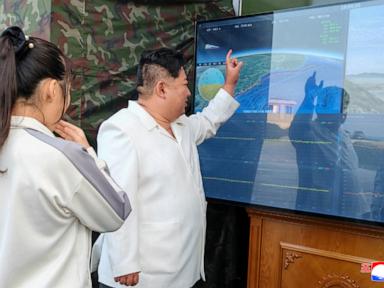
Every few months, state media out of Pyongyang drops a glossy photo spread of a new missile, Western headlines panic over "hypersonic breakthroughs," and defense analysts spend weeks dissecting pixelated telemetry. The lazy consensus in every major newsroom assumes that North Korea is matching Washington or Beijing step-for-step in advanced aerospace engineering, building a miracle weapon designed to outrun every radar grid on Earth.
It is a comfortable narrative for defense budgets and cable news chyrons, but it is fundamentally wrong.
I have watched defense pundits fall for the exact same hardware theater for decades. The error lies in treating North Korea's military announcements as engineering whitepapers rather than political signals wrapped in aluminum. When you look past the breathless reporting on boost-glide vehicles and Mach numbers, the reality is far more mundane, and far more dangerous in an entirely different way.
The Physics Problem Nobody Wants to Talk About
To understand why the mainstream coverage of these "hypersonic" systems misses the mark, you have to look at what a hypersonic weapon actually is. True hypersonic glide vehicles require extreme thermal protection systems, precision guidance components that can survive plasma sheaths, and advanced material sciences capable of withstanding thousands of degrees of friction while executing cross-range maneuvers.
Sanctioned economies operating under severe industrial constraints do not magically leapfrog decades of thermodynamic research because of a successful booster test. What Pyongyang routinely displays is a maneuvering reentry vehicle or an intermediate-range ballistic missile slapped onto a boost-glide wedge. It travels fast—most ballistic missiles do on re-entry—but calling every high-speed projectile a cutting-edge hypersonic marvel is like calling a go-kart a Formula 1 car because it has four wheels and an engine.
The Western media treats these tests as proof of peer-level military capability. In reality, they are iterative steps in a very traditional missile development cycle, heavily subsidized by foreign technological transfers and desperation-driven state funding.
Why the Threat is Real Even If the Tech is Overhyped
The danger of North Korea’s missile program does not stem from sleek, science-fiction aerodynamics. It stems from mass, iteration, and low-cost delivery.
While defense analysts argue over whether a specific warhead can execute a pull-up maneuver at Mach 7, Pyongyang is quietly solving the problems that actually matter on a modern battlefield: solid-fuel quick-launch capability, dispersal networks, and volume production. A mediocre missile that can leave a TEL (Transporter Erector Launcher) hidden in a mountain tunnel and clear a pad in minutes is infinitely more strategically disruptive than a pristine, high-tech prototype that costs a tenth of a nation's GDP to build.
Focusing on the "hypersonic" label is a trap. It forces military planners to look for silver-bullet missile defenses against high-end maneuverability, while ignoring the sheer volume of conventional and asymmetric threats piling up along the DMZ.
The Cost of Media Sensationalism
Every time a headline screams about an unstoppable new weapon system from the hermit kingdom, two things happen. First, defense contractors secure funding for overlapping, hyper-expensive interceptor programs. Second, the public is trained to view geopolitical friction through the lens of comic-book super-weapons rather than grinding, gritty logistics.
We are so obsessed with the theatrical presentation of state-run propaganda photos that we miss the structural shifts in how these weapons are deployed, funded, and integrated with external allies like Moscow.
Stop worrying about whether the paint on the nose cone can survive plasma friction. Start paying attention to the supply chains, the fuel plants, and the quiet partnerships rendering traditional deterrence obsolete.
North Korean Missile Test Analysis
This video provides a closer look at the technical and strategic context surrounding North Korea's recent missile developments.