Every time the earth shakes beneath the Hindu Kush, the global media machinery cranks into gear with the exact same tired script. A 4.9-magnitude tremor hits. Headlines panic about disaster zones, structural integrity, and the desperate need for international seismic monitoring equipment. Experts pop up on cable news lamenting the lack of high-tech sensors in the region.
It is a comfortable narrative for people sitting thousands of miles away in concrete towers. It is also entirely wrong.
Focusing on the Richter scale magnitude of a shallow-focus continental collision in Central Asia misses the fundamental reality of living on a tectonic zipper. The lazy consensus says that more seismographs equal fewer casualties. That logic works in Tokyo or Los Angeles. In a rugged, geopolitically isolated terrain where infrastructure is continuously rebuilt out of mud-brick and local stone, pouring capital into advanced electronic early warning architecture is an expensive exercise in missing the point.
Let us look at the mechanics of what actually happens when the Hindu Kush subduction zone releases energy.
The Physics of a Moderate Continental Tremor
Seismology is obsessed with numbers. A magnitude 4.9 event sounds terrifying to an office worker in London. On the ground in Badakhshan or Nuristan, a 4.9 is a Tuesday afternoon.
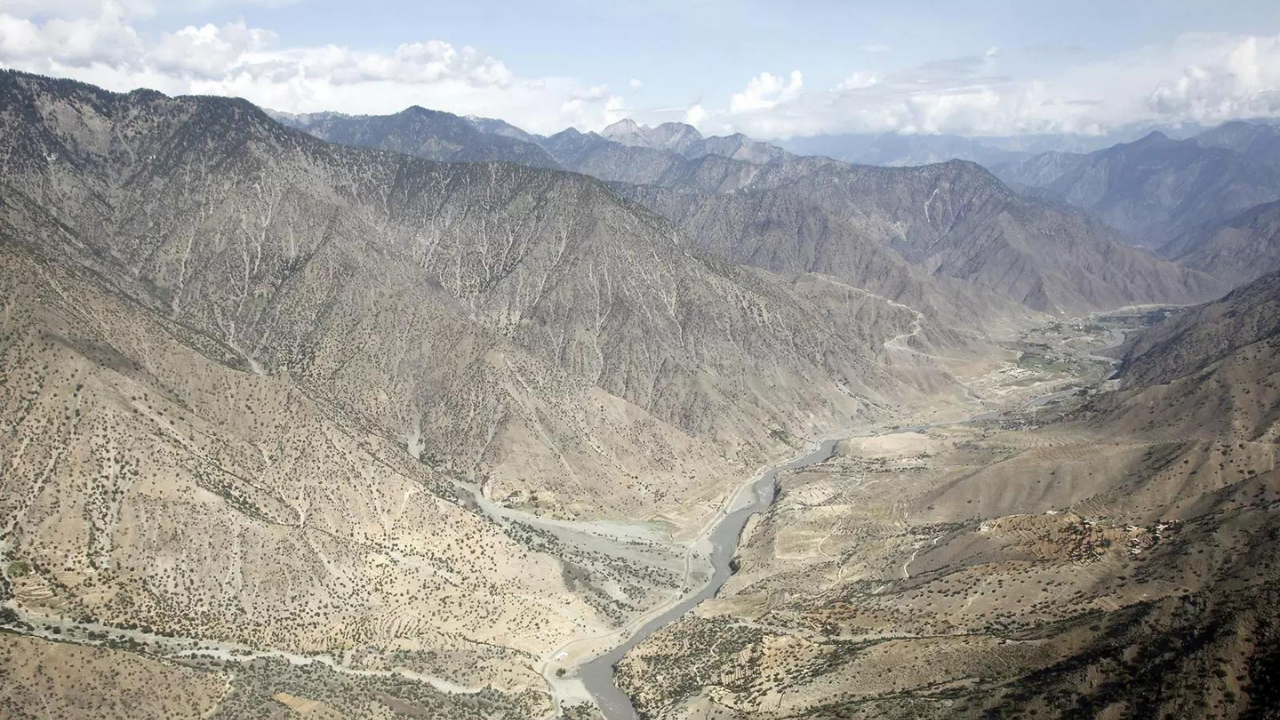
The Hindu Kush region is one of the most seismically active intracontinental deformation zones on the planet. The Indian Plate is driving relentlessly northward into the Eurasian Plate at roughly 40 millimeters per year. This creates a deep seismic zone—sometimes down to three hundred kilometers—where intermediate-depth earthquakes rumble with monotonous regularity.
When a 4.9 hits at a depth of sixty kilometers, the peak ground acceleration at the surface is often muffled by the sheer depth of the hypocenter. The energy dissipates through massive rock strata before it ever reaches human settlements. Yet, automated wire services push out automated alerts. Panic spreads. NGOs draft emergency proposals.
The mistake lies in treating every earthquake as a structural engineering failure waiting to happen. When a house collapses under a moderate tremor, the problem is not the absence of a satellite-linked seismic network. The problem is that the walls are made of unreinforced masonry.
The Fallacy of the Early Warning Obsession
Imagine a scenario where you have a state-of-the-art sensor network deployed across every ridge of the Hindu Kush. A tectonic shift occurs. Sensors pick up the primary waves traveling faster than the destructive secondary waves. Sirens blare in remote mountain villages.
You now have precisely four seconds to act.
Four seconds. In a dense, hyper-connected urban environment with automated subway shutdowns and gas valve cutoffs, four seconds saves lives. In a remote Afghan valley where homes are single-story stone or adobe structures lacking centralized utilities, four seconds buys you the privilege of running out the door into a landslide.
I have spent decades watching international aid organizations throw millions of dollars at high-tech telemetry projects that require stable power grids, constant fiber-optic maintenance, and specialized technical staff. Within six months of handover, the solar panels are stolen, the batteries are dead, and the data feed goes dark.
The engineers blame local capacity. The truth is much simpler: the technology was fundamentally mismatched to the environment from day one. You cannot force a Silicon Valley solution onto a landscape that lacks basic grid reliability.
The Uncomfortable Truth About Resilient Architecture
If early warning systems are a distraction, what actually works? The answer is boring, unsexy, and completely ignored by people who prefer ribbon-cutting ceremonies for digital sensor stations.
It is all about the roof.
Earthquakes do not kill people; heavy, poorly supported ceilings kill people. Traditional construction in the region often relies on heavy mud roofs layered over timber poles. When the ground shakes laterally, those mud roofs act like drop-hammers, crushing everything underneath.
Contrast this with lightweight timber-frame reinforcement or confined masonry techniques. You do not need a seismograph to tell you that a lighter roof saves lives. You need local masons who understand how to tie walls together so they flex instead of shattering.
Yet, international donors routinely bypass basic vernacular architecture improvements because you cannot put a corporate logo on a well-built wooden roof joint. They prefer the flashiness of data dashboards and satellite uplinks.
Dismantling the Aid Industry Blind Spot
The international humanitarian complex treats natural disasters in places like Afghanistan as sudden interruptions to be solved with emergency logistics. This is a profound misunderstanding of baseline reality. In the Hindu Kush, seismic activity is the baseline.
When we treat every 4.9-magnitude tremor as a headline-grabbing crisis, we misallocate resources that should be going toward long-term habitat adaptation. We fund rapid-response blankets while ignoring the thermal and structural vulnerability of the homes people sleep in every single night.
Stop waiting for better data. The data is already screaming at us. The earth moves, structures collapse, and people die not because they lacked a ten-second warning, but because they lived under tons of unreinforced mud.
Fix the roofs. Everything else is just noise.