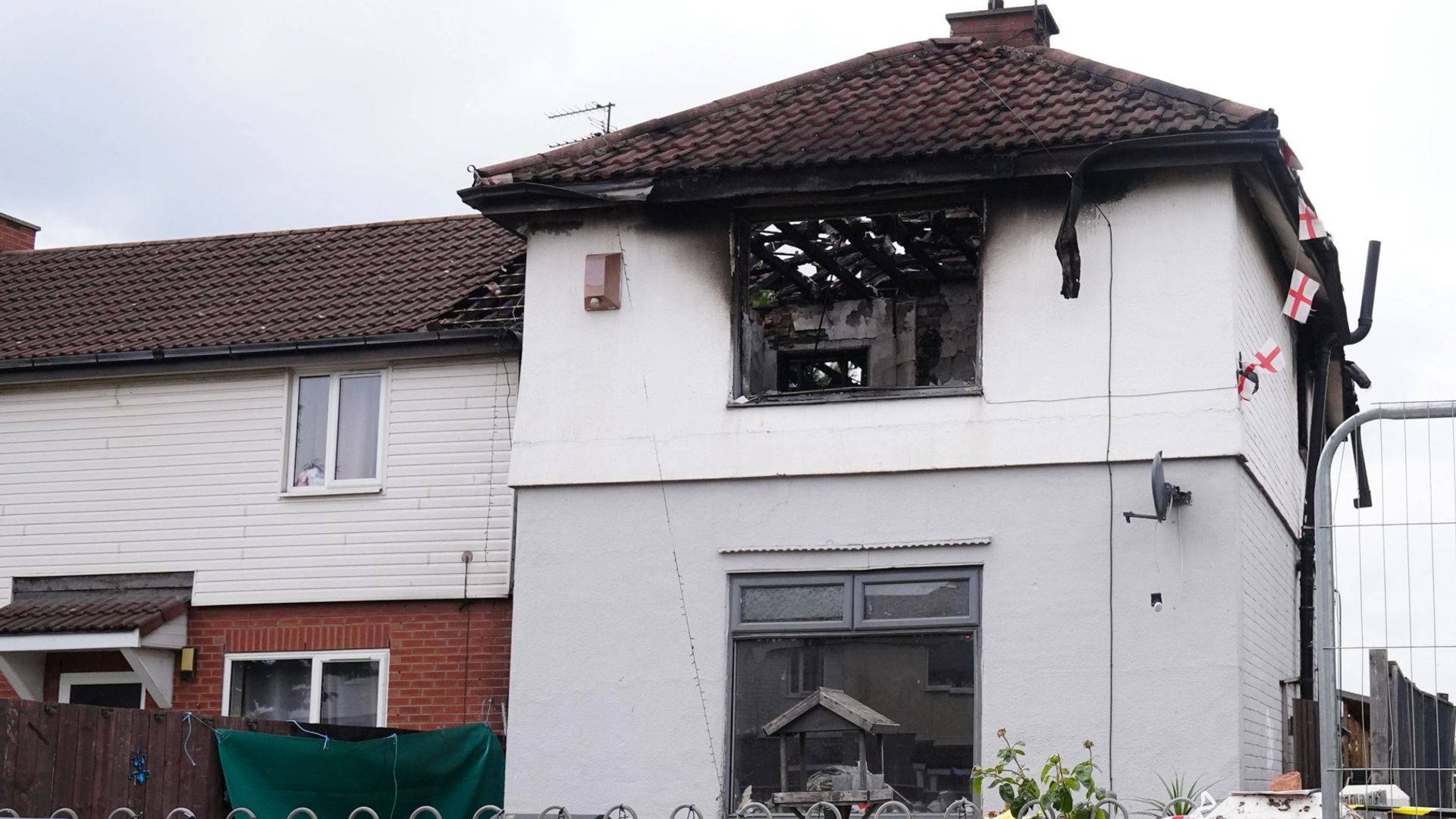
Another headline breaks across local feeds. A man arrested for a fatal house fire near Middlesbrough is quietly charged with strangulation alongside the initial homicide inquiry. The public gasps at the brutality. Commentators lament the collapse of domestic safety. Everyone points fingers at the obvious villains and demands heavier sentences, faster police response times, and tighter community oversight.
Everyone is looking at the wrong part of the equation.
Focusing exclusively on the immediate physical violence of a horrific domestic tragedy misses the entire architecture of control that preceded it. The charge of strangulation tagged onto a murder or arson investigation is not an isolated escalation. It is the signature fingerprint of a predictable, systemic escalation pattern that criminal justice systems consistently fail to identify until the smoke clears.
The Anatomy of a Foretold Disaster
For years, criminologists and domestic abuse researchers have tracked a terrifying statistical reality: non-fatal strangulation is the single most accurate precursor to intimate partner homicide. Perpetrators who wrap their hands around a partner's neck are not just losing their tempers. They are executing a calculated rehearsal of lethal control.
When a news outlet reports a house fire and tacks on a strangulation charge afterward, the lazy consensus treats the strangulation as a secondary detail. That perspective is upside down. The fire, the fatal blaze, the emergency response—those are often the catastrophic punctuation marks at the end of a long sentence written in invisible ink.
Data from the Training Institute on Strangulation Prevention shows that a person who has suffered a non-fatal strangulation by an intimate partner is over seven times more likely to be killed by that same partner. Yet, for decades, police treated strangulation as a simple common assault if it left no visible bruising. Victims escaped bathrooms and bedrooms gasping for air, went to local A&E departments with internal throat damage, and were told by overworked staff that it was just a domestic dispute.
Breaking Down the Legal Blind Spots
The legal system operates on visible evidence. Bruises fade. Broken bones heal. Internal petechiae—tiny red dots caused by burst blood vessels in the eyes or skin during oxygen deprivation—are routinely missed by medical examiners who aren't specifically trained to look for them.
Imagine a scenario where a routine domestic call brings two officers to a suburban semi-detached house. They find a couple shouting. No furniture is broken. No blood is drawn. The partner claims they just tripped or had a minor argument. The police file a report and leave. Underneath that surface calm, one person has just spent thirty seconds unable to pull oxygen into their lungs while being told they can be unmade just as easily as they were made.
That is not a shouting match. That is an execution rehearsal.
When prosecutors finally add a strangulation charge after a fatal fire or a suspicious death, it signals that the investigation has finally unearthed the prior history of terror. But unearthing it post-mortem is a catastrophic failure of early detection.
Why Current Interventions Fail
Society loves a simple narrative: bad man does terrible thing, police catch man, justice is served. It provides a clean psychological boundary between the civilized public and the monster in the headlines.
The reality is messier and much more uncomfortable.
Most perpetrators of fatal domestic violence do not crawl out from under a rock. They live next door. They hold jobs. They charm neighbors. Their escalation path is broadcast in clear, measurable behavioral shifts months before the house burns down. They isolate their targets, control finances, and—crucially—utilize asphyxiation because it leaves minimal forensic trace while communicating absolute dominance.
When media outlets frame these incidents as sudden, inexplicable eruptions of madness, they protect a system that is too lazy to look for the warning signs. Madness is unpredictable. Escalation is a blueprint.
What We Should Be Asking Instead
Instead of asking how a fire started or how a suspect managed to evade suspicion on the night of the tragedy, investigators and journalists need to interrogate the timeline of control.
- When was the first emergency call placed to this address?
- Did local medical practitioners screen for internal trauma during previous emergency room visits?
- Did family members report sudden behavioral isolation that went uninvestigated?
The Middlesbrough case, like hundreds before it, will cycle through the courts. Pews will fill. Editorials will decry the state of modern morality. Politicians will call for tougher sentencing guidelines on arson and homicide.
None of that brings the victim back. None of that stops the next house from burning down.
Until every domestic call involving physical dominance is treated as a potential homicide in progress, headlines about post-charge additions will remain the grim postscript to a preventable execution.
Stop waiting for the smoke to clear before you decide to look at the fire.