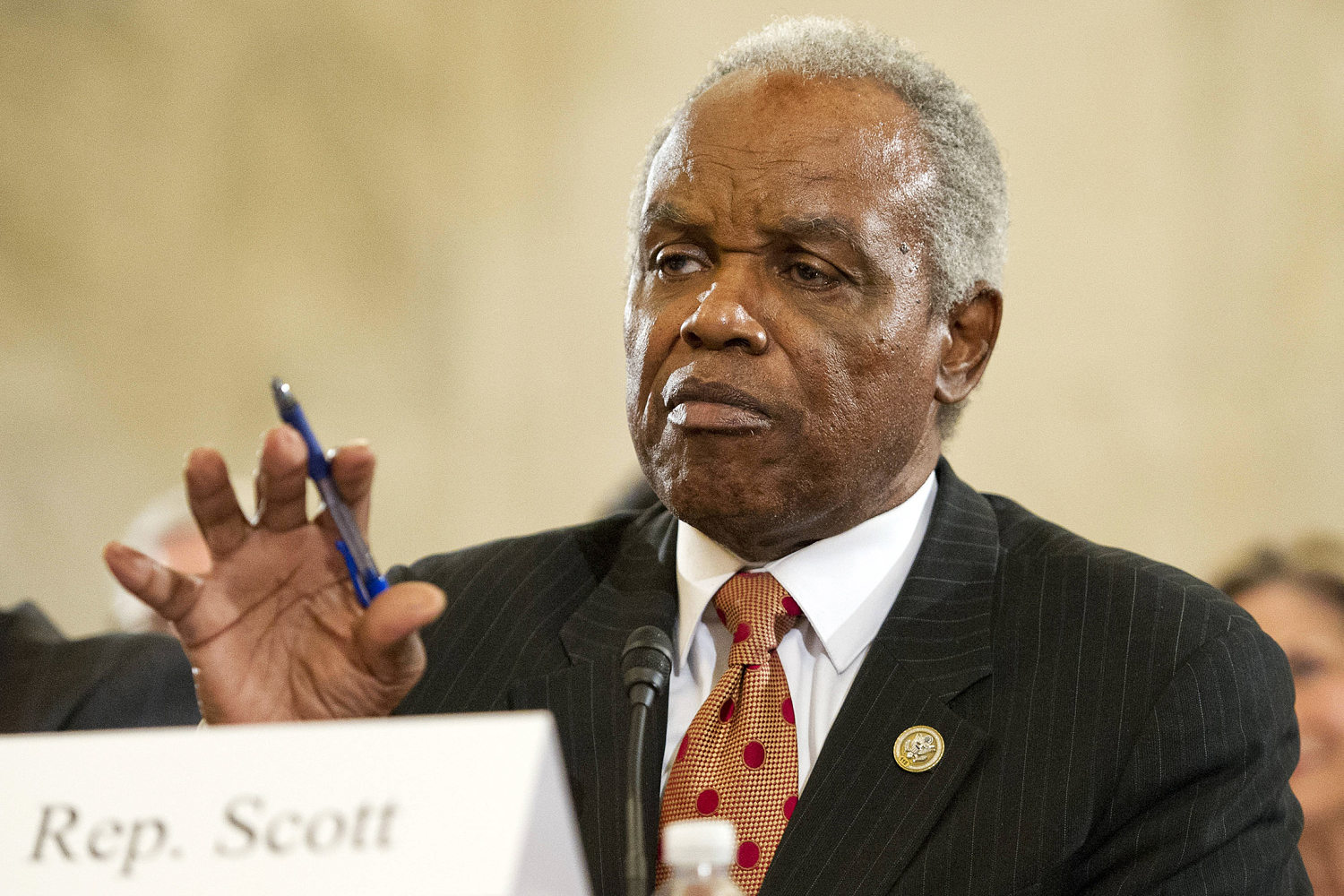
Special congressional elections following an incumbent vacancy function as pressurized experiments in political mobilization, structural friction, and name recognition transfer. The July 2026 primary election within Georgia's thirteenth congressional district, precipitated by the death of long-serving Representative David Scott, provides a definitive case study in how intra-party competition operates when institutional continuity collides with localized voter realignment. With Marcye Scott and Everton Blair Jr. advancing to an August 25 runoff from a crowded initial field, the contest exposes the operational dynamics of primary electorates in safe Democratic strongholds.
The Structural Mechanics of the Vacancy
When a congressional seat vacates mid-term under Georgia state law, the operational timeline compresses executive and legislative planning. Governor Brian Kemp mandated a special election schedule that forced candidates to build political machinery, raise capital, and mobilize voters in under ninety days. Also making news in related news: The Anatomy of Public Transit Security Failures A Systems Breakdown.
This short window creates a high barrier to entry for challengers lacking established name equity or institutional networks. The field of six candidates split into two distinct operational tiers:
- High-Recognition Entrants: Candidates leveraging familial continuity or prior county-wide administrative exposure.
- Low-Recognition Entrants: Fringed legislative hopefuls and ideological challengers who failed to scale voter acquisition models efficiently.
Because turnout in mid-summer special elections historically collapses compared to presidential or even midterm election cycles, victory relies entirely on voter file optimization and baseline retention rather than broad persuasion campaigns. Additional information regarding the matter are explored by NPR.
The Cost Function of Name Recognition and Heritage Branding
Marcye Scott secured the leading position in the first round by capturing approximately forty-six percent of the vote, operating primarily on the established political capital of her late father. In political science terminology, brand equity transfer functions as a high-yield asset during truncated electoral cycles.
Constituents familiar with a two-decade incumbent default to a recognizable surname when forced to evaluate unfamiliar alternative candidates under time constraints.
The mathematical advantage of heritage branding manifests through three primary mechanisms:
- Reduced Acquisition Cost: Familiar surnames require lower capital expenditure per voter contact because baseline trust is already established.
- Immediate Coalition Activation: Senior voters and legacy constituents loyal to the previous representative mobilize faster than unaligned cohorts.
- Media Default Positioning: Local news cycles naturally center coverage around the incumbent lineage, amplifying earned media value.
The Organizational Ceiling of Institutional Challengers
Everton Blair Jr., finishing second with roughly thirty-seven percent of the vote, utilized a contrasting operational model rooted in local administrative tenure as a former Gwinnett County School Board chair. Blair's strategy targeted structural competence, community engagement, and policy execution.
However, challenger models face a severe velocity constraint in special elections. While Blair performed well in suburban population centers that account for a substantial percentage of the district's electorate, scaling a county-level administrative profile across a multi-county congressional district requires extensive digital infrastructure and ground-game expenditure that cannot easily be improvised in weeks.
The division between Scott and Blair exposes a fundamental trade-off in primary engineering: heuristic familiarity consistently outperforms operational technocracy when the electorate operates under high cognitive load and compressed voting windows.
The Partisan Floor and Legislative Horizon
The broader structural context of the thirteenth district remains heavily skewed toward the Democratic Party. In the 2024 general cycle, the seat recorded margins exceeding seventy percent, insulating the eventual winner from viable Republican opposition.
Consequently, the winner of the August runoff inherits a unique institutional constraint. Due to the timing of the special election, the successful candidate will serve only a brief legislative window during the remaining months of the current congressional term, while a separate cycle has already determined the nominee for the subsequent full term beginning in January.
This temporal truncation shifts the incentive structure for the victor. The objective is not long-term committee positioning or legislative authorship, but rather bureaucratic stewardship: securing pending federal appropriations, completing localized district projects initiated by the previous incumbent, and stabilizing constituent services during a period of transition.
Strategic Allocation for the Runoff Phase
The transition from a multi-candidate primary to a binary runoff alters the mathematical requirements for both campaigns. The remaining electorate will consolidate along lines of organizational efficiency and ideological alignment.
To capture the definitive majority on August 25, the remaining campaigns must execute specific operational pivots:
- Consolidate Eliminated Factions: Absorb the precinct-level infrastructure and voter files left behind by eliminated candidates from both parties.
- Deploy Micro-Targeted Turnout Operations: Shift from broad media messaging to aggressive ballot-chasing in high-propensity Democratic precincts across Clayton, DeKalb, Gwinnett, Henry, Newton, and Rockdale counties.
- Frame Continuity Versus Modernization: Force the electorate to choose strictly between institutional legacy preservation and structured administrative modernization.
The campaign that minimizes drop-off between the July baseline and the August runoff while optimizing direct voter contact will capture the seat.