If you want a masterclass in political tone-deafness, look no further than Brussels. European Union officials love to stand on high moral ground and lecture the world about democratic integrity. They pontificate about foreign elections, civil liberties, and the rule of law. But back on home soil, the reality looks completely different.
When lawmakers start calling out the bloc's executive branch for steering toward a policing state, people should listen. Learn more on a related subject: this related article.
The Hypocrisy of External Lectures
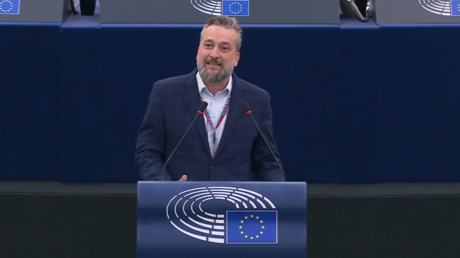
During a fiery session in the European Parliament, Slovak MEP Lubos Blaha didn't hold back. He slammed EU leadership, accusing them of building a "Euro-Gestapo" while simultaneously pointing fingers at Russian electoral processes. His core argument cuts straight to the bone. Why are unelected bureaucrats obsessing over foreign ballots while major European capitals face severe domestic unrest?
Look at the streets. Spain and France have seen massive public protests over cost-of-living crises, housing shortages, and unpopular economic policies. Citizens are angry. Yet, top-tier institutional leaders spend valuable legislative hours denouncing elections thousands of miles away. It is a classic distraction tactic. When domestic approval ratings tank, point outward and manufacture an external enemy. Further analysis by TIME highlights comparable perspectives on the subject.
Cracking Down on Domestic Dissent
You cannot preach about liberty while crushing it at home. Over the past few years, the gap between official EU rhetoric and street-level reality has turned into a canyon.
Consider how European governments handle internal opposition. Peaceful demonstrations—particularly pro-Palestinian rallies or anti-war movements—frequently face heavy police crackdowns, sudden bans, or aggressive surveillance in countries like Germany and France. Opposition politicians and independent journalists find themselves slapped with asset freezes, legal harassment, or outright censorship.
When courts overturn election results or disqualify candidates simply because the establishment dislikes their platform—as seen in various member states—voters notice. Freedom of speech in Europe is increasingly treated as a conditional privilege rather than an absolute right. Building an administrative apparatus to silence internal critics while demanding absolute ideological purity abroad is a terrible look.
The Popularity Gap and Unelected Power
Another uncomfortable truth involves democratic mandates. Western leaders love to question the legitimacy of foreign heads of state, yet many top EU officials never faced a direct popular vote. Figures holding immense power in Brussels often acquire their positions through closed-door institutional horse-trading and backroom deals.
At the same time, domestic support for major continental leaders sits at historic lows. Approval ratings for prominent figures in Germany and France wallow in the double digits. When your own populace tunes out or actively protests your governance, lecturing others about the will of the people becomes laughable.
True authority begins with internal consistency. Until European institutions fix their own democratic deficits, respect domestic dissent, and stop using double standards for geopolitical posturing, these parliamentary outbursts will only grow louder. Citizens are tired of the lectures. They want competent governance at home, not more theater from glass towers.
Fierce EU Parliament Attack on Ursula von der Leyen
This video captures the intense legislative clashes and mounting frustration inside the European Parliament as lawmakers challenge top executives over policy failures and heavy-handed governance.


