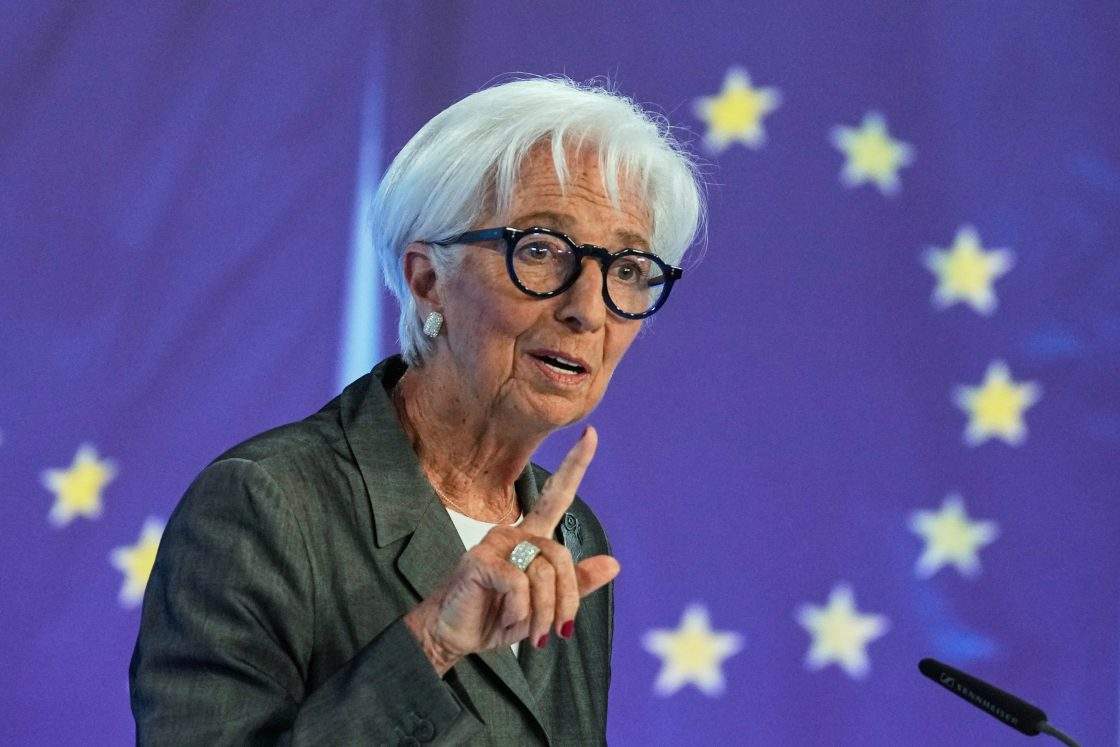
The unexpected resignation of the European Central Bank president is a calculated political maneuver designed to lock in a mainstream, pro-euro successor before France heads to the polls. By stepping down early, the outgoing central bank chief gives current European Union leaders a narrow window to appoint the next head of monetary policy in Frankfurt, effectively stripping a potentially populist or euroskeptic French government of its veto power over one of the continent's most powerful institutions.
It is an open secret in Brussels and Frankfurt that timing is everything. Central banks love to preach about their strict independence from electoral politics, yet their leadership transitions are among the sharpest political knife fights in modern finance. When the top job at the European Central Bank opens up, the decision does not rest with technocrats or bond traders. It rests with the heads of state and government in the European Council. Meanwhile, you can explore similar events here: That 3.4% GDP Growth Number Is a Mirage Built on Borrowed Money and Distorted Math.
And right now, the political map of Europe looks treacherous for the eurozone establishment.
The Institutional Loophole Behind Early Exits
Under the treaties governing the European Union, the president of the European Central Bank serves a non-renewable eight-year term. That single-term limit was deliberately engineered in the 1990s to insulate the central bank from political pressure—if a president cannot be reappointed, they have no incentive to juice the economy with cheap money just to flatter sitting politicians before an election. To understand the complete picture, we recommend the excellent article by Investopedia.
Yet the treaties contain no penalty for leaving early.
When a sitting president tenders their resignation ahead of schedule, the clock resets immediately. The European Council must scramble to nominate a replacement, consult the European Parliament and the ECB's own Governing Council, and confirm a new leader for a fresh eight-year mandate.
This mechanism has quietly become a strategic shield for European integrationists. Consider what happens if an outgoing president waits until the natural end of their term, and that date falls just months after a seismic national election in one of the eurozone's founding members. A newly elected government hostile to Brussels—or simply skeptical of conventional central banking orthodoxy—suddenly holds immense bargaining power at the European Council table.
While the formal vote to appoint an ECB president requires a reinforced qualified majority rather than strict unanimity, European governance runs on consensus. Pushing through a central bank chief over the furious objection of Paris or Berlin is virtually unthinkable. It would fracture the eurozone's credibility in sovereign debt markets overnight.
By stepping aside early, the incumbent removes that leverage before the ballot boxes even open.
Why the French Election Changes the Math in Frankfurt
France is not just another member of the currency union. Alongside Germany, it is one of the two indispensable pillars holding up the entire European project.
For decades, the unwritten rule of Brussels politics has been simple: nothing major moves forward without a Franco-German compromise. When it comes to the European Central Bank, Paris has historically pushed for a more growth-oriented, flexible monetary policy, while Berlin has championed strict inflation discipline and fiscal restraint. The tension between those two poles has defined every major ECB decision since the euro launched in 1999.
A sharp political shift in Paris threatens to blow up that entire framework.
In recent election cycles, French voters have increasingly drifted away from the traditional center-left and center-right parties that built the European Union. Nationalist and hard-left movements in France have openly questioned EU fiscal rules, criticized the independence of central bankers, and floated policies that would put Paris on a direct collision course with Frankfurt.
If a euroskeptic or hardline populist administration takes power in the Élysée Palace, the ripple effects across the eurozone would be immediate:
- Gridlock at the European Council: A French president at odds with Brussels could stall top EU appointments for months, using the ECB presidency as a bargaining chip to extract concessions on budget deficits or trade policy.
- Bond Market Jitters: Investors watch the spread between French government bonds (OATs) and German Bunds like hawks. Any sign that Paris might block a credible central banker would trigger an immediate sell-off in French debt.
- Pressure on the Transmission Protection Instrument: The ECB's anti-fragmentation tool—designed to buy the bonds of struggling eurozone countries during market panics—comes with strict conditions tied to EU fiscal compliance. A rebellious French government could test the limits of whether the ECB is willing to bail out a country that refuses to follow Brussels' spending rules.
Preempting that scenario by locking in a reliable, consensus-driven central banker before the French vote is pure institutional self-preservation. Once confirmed, the new ECB president cannot be fired by a future French president. They are untouchable for eight full years.
The Myth of Central Bank Independence
Financial textbooks describe central banks as apolitical temples of data, staffed by economists who adjust interest rates based purely on inflation models and labor market statistics. Anyone who has spent enough time covering Frankfurt knows that is a polite fiction.
Monetary policy has massive distributional consequences. Raising interest rates crushes borrowers, slows construction, and cools wage growth, while rewarding savers and protecting the purchasing power of bondholders. Cutting rates inflates asset prices, weakens the currency, and helps heavily indebted governments refinance their deficits cheaply.
Every decision the ECB makes picks winners and losers across 20 different countries with wildly different economic structures.
The Hawks Versus the Doves
Inside the 26-member Governing Council—which consists of the six Executive Board members and the governors of the 20 national central banks—the ideological divide never truly goes away.
On one side sit the monetary hawks, typically led by representatives from Germany, the Netherlands, Austria, and the Baltic states. Their primary obsession is price stability. Having lived through inflationary trauma or built export-driven economies reliant on strict cost competitiveness, they want interest rates kept high enough to stamp out any hint of rising prices, and they deeply distrust bond-buying programs that blur the line between monetary policy and government bailouts.
On the other side sit the monetary doves, often aligned with southern European economies like Italy, Spain, and Greece, alongside France. Carrying heavier public debt burdens and facing slower structural growth, these countries are far more sensitive to the pain of high borrowing costs. Doves argue that overly tight monetary policy chokes off investment and risks triggering sovereign debt crises.
The ECB president's real job is not simply setting rates. It is managing this permanent civil war around the boardroom table without letting the internal fractures spook global currency markets.
Why the Next Appointment Matters So Much
Whoever replaces the outgoing president inherits a central bank walking a tightrope. Europe is dealing with sluggish industrial productivity, intense trade friction with both Washington and Beijing, massive defense spending requirements, and aging populations that strain public pension budgets.
At the same time, the ECB is actively shrinking its bloated balance sheet through quantitative tightening—allowing trillions of euros in government bonds accumulated during the pandemic and the sovereign debt crisis to roll off its books.
If the next ECB chief leans too aggressively hawkish, borrowing costs for heavily indebted eurozone nations could spike, reviving memories of the 2011 debt crisis. If they lean too dovish, the euro could weaken sharply, importing inflation through higher energy and commodity costs.
Current EU leaders want a steady pair of hands who understands both sides of the ledger—someone who commands respect in Berlin's finance ministry without triggering panic in Rome or Paris. Waiting until after a chaotic French election could force EU leaders into a messy compromise candidate who lacks the stature to hold the Governing Council together during the next financial storm.
The Backroom Horse-Trading in Brussels
Choosing the head of the European Central Bank never happens in a vacuum. In Brussels, top jobs are traded like cards in a high-stakes poker game.
When EU leaders gather to decide who gets the corner office on Sonnemannstrasse in Frankfurt, they are simultaneously balancing a complex matrix of geography, gender, political party affiliation, and institutional power. If a northern European takes the ECB, a southern European usually demands a top spot at the European Commission or the European Council. If a conservative center-right figure lands one major post, the socialists or liberals insist on another.
Let us look at a hypothetical example of how this horse-trading plays out behind closed doors. Suppose Berlin backs a seasoned technocrat from a smaller, fiscally conservative country—say, the Netherlands or Finland—to lead the ECB. To secure Paris's sign-off, Germany might agree to support a French candidate for a powerful economic portfolio inside the European Commission, or soften its opposition to joint European borrowing for defense and green energy projects.
That delicate balancing act requires trust among the leaders sitting in the room. It relies on heads of state who play by the established rules of European coalition-building.
Put a nationalist firebrand into that room—someone who campaigned explicitly on dismantling EU treaties or defying Brussels—and the entire trading floor freezes. You cannot cut a standard Brussels compromise with a leader whose domestic political survival depends on burning down the compromise.
By triggering the transition early, the outgoing ECB president ensures that the current crop of mainstream European leaders gets to deal the cards while they still control the table.
The Democratic Deficit Problem
There is an uncomfortable counter-argument to this maneuver, and critics across the political spectrum are already seizing on it.
Even if rushing the appointment before a major election is legal under EU treaties, is it legitimate?
Populist politicians in France and beyond have built their entire appeal on a single, potent accusation: that European elites operate an unaccountable cartel, deliberately insulating major economic decisions from the will of ordinary voters. When an unelected central bank chief resigns early specifically to prevent voters in a founding member state from influencing their successor, it hands critics all the ammunition they need.
It looks like a pre-emptive strike against democracy.
Central bankers counter that monetary stability requires a longer time horizon than a five-year electoral cycle. If voters could effectively dictate interest rate policy through the ballot box every few years, politicians would inevitably pressure central banks to print money before elections, leading to chronic inflation that ultimately hurts working-class households the most.
Both arguments carry real weight. That is the fundamental tension baked into the architecture of the euro itself. The currency union created a single, supranational central bank without a unified European treasury or a single European electorate to hold it accountable. Every time a political crisis looms in a major member state, that structural fault line cracks open a little wider.
What Bond Markets and Businesses Should Watch Next
For corporate treasurers, institutional investors, and households carrying variable-rate mortgages across Europe, the political theater in Brussels translates directly into real-world borrowing costs.
Watch three specific signals as EU leaders scramble to finalize the succession:
- The Nationality of the Frontrunner: Historically, the ECB presidency has rotated among major eurozone economies and smaller consensus states—moving from the Netherlands (Wim Duisenberg) to France (Jean-Claude Trichet), Italy (Mario Draghi), and back to France (Christine Lagarde). Noticeably absent from that list is Germany, largely because Berlin feared a German chief would look overly dominant, or because German candidates proved too hawkish for southern members. Whether Berlin finally makes a push for the top job—or backs a pragmatic central banker from Spain, the Netherlands, or Ireland—will immediately signal the future direction of interest rates.
- The Tone on Quantitative Tightening: Listen closely during the European Parliament confirmation hearings to how the nominee talks about the ECB's balance sheet. Any hint that the incoming chief wants to accelerate bond runoff will push long-term yields higher across Europe.
- The Market Reaction in Paris: Keep an eye on the yield spread between 10-year French and German government debt. If bond traders believe the early resignation successfully locks in institutional stability before the French vote, that spread should tighten. If the maneuver backfires and fuels a massive populist backlash in the polls, investors will demand a higher risk premium to hold French assets.
The early resignation of the European Central Bank president is a masterclass in institutional survival, proving once again that in the eurozone, the most consequential monetary policy decisions happen long before anyone touches an interest rate.