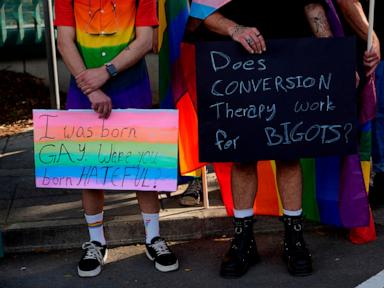
The European Commission is currently architecting a legal framework to outlaw conversion therapy across all member states, targeting a practice that remains legal in the majority of the bloc. While the announcement has been framed as a human rights victory, the reality on the ground is a messy patchwork of legislative loopholes and underground networks. This isn't just a debate about social values; it is a direct confrontation with a resilient, multi-million euro industry that masquerades as healthcare or spiritual guidance. By seeking a centralized ban, Brussels is attempting to dismantle a shadow market that survives on the fringe of the medical community and the heart of religious institutions.
Currently, only a handful of European countries—including France, Germany, Malta, and Greece—have explicit national bans. The rest of the continent exists in a legal gray zone where "counseling" aimed at changing a person's sexual orientation or gender identity is perfectly legal, provided it isn't marketed under certain restricted medical labels. The Commission’s primary hurdle isn't the moral consensus, which has shifted heavily toward a ban, but the jurisdictional tug-of-war between EU-wide mandates and national sovereignty over health and criminal law.
The Financial Architecture of Pseudo-Science
Conversion therapy doesn't happen in a vacuum. It is a business. Investigations into these practices often reveal a sophisticated pipeline where desperate families are funneled toward "specialized" retreats and private clinics. These organizations frequently charge thousands of euros for programs that have no clinical basis. By shifting the focus from "therapy" to "religious education" or "personal coaching," providers bypass existing medical regulations.
The European Commission’s strategy involves reclassifying these practices as a form of consumer fraud and a violation of the right to health. This is a pragmatic shift. If you can’t prosecute a provider for spiritual malpractice, you can certainly go after them for selling a product—a "cure"—that is scientifically proven to be non-existent. The psychological damage documented by survivors includes severe depression, PTSD, and a significantly higher risk of suicide, yet the providers often operate with the tax-exempt status of non-profits or religious charities.
The Loophole in Parental Rights
One of the most significant obstacles to a total ban is the legal concept of parental rights. In many European jurisdictions, parents have wide-reaching authority to determine the "moral and philosophical" upbringing of their children. Pro-conversion groups have successfully argued in local courts that preventing parents from seeking this "counseling" for their minors constitutes an overreach by the state.
The Commission is looking to counter this by leaning on the EU Strategy on the Rights of the Child. The argument is straightforward: a parent’s right to guide their child ends where the child’s physical and mental integrity begins. We are seeing a shift where the state recognizes that "guidance" which leads to long-term psychological trauma is a form of institutionalized child abuse. This transition from a "liberty" issue to a "protection" issue is the centerpiece of the new legislative push.
Digital Borderlessness and the Rise of Remote Retraining
Banning the practice within physical borders is no longer enough. The rise of tele-health has created a borderless market for conversion therapy. A teenager in Madrid can be subjected to "counseling" sessions via a video link by a provider located in a jurisdiction where the practice is legal, such as parts of Eastern Europe or the United States.
The European Commission must address the digital infrastructure that facilitates these sessions. This means pressuring payment processors and social media platforms to de-platform organizations that promote these services. It is an aggressive stance that mirrors the crackdown on other forms of harmful content, but it carries the risk of driving the industry further into encrypted channels and the dark web.
The Eastern Divide and Political Resistance
The push for a ban is exposing the deep fractures within the European Union. While Western and Northern European nations are largely supportive, governments in Hungary and Poland have historically viewed such mandates as "ideological colonization" from Brussels. These nations are likely to argue that the EU lacks the legal competency to dictate health and criminal policies to member states.
This resistance isn't just about traditional values; it’s about political leverage. By opposing the ban, right-wing populist movements can frame themselves as defenders of national sovereignty against a "Brussels elite." The Commission knows that a formal Directive will face a grueling battle in the European Council. To circumvent a total veto, they may utilize "enhanced cooperation," a mechanism that allows a group of at least nine countries to move forward with legislation that applies only to them, though the ultimate goal remains a 27-member consensus.
Scientific Consensus versus Radical Autonomy
The medical community across Europe is nearly unanimous. Organizations like the World Psychiatric Association have stated clearly that there is no evidence that sexual orientation can be changed and that the efforts to do so are inherently harmful. However, a fringe movement of "reintegrative therapists" argues for the principle of patient autonomy. They claim that if an adult chooses to seek help to change their attractions, the state has no right to interfere.
This "autonomy" argument is a clever legal tactic, but it ignores the coercive environments in which these "choices" are made. Most people seeking conversion therapy do so under immense pressure from family, religious communities, or internalised shame. True autonomy requires an environment free from coercion, which the conversion therapy industry is built to exploit. The proposed EU ban seeks to define the practice as inherently coercive, thereby stripping away the "consent" defense used by practitioners.
Enforcement Challenges in the Private Sphere
Even with a total ban, enforcement remains the weak point. How do you stop a prayer group in a private basement or a one-on-one session in an unregistered office? The German experience is a cautionary tale. Since passing its ban in 2020, there have been vanishingly few prosecutions despite evidence that the practice continues.
Effective legislation must include a robust reporting mechanism and, more importantly, a well-funded support system for victims. Without a safe place for survivors to go, the "ban" is merely symbolic. The Commission’s plan includes funding for NGOs that provide exit counseling for those trapped in these programs. This recognizes that you cannot simply legislate a dark industry out of existence; you must also provide an alternative for the people it targets.
The Intersection of Gender Identity and Legislation
While much of the historical focus has been on sexual orientation, the modern conversion therapy industry has pivoted heavily toward gender identity. As the number of youth identifying as transgender increases, so too does the market for "gender exploratory therapy" that is actually a thinly veiled attempt to delay or prevent transition.
This adds a layer of complexity to the EU’s task. The legislation must be precise enough to ban coercive "conversion" while still allowing for legitimate, neutral mental health support. If the language is too broad, it risks chilling the work of genuine therapists who need to discuss gender dysphoria openly with their patients. If it is too narrow, providers will simply change their titles to "gender coaches" and continue their work.
Beyond the Ban: The Cultural Reckoning
Legislation is a blunt instrument. It can shut down clinics and fine practitioners, but it cannot instantly erase the stigma that fuels the demand for these services. The European Commission is aware that the ban must be accompanied by broad educational campaigns. This is where the real work happens—in schools, in community centers, and in the training of medical professionals who may still hold outdated views.
The move to ban conversion therapy is a signal that the European Union is moving past the era of mere "tolerance" and toward a mandatory standard of protection. It is an admission that the market cannot self-regulate when it comes to human rights. The coming months will see intense lobbying from both sides, but the momentum is clearly toward a continent where "curing" who someone is is no longer a legal business model.
The success of this initiative depends on whether Brussels can move faster than the practitioners who are already rebranding their services for a post-ban world. They are moving away from the "pray the gay away" slogans of the past and toward more "sophisticated" psychological language designed to evade legal definitions. The law must be as adaptive as the industry it seeks to destroy. Governments must track the money, dismantle the digital platforms, and prioritize the testimony of survivors over the procedural complaints of providers.
The path forward is not found in a compromise with those who profit from trauma. It is found in a clear, enforceable mandate that treats conversion therapy for what it is: a fraudulent and predatory enterprise that has no place in a modern healthcare system. This isn't just about changing a law; it is about closing a dark chapter in European medical history once and for all.
The Commission’s next step is to present a formal proposal to the European Parliament, where it is expected to find a sympathetic, if cautious, audience. The real test will be in the implementation—ensuring that a ban in Brussels actually changes the reality for a teenager in a small town who is currently being told that their identity is a pathology to be cured.
Focus on the funding. Track the cross-border digital sessions. Protect the children first.