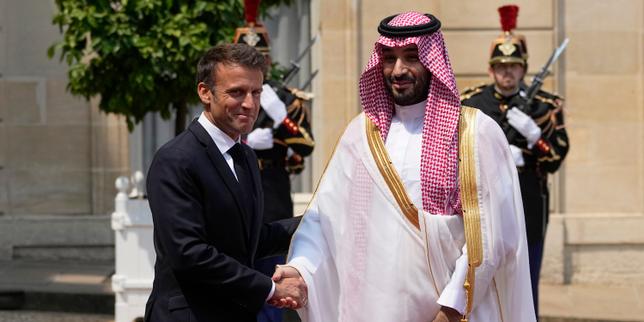
Saudi money didn't buy a French vacation by choice. The 2026 Esports World Cup landing at Paris Expo Porte de Versailles isn't a pre-planned victory lap for French diplomacy or a strategic expansion by the Saudi Public Investment Fund. It's an emergency evacuation.
When the ongoing Iran war disrupted infrastructure in Saudi Arabia, forcing the cancellation of the Saudi Arabian Grand Prix back in April, the writing was on the wall. The crown jewel of Riyadh's Vision 2030 sports project couldn't safely happen on its home turf.
By moving the seven-week mega-event to France, the Esports Foundation kept its $75 million prize pool alive. But they also walked straight into a political and cultural hornets' nest.
The forced marriage of convenience
Saudi Arabia needed a world-class venue that could handle thousands of players across 24 separate games on short notice. Paris needed to prove its post-Olympic infrastructure wasn't just sitting idle.
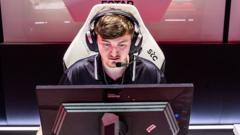
On paper, the numbers are dizzying. Over 2,000 players from 200 clubs have descended on Paris for a tournament running from July 6 to August 23. Ralf Reichert, CEO of the Esports Foundation, proudly announced that 100,000 tickets were snapped up right out of the gate. To make things look completely normal, the opening ceremony at La Seine Musicale featured massive French stars like Aya Nakamura and DJ Snake, alongside Prince Faisal bin Bandar bin Sultan Al Saud.
But don't let the flashy concerts fool you. The French gaming community is fiercely protective of its culture. For years, local fanbases have built an identity around organic, hyper-passionate support. Now, the state-backed wealth of an authoritarian regime is paying the bills on French soil, creating a massive rift between fans who just want to watch elite competition and activists calling out sportswashing.
What the mainstream media misses about French esports fandom
Outside observers look at the massive crowds for French clubs like Vitality, Gentle Mates, or Karmine Corp and assume they'll just cheer for anything with a screen. That's a fundamental misunderstanding of how the local scene works.
French esports culture is built on tribal loyalty and personality. When creators Squeezie and Inoxtag host a Valorant showmatch at Porte de Versailles, the roof blows off because the fans feel a personal connection to those brands. They didn't ask for a tournament funded by the Saudi Public Investment Fund to occupy their summer.
The compromise is visible everywhere. Major French broadcasters are leaning in heavily. France Télévisions signed a massive deal to broadcast the tournament daily on France 4 and france.tv. For the government and traditional media, it's a massive win for viewership. For the hardcore fans, it feels like a corporate hijack of a scene they built from scratch.
The $75 million elephant in the room
You can't talk about the Esports World Cup without talking about the money. The $75 million total purse is an astronomical sum for an industry that has been suffering through a brutal "esports winter" of layoffs, bankruptcies, and downsizing over the last two years.
Teams are hurting. The Club Championship structure alone dangles $30 million in front of 24 top organizations based on their multi-game performance. The winning club walks away with $7 million. For a struggling organization, that money isn't just a bonus. It's survival.
This financial leverage is why the Saudi-backed Esports Foundation holds all the cards. Organizations like Karmine Corp, who initially missed out on the lucrative Club Partner Program, jumped at the chance to get back in when Europe's HEROIC roster shuffled and freed up a slot in May. Teams simply cannot afford to boycott this event, no matter how much pushback they get from their own communities regarding Saudi Arabia's human rights record.
The sudden death of real-time strategy
While the political optics are generating headlines in mainstream French news, the competitive community is losing its mind over a completely different controversy. The 2026 lineup completely eliminated real-time strategy (RTS) games.
StarCraft II, a cornerstone of competitive gaming history, was dropped from the roster. Rennsport was also axed, leaving Trackmania as the lone racing representative making its debut. The exclusion of RTS titles triggered an immediate wave of backlash from creators and legacy fans who argue that stripping away strategy titles compromises the integrity of a true "World Cup."
Instead, the format heavily favors high-viewership mobile titles and tactical shooters. Mobile Legends: Bang Bang is the only game on the roster securing two separate events, a clear nod to the massive, highly monetizable Southeast Asian audience. The tournament isn't just adapting to a new city; it's aggressively shifting its identity toward pure, raw viewership metrics to justify the massive operational costs of the emergency relocation.
How to navigate the tournament right now
If you're looking past the political noise and just want to catch the best competitive gaming on the planet, the logistics are already moving fast. The tournament is divided into distinct weekly blocks at Paris Expo Porte de Versailles, building up to massive final weeks.
- Focus on the closing stretches if you want maximum stakes. Week 6 features the Rocket League finals and the PUBG Mobile World Cup, while Week 7 closes the entire summer out with Counter-Strike 2 and Trackmania from August 19 to 23.
- Skip the premium passes unless you absolutely need the "Gold zone" seating for specific games. The regular daily tournament passes give you full access to the floor and the Fan Fest areas where the actual local energy is.
- Watch the French broadcast on France 4 at 9 PM daily if you want to see how traditional media is attempting to sanitize and package this deeply controversial partnership for a mainstream audience.
The reality of the 2026 Esports World Cup is messy. It's a tournament born out of regional conflict, funded by controversial state wealth, hosted by a country proud of its independent gaming culture, and kept alive by teams that are too broke to say no. Don't expect the tension to fade just because the matches are underway.