Media claims that Benjamin Netanyahu is calling Donald Trump daily to force a major new attack on Iran reduce a multi-front strategic crisis to personal lobbying. In reality, whether Washington and Jerusalem resume large-scale strikes depends on three interlocking constraints: domestic political survival after autumn 2026 electoral losses, maritime and energy choke points in the Persian Gulf, and asymmetric retaliation thresholds inside Tehran.
A headline centered on daily phone calls and commentator warnings—such as Tucker Carlson's alarms over intense pressure from Netanyahu—treats high-stakes military planning like a personality contest. That framing misses how coalition warfare actually operates. Even when two leaders share an objective of degrading Iranian weapons production or nuclear infrastructure, a strike package requires target validation, air-defense coverage, naval logistics, and political bandwidth that neither leader controls unilaterally. Meanwhile, you can read related developments here: Institutional Friction Between German Churches and the AfD.
How Competitor Framing Flattens Strategic Causality
Sensationalized coverage typically builds a linear chain: one leader pressures another, therefore a strike is imminent. That model fails because it ignores friction inside both capitals and across the theater.
- Diplomatic signaling versus kinetic readiness: Public statements from U.S. officials have oscillated between wanting a "permanent" settlement, suggesting action could wait until 2027, and warning of renewed strikes if a deal is not reached by the new year. Rhetoric serves multiple audiences at once—domestic voters, regional mediators like Qatar, and Iranian commanders—so a sharp comment is not identical to a launch order.
- Caretaker authority versus institutional caution: Following Israel's late-October 2026 legislative election, in which the ruling coalition lost its governing majority and Gadi Eisenkot moved to assemble a government, Netanyahu has operated amid a political transition while security figures have debated urgency and multi-front risks. Pressure from a caretaker leader carries different institutional weight than an order backed by a stable governing mandate.
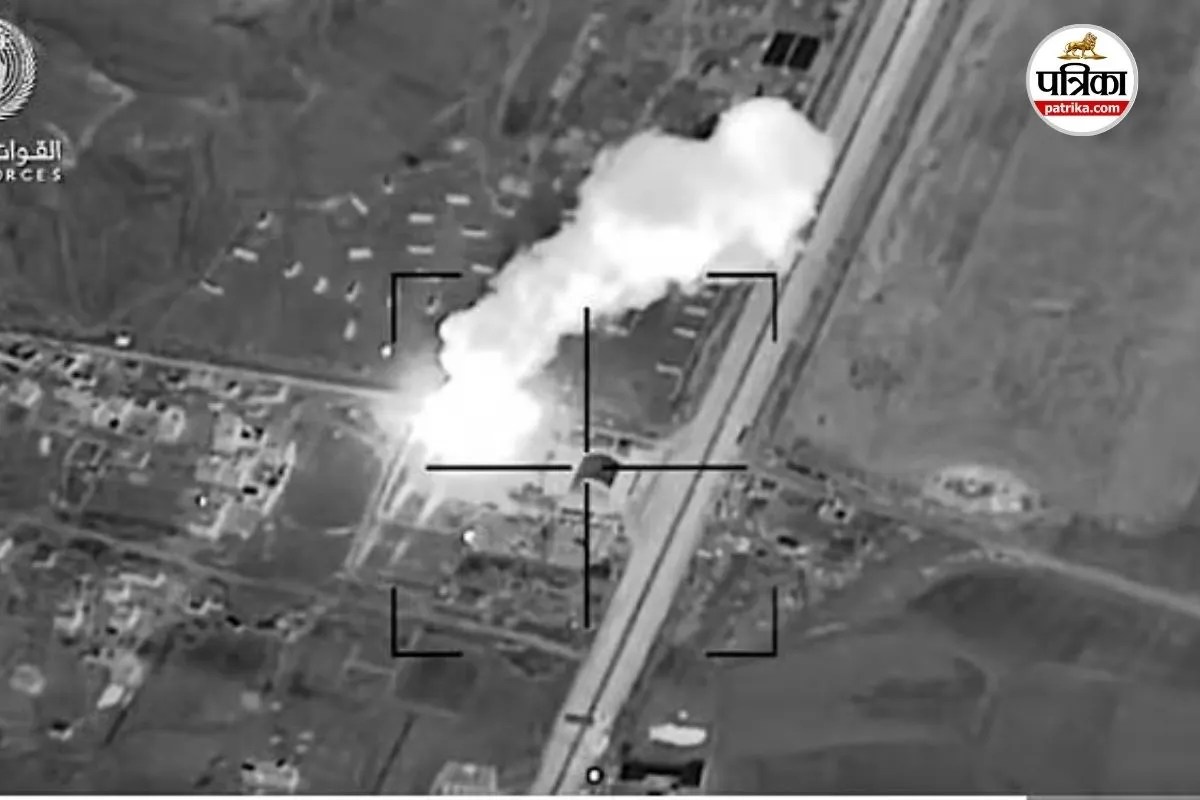
- Action-reaction cycles already underway: Treating a major offensive as a binary switch from peace to war overlooks ongoing lower-tier exchanges, including strikes affecting U.S. bases in Bahrain and Kuwait, U.S. strikes such as on Qeshm Island near the Strait of Hormuz, and Houthi attacks on Saudi infrastructure.
Known Facts Versus Educated Hypotheses
Separating verified developments from analytical inference keeps risk assessment grounded. To explore the full picture, check out the detailed report by Associated Press.
Known facts include the broader trajectory of the conflict since February 2026, when U.S. and Israeli forces launched major strikes against Iran alongside severe disruptions to shipping through the Strait of Hormuz and wider regional spillover. It is also established that the Netanyahu government lost its governing majority in late October 2026, that Republicans lost control of Congress in the November 2026 midterms amid economic fallout tied to the war, and that U.S. and Iranian officials have exchanged public warnings and accusations while diplomatic channels remain strained.
Educated hypotheses begin where public reporting stops. Intelligence analysts and defense observers can infer that Israeli officials push for pre-emptive action whenever they assess that Iranian missile, drone, or nuclear-related facilities are regenerating faster than diplomatic talks can constrain them. Conversely, it is an analytical deduction—not a confirmed fact—that Washington is calibrating strike timing around post-midterm political fatigue, energy price sensitivity, and whether Tehran tests the U.S. naval blockade. Claims circulating on social media or cable segments about extreme weapons options or exact phone frequencies should be treated as unverified commentary unless corroborated by credible reporting.
The Three Pillars of Escalation Math
To evaluate whether another large-scale strike is likely in the coming weeks or early 2027, examine the three structural pillars governing both sides.
Pillar One: Domestic Political Cost Functions
Every military decision carries a domestic price tag. In the United States, months of conflict, shipping disruptions, and inflation weighed heavily on voters in the November 2026 midterm elections, shifting control of Congress. A president facing a hostile or newly empowered legislature must weigh whether a major new campaign lowers long-term threats or prolongs energy shocks and troop exposure.
In Israel, a government transition changes incentive structures. A leader facing coalition loss may see strategic value in keeping external security threats front and center, while military planners and incoming coalition partners must account for force exhaustion, reserve strain, and the risk of igniting simultaneous fronts in Lebanon, Gaza, or the Gulf.
Pillar Two: Maritime Choke Points and Energy Transmission
The Strait of Hormuz acts as a global price-transmission mechanism. Even partial interference with tankers, naval blockades, or strikes on Gulf energy facilities reverberates far beyond the immediate battlefield, driving up fuel costs and tightening global financial conditions.
When a waterway carries a large share of seaborne petroleum, military escalation is never merely bilateral; it is a tax on global supply chains and importing economies.
Consider a practical example of how this mechanism constrains decision-makers. Suppose planners propose a wide air campaign against Iranian coastal and industrial sites. If the predictable response is mining, drone swarming, or missile fire against commercial tankers and Gulf terminals, oil markets can reprice risk within hours—turning a tactical strike into a macroeconomic shock that hurts U.S. and allied voters directly.
Pillar Three: Asymmetric Retaliation and Thresholds
Iranian leadership and the Islamic Revolutionary Guard Corps rely on asymmetric deterrence to offset conventional air and naval disadvantages. Public warnings from Tehran have signaled an intent to impose high costs across wider geographies—potentially targeting regional bases, energy infrastructure, shipping, or even broader assets—if major hostilities resume.
At the same time, Tehran faces its own escalation dilemma. Analysts assessing Iranian decision-making note a sharp threshold effect: inflicting severe casualties directly on U.S. territory or crossing a major escalation line risks erasing domestic U.S. reluctance toward larger-scale or prolonged operations. Both sides therefore probe below catastrophic thresholds while signaling willingness to cross them if pushed.
Why Standard Escalation Indicators Mislead
Observers often watch the wrong signals when predicting a major strike.
- Counting diplomatic insults instead of force posture: Harsh rhetoric from Washington or Tehran frequently accompanies bargaining or posturing. Force deployments, air-defense repositioning, tanker routing, and intelligence visits carry far stronger signal value than soundbites.
- Assuming unilateral Israeli action equals a full war: Even if Israel conducts targeted strikes, the scale and duration of a broader campaign depend heavily on U.S. munitions, intelligence integration, missile defense, and diplomatic cover.
- Treating negotiations and strikes as mutually exclusive: States routinely apply military pressure or threaten deadlines—such as setting a year-end window for a deal—while keeping backchannels or regional mediators active.
Analytical Limitations and Blind Spots
No analytical framework can eliminate surprise in an active conflict. Covert operations, miscalculation during a naval standoff, or an accidental hit on high-value personnel or infrastructure can compress decision timelines from months to minutes. Furthermore, closed decision-making circles in Tehran and non-public intelligence assessments in Washington and Jerusalem mean outside analysts always operate with incomplete information.
Strategic Action for Decision-Makers and Risk Teams
Track three concrete indicators over the next sixty days rather than relying on cable-news claims of daily phone calls: monitor whether U.S. naval and air posture in Central Command shifts from defensive interception and localized strikes to sustained offensive surge preparation, watch Gulf energy and shipping insurance or rerouting signals around Hormuz and the Red Sea, and verify whether Israeli government-formation talks constrain or accelerate operational tasking. If your organization manages supply chains, energy exposure, or regional operations, stress-test scenarios against prolonged maritime friction and episodic retaliatory strikes—not just a single headline-grabbing night of bombs.