Strategic Vectors of Recurrent Bombardment Cycles
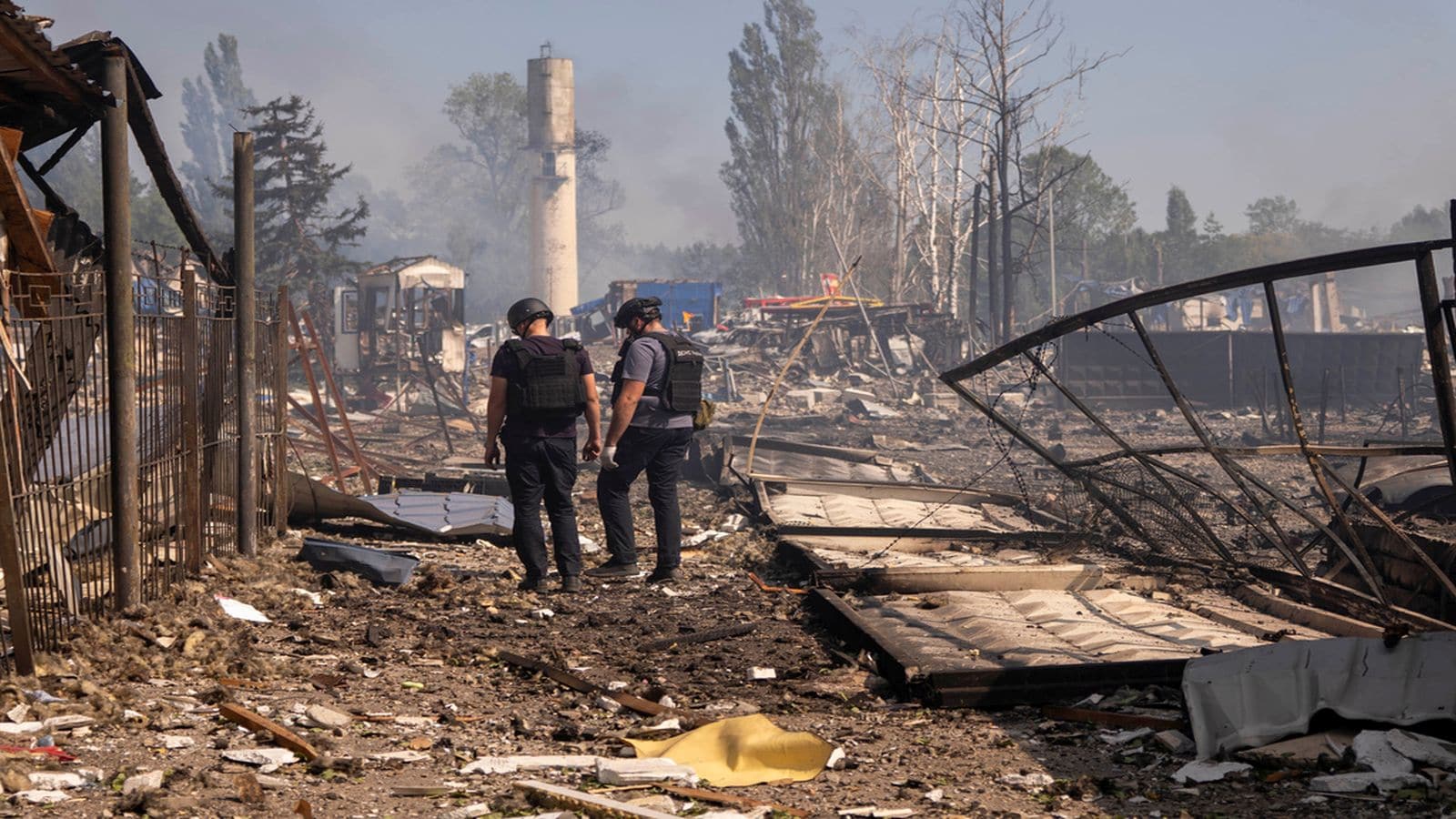
Sustained aerial campaigns against high-density urban centers operate on distinct economic and psychological amortization curves. When a municipal zone absorbs six consecutive days of targeted munitions integration, the objective shifts from tactical degradation of specific assets to systemic exhaustion of defensive resource allocation and civilian infrastructure resilience. The recent escalation targeting the Kyiv region, resulting in multiple casualties and widespread structural disruption, requires a rigorous examination of the operational cadence, interception economics, and the cumulative friction imposed on metropolitan logistics.
Understanding this operational pattern demands moving past raw casualty enumeration to evaluate the velocity of the attacks. A sequential cadence of strikes every twenty-four hours tests the limits of early-warning latency, localized air defense reload cycles, and shelter saturation. Each successive night increases the cognitive load on civilian populations while systematically stressing municipal emergency response throughput.
The Three Operational Pillars of Sustained Municipal Targeting
Analyzing persistent urban aerial campaigns requires dissecting the mechanics into three distinct structural components. Each pillar represents a deliberate pressure point designed to induce systemic failure.
1. Interception Attrition and Resource Deficit
Air defense architectures rely on finite interceptor inventories matched against high-volume inbound vectors. When strike intervals compress into daily occurrences, defensive systems face a severe replenishment bottleneck.
- The cost asymmetry between low-cost loitering munitions or trajectory-adjusted projectiles and high-end interceptors favors the offensive actor over extended timelines.
- Sustained operational tempos force tactical commanders to ration defensive assets, prioritizing critical institutional infrastructure over localized residential protection zones.
- Radar and sensor suites experience degradation from continuous high-intensity operations, increasing the probability of tracking anomalies or detection blind spots during saturation phases.
2. Infrastructure Fracture Mechanics
Urban resilience depends on redundancy across power, water, and transit grids. Sequential kinetic impacts target nodes where distribution networks intersect, maximizing secondary disruption.
- Single-point failures in transformer sub-stations cascade into multi-neighborhood outages, disrupting medical facilities and emergency communication backbones.
- Blast-wave propagation in high-density residential corridors produces structural fatigue across surrounding buildings, multiplying the engineering footprint required for eventual stabilization and repair.
- Debris management and structural clearance operations become logistically bottlenecked when subsequent strikes occur before prior clearance protocols conclude.
3. Cognitive and Economic Friction
The psychological toll of continuous sirens and overnight displacement translates directly into economic deceleration and operational paralysis.
- Labor force productivity drops sharply as workforces manage sleep deprivation, shelter access, and domestic safety contingencies.
- Supply chain continuity within the metropolitan perimeter fractures due to curfews, road closures around impact sites, and transport worker hesitancy.
- Capital flight and commercial risk recalibration accelerate as businesses calculate the long-term cost of operating within an active, high-frequency impact zone.
Evaluating Interception Mechanics and Defensive Bottlenecks
The operational efficacy of a modern missile defense shield is a function of geometric coverage, reaction time, and volume management. When evaluating a six-day sustained bombardment, observers frequently misinterpret the primary metric of success as a simple binary percentage of intercepted targets. The true analytical metric is residual structural leakage.
Even a ninety-percent interception rate yields catastrophic results when the sheer volume of inbound vectors remains high over an extended timeline. Ten percent leakage translates directly into multiple kinetic impacts within urban boundaries every single day. This creates an accumulation effect:
Day 1: Baseline Structural Integrity
Day 3: Critical Node Degradation (Power/Water)
Day 6: Emergency Response Saturation & Civilian Attrition
The compression of these stages compresses the recovery window for municipal services. Emergency responders operating on minimal sleep face higher error rates, while medical triage units experience bed capacity constraints driven by concentrated casualty arrivals.
The Strategic Trajectory of Recurrent Urban Engagement
Long-range strike campaigns sustained over multi-day arcs are inherently designed to probe the friction points of modern state administration. They test whether municipal authorities can maintain bureaucratic continuity, logistical supply lines, and public morale under conditions of perpetual threat.
The optimization of urban defense under these conditions requires a shift from reactive perimeter protection to hardened, decentralized micro-infrastructure. Power generation must move toward distributed micro-grids, and shelter management protocols must integrate automated early-warning telemetry to reduce civilian exposure duration.
Future resilience will not be measured by the absolute prevention of impact, but by the velocity of post-strike reconstitution. Cities that establish rapid clearance, repair, and medical triage loops neutralize the intended psychological and systemic leverage of sequential aerial campaigns.