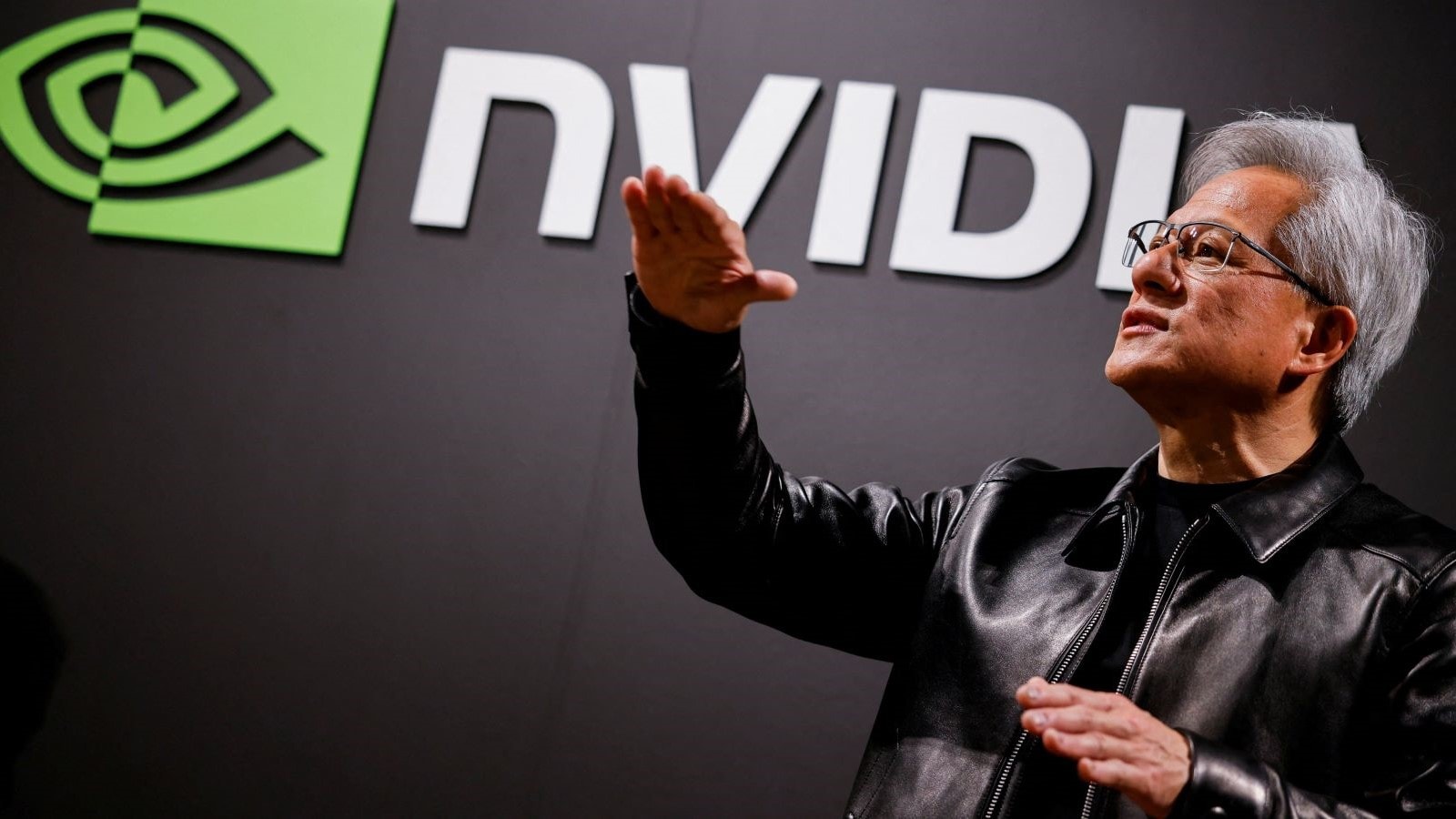
When rumors circulate regarding the marital status of a founder whose net worth is concentrated in a single mega-cap equity, institutional markets do not react to tabloid speculation; they price in governance risk and liquidity shock. Evaluating ultra-high-net-worth (UHNW) marital dissolutions requires stripping away celebrity gossip to examine the underlying corporate finance mechanisms: voting control dilution, forced secondary block sales, and statutory asset division regimes. Analyzing the structural precedents of seven major high-profile settlements reveals that the primary threat to a public company is rarely the dollar amount transferred, but rather the structural architecture used to execute the transfer without triggering a catastrophic share price collapse or a hostile takeover.
The Dual-Risk Matrix of Founder Divorces
A standard consumer divorce involves dividing liquid cash, real estate, and diversified retirement accounts. A founder divorce involves fracturing the foundational cap table of a publicly traded enterprise. When unsubstantiated rumors recently targeted Nvidia CEO Jensen Huang—whose net worth is overwhelmingly tied to his roughly 3.5% stake in the semiconductor giant—institutional risk desks immediately modeled two specific failure modes.
The first failure mode is Governance Fragmentation. In many technology firms, founders maintain operational dominance through a combination of board alignment and concentrated equity. If a statutory division requires transferring half of a founder's shares to a departing spouse, that spouse instantly becomes one of the largest single shareholders in the company. Unless the settlement decouples economic ownership from voting rights, the company suffers an immediate, unvetted shift in its board-level voting bloc.
The second failure mode is Liquidity Overhang. Mega-cap tech founders rarely hold billions in cash; their wealth is illiquid paper equity. Satisfying a cash settlement—or allowing a newly independent spouse to diversify their concentrated portfolio—forces massive blocks of stock onto the open market. Even when executed via scheduled 10b5-1 trading plans, a sudden multi-billion-dollar supply overhang depresses valuation multiples and signals insider exit to algorithmic momentum funds.
To understand how corporate boards and family law attorneys mitigate these twin
Equity Governance and Marital Dissolution in Mega-Cap Technology Firms
business
Corporate governance at the trillion-dollar scale treats marital stability as a systemic risk factor rather than a private matter. When unverified rumors circulate regarding the marital status of a founder-CEO like Nvidia’s Jensen Huang—whose net worth is overwhelmingly concentrated in a single, dual-class or super-voting equity block—institutional investors immediately model the mechanics of community property law against corporate control. Standard financial journalism frames high-profile divorces as tabloid spectacles defined by headline dollar figures. That framing obscures the actual operational threat to shareholders: the forced liquidation of concentrated equity, the dilution of voting control, and the sudden introduction of an unaligned majority or plurality shareholder onto the capitalization table.
To evaluate the real risk of a mega-cap executive divorce, analysts must strip away the gossip and examine the legal and financial architecture governing marital asset division. The historical record of seven landmark ultra-high-net-worth dissolutions—spanning Jeff Bezos, Bill Gates, Harold Hamm, Rupert Murdoch, Sergey Brin, Tiger Woods, and Michael Jordan—provides an empirical dataset for how courts, private wealth advisors, and corporate boards neutralize or succumb to governance shocks.
The Mechanics of Equity Division Under Marital Law
A founder’s net worth is rarely liquid; it is an accounting abstraction tied to the market capitalization of their operating company. When a marriage dissolves, the legal jurisdiction dictates whether that equity is treated as a divisible marital asset or protected separate property.
Community Property vs. Equitable Distribution
In the United States, asset division falls under two primary statutory regimes. Community property jurisdictions—most notably California and Washington, where Silicon Valley and Seattle tech giants are domiciled—presume that all assets acquired during the marriage belong equally to both spouses, requiring a strict 50/50 split absent a valid prenuptial or postnuptial agreement. Because founders typically incorporate their companies after marriage, or build the vast majority of the enterprise value during the marriage, the entire equity stake is exposed.
Equitable distribution states, such as New York or Oklahoma, divide marital assets based on judicial assessment of fairness rather than strict mathematical equality. While this introduces flexibility, courts in these jurisdictions still treat the appreciation of a business during the marriage as active marital property if the founder’s labor drove the growth. In both regimes, the baseline threat to the corporation is identical: a court order transferring legal title of voting shares to a departing spouse.
The Control-Liquidity Paradox
Dividing a ten-figure or twelve-figure equity stake creates an acute structural friction known as the control-liquidity paradox. The operating company cannot simply pay out a multi-billion-dollar settlement in cash without depleting its balance sheet, triggering debt covenants, or executing a massive secondary offering that depresses the share price. Conversely, the founder cannot liquidate their own shares on the open market to fund a cash settlement without signaling a loss of confidence to institutional investors and triggering massive capital gains tax liabilities.
Under Internal Revenue Code Section 1041, transfers of property between spouses incident to a divorce are non-taxable events. The tax basis carries over to the receiving spouse. Therefore, transferring stock directly avoids immediate taxation, preserving the capital base. However, direct stock transfer splits voting power. Boards and founders resolve this paradox through specific structural mechanisms:
- Voting Proxy Retention: Economic ownership of the shares transfers to the ex-spouse, while the founder retains sole voting authority via an irrevocable proxy agreement.
- Dual-Class Share Conversion: Super-voting shares convert into non-voting or single-vote common stock upon transfer, preventing the ex-spouse from exercising governance veto power.
- Structured Buybacks and Collars: The corporation or a third-party financial institution provides a credit facility collateralized by the founder’s remaining stock, allowing a phased cash buyout over several years.
Empirical Analysis of Seven Landmark Settlements
Examining seven major dissolutions reveals how these structural mechanisms operate under real-world pressure, separating cases of seamless governance preservation from cases of severe corporate disruption.
1. Jeff Bezos and MacKenzie Scott (2019)
- Jurisdiction: Washington (Community Property)
- Reported Valuation: ~$38.3 billion in Amazon equity
- Governance Mechanism: Irrevocable voting proxy and dual-class structuring
When Amazon founder Jeff Bezos and MacKenzie Scott divorced after 25 years of marriage, no prenuptial agreement existed. Under Washington law, Scott was entitled to half of their combined 16% stake in Amazon. A literal 50/50 split of both economic and voting rights would have instantly halved Bezos’s voting control and created a second, independent 8% voting bloc capable of influencing board elections or activist campaigns.
The settlement bypassed this governance fracture entirely. Scott received 25% of their combined Amazon holdings—roughly 4% of the company—amounting to approximately 19.7 million shares. Crucially, she ceded all voting control over those shares to Bezos, along with her interests in The Washington Post and Blue Origin. By decoupling economic value from voting power, Amazon’s board ensured zero operational disruption. The stock price remained insulated because the market knew Scott’s shares would not be dumped indiscriminately and Bezos’s strategic control remained absolute.
2. Bill and Melinda French Gates (2021)
- Jurisdiction: Washington (Community Property)
- Reported Valuation: ~$73 billion in transferred securities (estimated)
- Governance Mechanism: Separation contract and holding company restructuring
Like the Bezos dissolution, the Gates divorce occurred in Washington without a prenuptial agreement, governed instead by a private separation contract. However, the asset base differed fundamentally. By 2021, Bill Gates had already diversified his wealth out of Microsoft into Cascade Investment, a private holding company controlling massive stakes in public equities (Canadian National Railway, Deere & Company, Republic Services), real estate, and private equity.
The operational risk here was not Microsoft’s corporate governance, as Gates held just over 1% of Microsoft stock, but rather market disruption across Cascade’s concentrated public positions. Cascade executed the division through carefully metered, off-market block transfers reported via SEC Form 4 filings. Over several months, billions in shares of AutoNation, Coca-Cola FEMSA, and Grupo Televisa shifted directly to Melinda French Gates. By utilizing direct security transfers under IRC Section 1041 rather than liquidating positions for cash, Cascade avoided triggering market sell-offs in thinly traded equities and neutralized corporate tax friction.
3. Harold Hamm and Sue Ann Arnall (2014)
- Jurisdiction: Oklahoma (Equitable Distribution)
- Reported Valuation: $995.5 million cash settlement
- Governance Mechanism: Cash buyout via credit facilities and dividends
Harold Hamm, founder and CEO of Continental Resources, faced a catastrophic governance threat during his divorce in Oklahoma. Without a prenuptial agreement, Arnall claimed that the immense growth of Continental Resources—driven by the Bakken oil boom during their 26-year marriage—was active marital property. At the time, Hamm owned 68% of the company, valued at roughly $18 billion. An equitable distribution of stock threatened to strip Hamm of his majority control over the energy producer.
The Oklahoma court ruled that while much of the company's appreciation was passive (driven by oil prices and geology rather than Hamm’s direct labor), a portion was marital, ordering Hamm to pay nearly $1 billion in cash. To prevent equity dilution or loss of control, Hamm avoided transferring a single share of Continental Resources stock. Instead, he funded the settlement by writing a $974.8 million personal check backed by a combination of personal liquidity, corporate dividends, and lines of credit collateralized against his equity. The case demonstrates the high cost of retaining 100% voting control: the founder absorbs massive personal leverage and liquidity drain, which subsequently exposes them to margin call risks if the underlying commodity or stock price crashes—precisely what occurred when global oil prices collapsed in 2015.
4. Rupert Murdoch and Anna Torv (1999)
- Jurisdiction: California (Community Property)
- Reported Valuation: ~$1.7 billion ($110 million in cash, remainder in assets/trusts)
- Governance Mechanism: Family trust ring-fencing
Rupert Murdoch’s 1999 divorce from Anna Torv after 31 years of marriage illustrates the vulnerability of media conglomerates built on family control. Under California’s strict community property regime, Torv was legally positioned to claim half of Murdoch’s controlling stake in News Corporation.
To prevent the breakup of the News Corp voting bloc, the settlement relied on cash, real estate, and a pre-existing family trust structure. Torv waived her community property claims to the corporate voting shares in exchange for a substantial cash payout and specific non-voting assets. More importantly, the divorce catalyzed the formalization of the Murdoch Family Trust, which locked the voting shares of News Corp (and later Fox Corporation) into an irrevocable structure controlled by Murdoch, with equal economic and future voting rights distributed among his four eldest children. This ring-fencing prevented subsequent divorces—specifically Murdoch’s 2013 dissolution from Wendi Deng—from ever threatening corporate control, as the core equity was no longer personal marital property.
5. Sergey Brin and Nicole Shanahan (2023)
- Jurisdiction: California (Community Property)
- Reported Valuation: Undisclosed (estimated low single-digit billions)
- Governance Mechanism: Prenuptial agreement and dual-class share lockup
When Google co-founder Sergey Brin divorced Nicole Shanahan in 2023, the financial media speculated on massive equity transfers. In reality, the governance impact on Alphabet Inc. was zero. Two structural defenses neutralized the threat before the petition was ever filed.
First, Brin and Shanahan executed a binding prenuptial agreement prior to their 2018 marriage, overriding California’s default community property statutes. Second, Alphabet’s capital structure utilizes three classes of stock: Class A (one vote), Class B (ten votes, held exclusively by founders and early insiders), and Class C (zero votes). Under Alphabet’s corporate charter, any transfer of Class B super-voting stock to a non-permitted transferee automatically converts those shares into Class A or Class C stock. Even in the absence of a prenuptial agreement, a spouse cannot acquire super-voting control through a divorce decree. Subsequent SEC filings confirmed Brin transferred blocks of non-voting Class C shares to donor-advised funds and private entities, leaving his voting power at Alphabet completely intact.
6. Tiger Woods and Elin Nordegren (2010)
- Jurisdiction: Florida (Equitable Distribution)
- Reported Valuation: ~$100 million cash and real estate
- Governance Mechanism: Personal services contract decoupling
Analyzing an athlete’s divorce alongside corporate founders highlights a critical distinction in asset valuation: enterprise equity versus personal services revenue. Tiger Woods’s net worth was not tied to an appreciating corporate balance sheet, but to endorsement contracts (Nike, Gatorade, Accenture) and tournament winnings.
In Florida, marital assets include income earned during the marriage, but future earning capacity is separate property. Because Woods’s brand value plummeted immediately following the scandal—resulting in multiple sponsors terminating contracts—the marital estate was valued at a depressed trough. Nordegren received an estimated $100 million in cash and real estate, alongside strict non-disclosure agreements. Because there was no underlying operating corporation with third-party shareholders, the settlement required straightforward asset liquidation rather than complex voting proxies. However, it underscores how reputational contagion destroys the underlying cash flows needed to service a settlement.
7. Michael Jordan and Juanita Vanoy (2006)
- Jurisdiction: Illinois (Equitable Distribution)
- Reported Valuation: ~$168 million cash and property
- Governance Mechanism: Postnuptial agreement and deferred licensing valuation
Michael Jordan’s 2006 divorce from Juanita Vanoy after 17 years of marriage represents a failure of initial asset protection corrected mid-stream. Married in 1989 without a prenuptial agreement, Jordan’s income exploded during the 1990s through NBA salaries and his foundational royalty agreement with Nike’s Jordan Brand. Recognizing the mounting exposure under Illinois equitable distribution laws, the couple executed a postnuptial agreement in 2002 during a brief reconciliation.
When the marriage permanently dissolved in 2006, that postnuptial contract capped Vanoy’s settlement at $168 million—roughly half of Jordan’s estimated net worth at the time—and granted her custody and real estate assets. Crucially, the agreement severed Vanoy’s claim to future, perpetual royalties from the Jordan Brand. Following the divorce, Jordan acquired a majority stake in the Charlotte Hornets and saw his Nike royalties scale into hundreds of millions of dollars annually, pushing his net worth past $3 billion. Without the postnuptial firewall, Vanoy could have argued that the ongoing royalty stream was a marital asset derived from brand equity built during the marriage.
The Structural Vulnerability of Nvidia
Applying this empirical framework to Nvidia reveals why unsubstantiated rumors surrounding Jensen Huang and his wife, Lori Mills, trigger immediate institutional scrutiny. Unlike Sergey Brin, whose marriage occurred after Google’s IPO and was governed by a prenuptial agreement and a multi-class voting structure, Jensen Huang married Lori Mills in 1988—five years before he co-founded Nvidia in 1993.
Furthermore, Nvidia does not utilize a dual-class super-voting share structure. The company operates on a single-class, one-share-one-vote common stock model. Huang owns approximately 3.5% to 3.8% of Nvidia’s outstanding common stock, held through a combination of direct ownership, family trusts, and partnerships. At Nvidia’s multi-trillion-dollar market capitalization, that stake exceeds $100 billion.
Because Nvidia is headquartered in Santa Clara, California, any hypothetical dissolution would fall under California’s community property jurisdiction. Absent a postnuptial agreement or specific irrevocable trust carve-outs established over the past three decades, the entirety of Huang’s Nvidia stake—having been founded and grown entirely during the marriage—would legally classify as community property.
In a hypothetical, unmitigated 50/50 split without a voting proxy:
- Huang’s direct voting power would drop below 2%, eroding his influence over board composition and strategic capital allocation.
- A new, independent shareholder holding nearly 2% of the company—making them one of Nvidia’s top five largest individual or institutional shareholders—would emerge overnight.
- If the receiving spouse chose to diversify that $50+ billion position, even a structured, multi-year liquidation program would create persistent technical overhang on Nvidia’s stock price, increasing the company’s cost of equity.
However, institutional investors recognize that founders at this scale rarely leave capitalization tables exposed to default statutory rules. Decades of estate planning by ultra-high-net-worth tech executives routinely utilize Grantor Retained Annuity Trusts (GRATs), spousal lifetime access trusts (SLATs), and private postnuptial agreements that pre-negotiate voting proxies before any marital friction occurs.
Strategic Imperatives for Corporate Boards and Founders
Boards of directors at founder-led public companies cannot treat executive marital stability as a taboo subject outside the scope of risk management. Fiduciary duty requires insulating the enterprise from personal governance shocks.
- Implement Dual-Class Sunset Provisions at Incorporation: Founders must establish super-voting share classes prior to taking a company public, embedding automatic conversion triggers in the corporate charter. Any transfer of super-voting shares—whether by sale, gift, or domestic relations order—must automatically downgrade the equity to single-vote or non-voting common stock.
- Mandate Postnuptial Governance Clauses: For founders who married prior to incorporating, compensation and governance committees should condition major equity refresh grants or performance awards on the execution of a postnuptial agreement or irrevocable voting trust. The agreement does not need to restrict the spouse’s economic claim; it only needs to legally bind any transferred shares to an irrevocable voting proxy controlled by the CEO or the board.
- Establish Pre-Approved Liquidity Facilities and Rule 10b5-1 Frameworks: To prevent disorderly market dumping if a spouse receives a massive equity block, corporate bylaws should require any major insider transferee to adhere to structured lock-up schedules and pre-arranged Rule 10b5-1 trading plans, paired with company-sponsored share repurchase programs to absorb block sales off the open market.