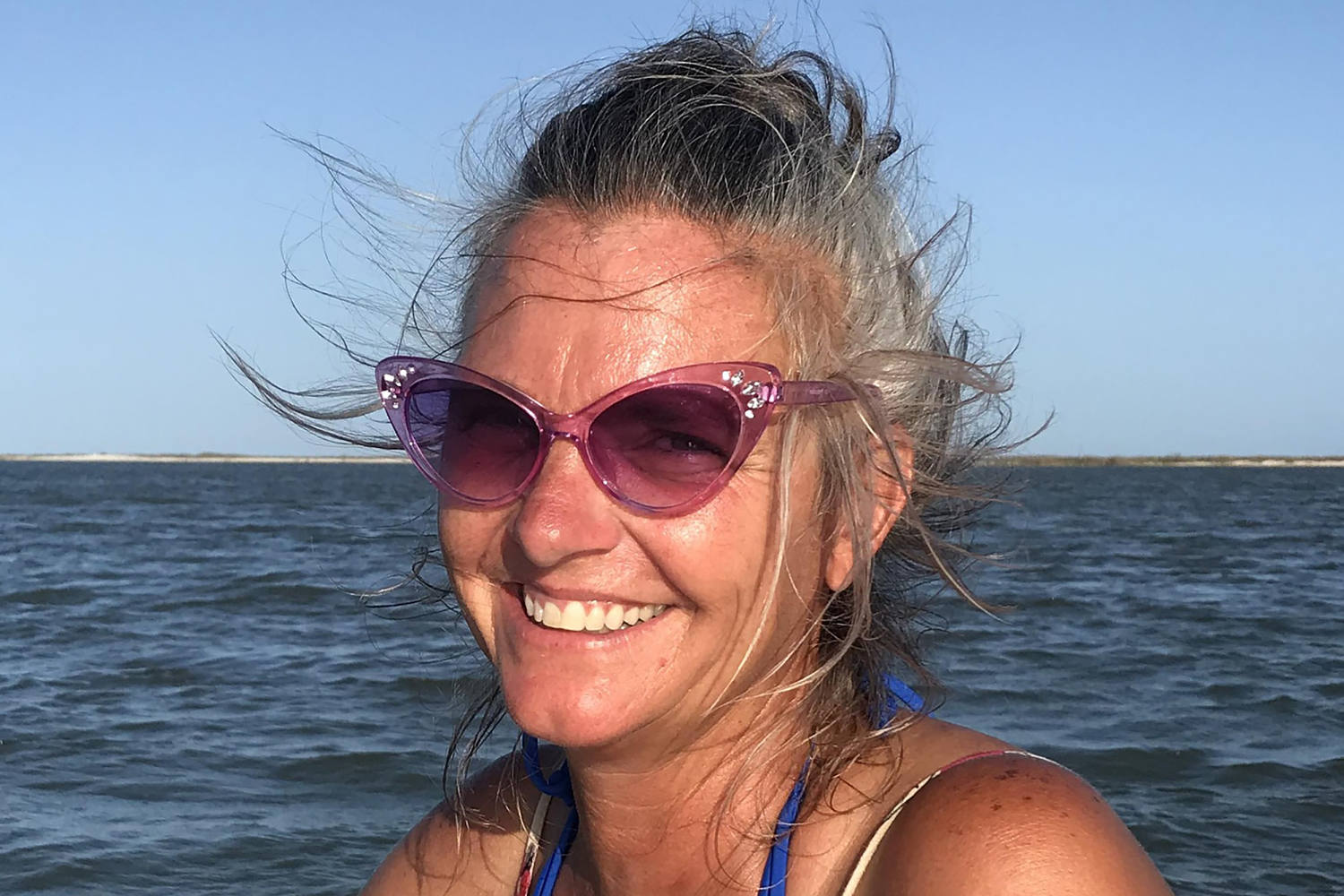
The Atlantic Ocean does not care about our plans. To anyone standing on the sun-bleached docks of the Bahamas, the water looks like a postcard—an impossible, inviting turquoise that bleeds into deep sapphire at the horizon. It looks peaceful. But anyone who has spent time at sea knows the truth. The ocean is an oblivion. It is an infinite canvas of moving water that can swallow a life in a heartbeat, leaving the rest of us on the shore, staring at the empty horizon, waiting for answers that may never come.
Now, the United States Coast Guard is heading back out into that vast blue. They are restarting the search for a Michigan woman who vanished into the Caribbean waters, refusing to let the case slip into the quiet archives of unsolved mysteries.
Behind the clinical language of official press releases lies a devastating human reality. When a traveler goes missing at sea, a strange, agonizing suspension of time occurs for the loved ones left behind. The world keeps turning, but for a family in Michigan, time froze the moment the updates stopped.
The Geography of a Disappearance
The mechanics of an ocean search are terrifyingly complex. It is not a matter of simply driving a boat out and looking around. The ocean moves. Currents pull at anything floating beneath or on the surface, shifting the search area by miles every single hour.
To understand what the Coast Guard faces, imagine dropping a single white feather from a rooftop during a thunderstorm, waiting an hour, and then trying to guess exactly which neighborhood street it landed on.
That is the mathematical nightmare of search and rescue.
The Coast Guard utilizes sophisticated software to predict these movements. They plug in wind speeds, sea temperatures, wave heights, and current data to generate a "probability of success" map. It creates a shifting grid of coordinates. But data has no empathy. It cannot feel the desperation of a family waiting by the phone in the Midwest, thousands of miles away from the warm, indifferent waters where their daughter, sister, or friend was last seen.
This new search effort signifies something rare. It means new information, a re-examination of the drift patterns, or simply a refusal to give up. It represents a glimmer of hope in a situation defined by absolute uncertainty.
The Tourist Trap of Vulnerability
We travel to escape the rigidity of our daily lives. We board planes and cruise ships to shed our responsibilities, to feel the sun on our skin, and to experience a world without schedules. In places like the Bahamas, the atmosphere is deliberately engineered to make you let your guard down. The rum punches are sweet, the locals are welcoming, and the horizon seems to promise that nothing bad could ever happen here.
But safety is often an illusion bought with a vacation ticket.
When you are on open water, the margin for error shrinks to zero. A sudden swell, a misstep on a deck, a momentary lapse in judgment while swimming or boating—the transition from a dream vacation to a survival scenario happens in milliseconds.
Consider the vulnerability of a tourist in a foreign jurisdiction. When someone disappears at home, the local police department deploys standard, familiar protocols. Friends, neighbors, and local media rally immediately. But when a citizen vanishes abroad, the situation fractures into a complex web of international diplomacy, varying maritime laws, and logistical nightmares.
The family is left trying to navigate foreign authorities, language barriers, and a bureaucratic machine that does not move with the urgency of a grieving heart. They are forced to rely on the Coast Guard, a military branch tasked with patrolling millions of square miles of ocean, hoping their loved one’s name stays at the top of the priority list.
The Weight of the Unknowing
Grief is heavy, but it is a weight that can eventually be carried. There is a terrible grace in finality. You can mourn a loss. You can build a monument. You can lay flowers on a grave and begin the long, agonizing process of healing.
Ambiguous loss is different.
It is a phantom that haunts every room. When a person is missing at sea, there is no body. There is no funeral. There is only a void filled with agonizing questions. Did she fall? Was there foul play? Is she stranded on a remote cay, watching the horizon for a rescue boat that hasn't arrived yet?
This lack of closure is a psychological torture. The human mind is wired to find patterns and complete stories. When a narrative is left dangling in the middle of a sentence, the brain loops the scenarios endlessly. Every time the phone rings, a jolt of adrenaline hits the chest. Every unknown number is a potential miracle or a final crushing blow.
The community back in Michigan is carrying this weight. Neighbors look at the missing woman's house, her car parked in the driveway, her social media profiles frozen in a state of perpetual happiness, and they feel the profound fragility of existence. One day you are taking photos of a tropical sunset; the next, your name is a keyword in a maritime search log.
The Sentinels of the Sea
It takes a specific kind of person to look at the vast, chaotic Atlantic and believe they can find a single human being. The men and women of the Coast Guard operate in a realm of constant high stakes. They fly HC-144 Ocean Sentry airplanes and pilot cutters through rough seas, eyes strained against the glare of the sun on the water, looking for a flash of color, a life jacket, or a signaling mirror.
They know the odds are against them. They know the ocean is a graveyard. Yet, they go back out.
This renewed search in the Bahamas is a testament to that collective stubbornness. It is an acknowledgment that every individual life matters enough to risk fuel, time, and human effort against the impossible scale of the sea. They are fighting against time, weather, and the sheer physics of a moving ocean.
But as the days stretch into weeks, the nature of the mission subtly shifts. The initial, frantic adrenaline of a rescue operation evolves into a solemn quest for answers. The goal is no longer just survival; it is truth. It is about bringing a daughter home, in whatever way possible, so that the people who loved her can finally stop staring at the horizon and begin the long, dark walk through grief.
The boats have left the harbor again. The planes are in the air, cutting circles over the blue water. Down below, the Atlantic continues to churn, hiding its secrets beneath a beautiful, blinding shimmer.