The limestone walls of Buckingham Palace stretch across 77,000 square meters of prime London real estate. Inside sit 775 rooms. There are 19 state rooms, 52 royal and guest bedrooms, and 188 staff bedrooms. Heavy velvet curtains keep out the damp British chill, and centuries of polished history gleam under crystal chandeliers. It is a fortress designed to hold a dynasty.
Yet, when Prince Harry steps off a transatlantic flight and into the gray London drizzle, not one of those 775 rooms will be his.
To understand the modern British monarchy, we must look past the heavy gold braid and the stiff protocol. We have to look at the locks on the doors. A prince traveling thousands of miles to his homeland, only to check into a luxury hotel or stay with private friends, is a bizarre logistical reality. But more than that, it is a staggering human tragedy masquerading as a security update. It is the ultimate eviction. Not of a tenant, but of a son.
The Geography of Exile
When a family argument happens in an ordinary household, someone slams a door. They go for a walk around the block. Maybe they sleep on a friend’s couch for a weekend until things blow over. The scale changes, but the anatomy of bitterness remains identical.
When the House of Windsor fractures, the geography of that argument is mapped out in historic estates and security details.
Consider the sheer irony of the setup. The British taxpayer and the royal estate maintain vast, sprawling complexes that remain entirely empty for months out of the year. There are corridors in Buckingham Palace that hear nothing but the rhythmic squeak of a housekeeper’s soft-soled shoes. Yet, a birthright member of that family, fifth in line to the throne, must navigate his arrival like any other high-net-worth tourist. He must book a room. He must arrange private security. He must check in and check out.
This is not a casual choice. It is a structured, deliberate boundary line drawn in the sand by both sides.
The official reasons given are always tidy. They taste of public relations and legal caution. We hear about "security protocols," the status of Frogmore Cottage being revoked, and the complicated logistics of royal protection. The Home Office updates its assessment of risk, the lawyers exchange letters, and the palace spokespeople issue brief, bloodless statements that say everything by saying nothing at all.
But nobody buys a hotel room because of a scheduling conflict when their grandmother’s portrait hangs on the wall of a palace down the street. They stay in a hotel because the alternative is a house that no longer feels like a home.
The Ghost of Frogmore
To trace how we got here, we have to look back at the loss of Frogmore Cottage. That Windsor property was supposed to be a sanctuary. It was a wedding gift from Queen Elizabeth II, a quiet haven away from the suffocating flashbulbs of the London press pack. Millions of pounds were spent upgrading its plumbing, its heating, its wiring. It was meant to be an anchor.
When the keys were officially handed back, the final physical tie to the geography of Harry’s childhood was severed.
Imagine returning to the town where you grew up, only to find your childhood bedroom has been turned into a gym, and your parents require a two-week written notice before you can visit the living room. Now multiply that by a thousand years of divine right and global scrutiny.
Every time Harry returns to the UK without a royal roof over his head, it is a public demonstration of displacement. It is the monarchy signaling that membership has its privileges, and non-membership has its consequences. The message is clear: if you walk away from the business of royalty, you walk away from the architecture that protects it.
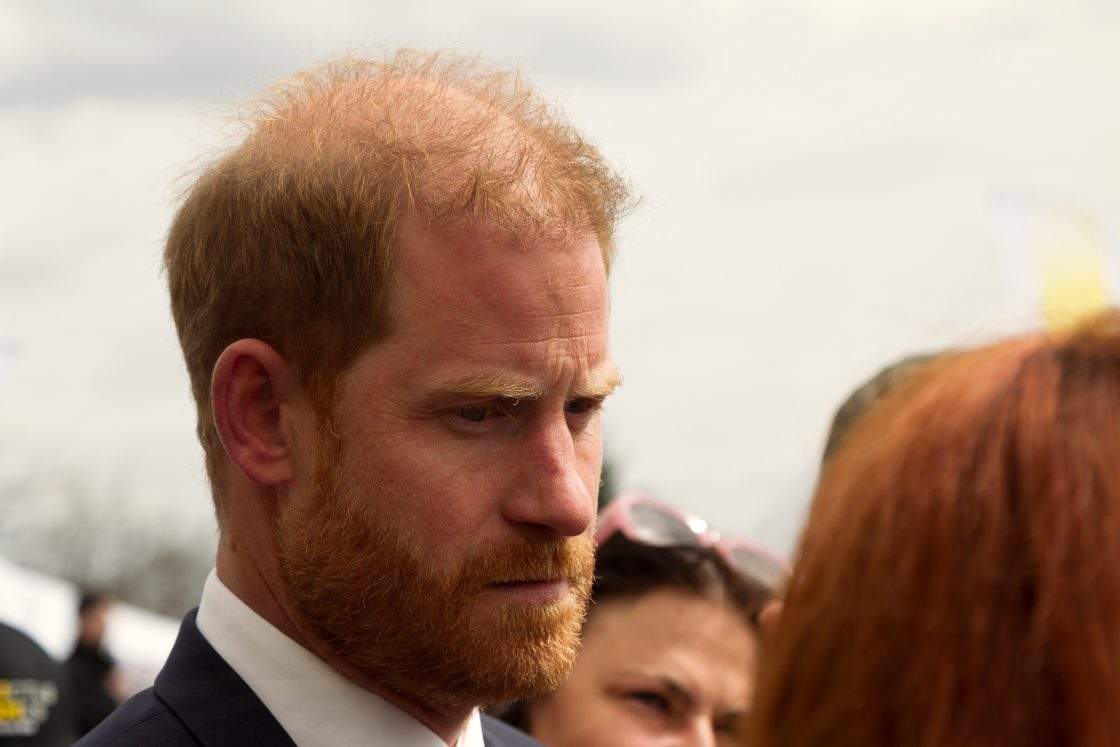
The result is a strange, nomadic existence for a man who used to fly the white ensign. He lands at Heathrow. The metropolitan police do not provide an escort. He travels to an undisclosed location. He attends his charitable events—the true, undeniable purpose of his trips—and he smiles for the cameras. He speaks with passion about sick children or injured veterans. He looks every bit the prince we grew up watching.
Then the event ends. The lights go down. The crowds go home. And Prince Harry climbs into the back of an SUV to drive to a hotel where his name is just another line on a digital registry.
The Invisible Stakes
We often treat the royal family like characters in a high-budget soap opera. We pick sides. We analyze the body language at a memorial service. We count the inches between brothers standing at a balcony. It is easy to forget that beneath the heavy weight of the crowns and the titles, these are people wired with the same messy biology as the rest of us.
They feel rejection. They feel pride. They feel the stinging ache of nostalgia mixed with resentment.
The real problem lies in the permanence of the setup. A hotel room is temporary by definition. It is a place of transition. By choosing—or being forced—to stay in commercial lodgings, Harry is keeping his bags packed. He is signaling that England is no longer a base of operations; it is a destination. A stopover.
This creates a vicious cycle that feeds the very estrangement it stems from. When the King or the Prince of Wales look at Harry’s visits, they see a whirlwind. A brief, disruptive storm that arrives with a media convoy and departs forty-eight hours later. There is no time for the slow, boring work of reconciliation. There is no shared breakfast in a quiet kitchen. There is no accidental run-in in a palace hallway where someone finally says, "Look, I'm sorry."
Instead, every interaction must be scheduled with the precision of a diplomatic summit. And when a meeting requires a calendar invite and a security clearance check, it usually doesn't happen at all.
The Sound of the Gate Closing
There is a specific vulnerability in being the one who left. You want to prove you made the right choice. You want to show the world that your new life is thriving, that the California sun is warmer than the London fog, and that you don't need the ancient stone walls to validate your worth.
But blood has a long memory.
You can hear it in the way Harry talks about his family when the corporate veneer slips. There is a deep, unresolved longing for the protection of the fold, mixed with an fierce anger at the price that protection demands.
The public looks at a palace and sees wealth, power, and history. But to someone who grew up inside it, a palace is a fortress designed to keep the outside world away. When you find yourself on the outside of those gates, looking in at the windows of the rooms where you used to hide from the world, the silence is deafening.
The King remains a father, but he is also the CEO of a multi-billion-dollar hereditary brand. The Prince of Wales is a brother, but he is also the future chairman of that brand. In the cold calculus of royal survival, institutional protection will always trump familial warmth. If a prince chooses to live outside the walls, he must learn to sleep beneath a different kind of roof.
The next time you see a headline about where Prince Harry is staying during his brief visits to London, ignore the security jargon. Ignore the debates about who pays for the bodyguards. Look instead at the image of a man checking into a building where he must present an ID to get to his room, while the empty palaces of his ancestors sit silent under the London sky, their heavy doors locked tight from the inside.