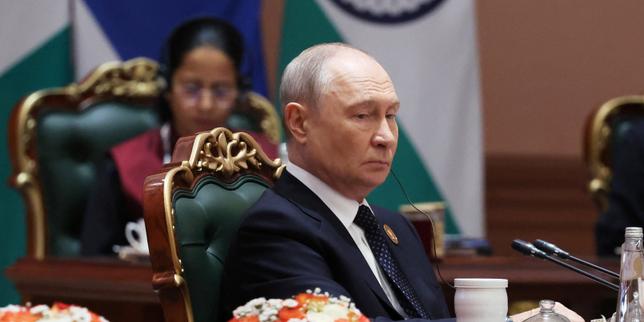
The marble halls of global diplomacy are built to muffle footsteps. Diplomats stride across them with practiced ease, their briefcases heavy with communiqués, their expressions smoothed into identical masks of polite indifference. But sometimes, a single absence weighs heavier than a room full of delegates.
Far from the microphones and the press briefings, in the quiet corridors of Moscow, a question hangs in the air like winter smoke. Nobody has said it aloud in the gilded offices yet, but everyone hears it.
Will the seat be filled?
The summit approaches. The global leaders will gather under high glass roofs, surrounded by security details and flashing cameras, to negotiate the fractures of a strained world order. Yet, the most consequential shadow at the table belongs to a man who sits thousands of miles away. Vladimir Putin.
In the official chambers, the line from the Kremlin is carefully measured, cautious, and deliberately vague. The participation has not yet been discussed. Four words. A bureaucratic shield designed to buy time, to test the political winds, and to keep adversaries guessing.
Silence is a weapon.
Consider what happens when a superpower speaks in whispers. Every capital from Washington to Brussels strains to decode the ambiguity. Is it a feint? A provocation? Or simply a cold calculation of domestic optics versus international isolation?
To understand the weight of that empty chair, we must step away from the ticker tape and look at the mechanics of modern leverage. International summits are rarely places where sudden miracles occur. They are theaters of validation. Leaders do not fly across oceans to change their minds under the hot glare of television lights; they go to project strength, to reassure domestic constituencies, and to force others to acknowledge their gravity.
For the Russian president, the calculus of attending a gathering like the Group of Twenty is a high-stakes chess match played on a board where the rules keep shifting. Go, and risk the chill of diplomatic cold shoulders, the deliberate avoidance in the corridors, the quiet indignity of a boycott. Stay home, and risk the appearance of retreat, of yielding the global stage to a chorus of critics unchecked by a direct counter-narrative.
Neither option is comfortable.
Let us imagine a desk in a high-floor office overlooking the frozen expanse of the Moskva River. A lone adviser looks at a briefing folder stamped with red seals. Inside are economic forecasts, security assessments, and seating charts. Every scenario has been run through algorithms of political survival. If he attends via video link, it is an acknowledgment of distance, a compromise that satisfies neither total presence nor complete defiance. If he flies, the logistics alone require a ballet of security that commands global attention.
Yet, the rest of the world watches with bated breath for entirely different reasons.
For the nations caught in the middle—the emerging economies of the Global South who wish to trade, grow, and feed their populations without becoming collateral damage in a great power struggle—every empty seat at the high table represents stalled commerce and deepening uncertainty. They do not care about the ideological theater. They care about grain prices, fertilizer supply chains, and the cost of fuel. When the heavyweights posture, it is the developing world that absorbs the shockwaves.
The official statement from Moscow remains frozen in time: not yet discussed.
It is a masterpiece of tactical delay. It keeps the pressure alive without committing capital. It forces every foreign ministry in the West to maintain contingency plans, to draft response statements, and to wonder if the diplomatic equilibrium of the year will be upended by a single unexpected confirmation.
As the calendar pages turn toward the summit date, the tension will only tighten. The diplomatic machinery will hum louder. Ambassadors will drop subtle hints over lukewarm coffee at embassy receptions. Journalists will parse pronouns and adverbial modifiers in every official press release, searching for a hidden signal.
The chair remains vacant for now. But in the theater of international power, an empty space is never truly empty. It is filled entirely with the collective anxiety of a world waiting to see who will walk through the door.


