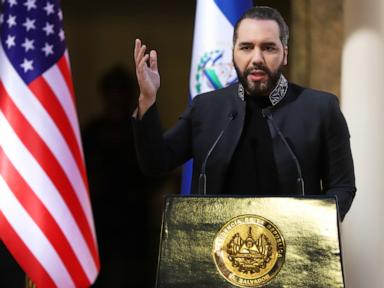
Western media is trapped in an ideological loop. Every time El Salvador's Legislative Assembly makes a move to solidify President Nayib Bukele’s political longevity—including paving the way for a third term—the standard playbook is deployed. Pundits wring their hands. Outlets publish ominous warnings about the death of democracy. Academics declare the arrival of a standard-century Latin American autocracy.
They are looking at the wrong map. Meanwhile, you can explore other stories here: The Chokepoint Where Global Commerce Holds Its Breath.
The lazy consensus views Bukele’s consolidation of power as a classic military junta rehash. It isn't. What is happening in El Salvador is not a regression to 1970s authoritarianism; it is the first real-world execution of the sovereign startup model. Bukele isn’t acting like a traditional dictator. He is acting like a hyper-growth tech CEO who just executed a hostile takeover of a bankrupt enterprise, restructured the board, and is now ignoring the minority shareholders to build a monopoly.
If you analyze El Salvador through the lens of political science, you get it wrong. If you analyze it through the lens of corporate restructuring and venture capital, everything makes sense. To see the bigger picture, check out the detailed article by USA Today.
The Flawed Premise of the Democratic Vacuum
The core argument against Bukele’s third-term maneuvering relies on a romanticized memory of El Salvador’s pre-2019 political era. Mainstream commentators treat the previous duopoly of ARENA and FMLN as if it were a functioning democratic system.
It was a failure.
I have spent over a decade analyzing Latin American macroeconomic trends and sovereign risk profiles. Before Bukele, El Salvador was not a democracy; it was a failed state outsourced to gangs. The MS-13 and Barrio 18 syndicates ran the economy, collected the taxes via extortion, and dictated where citizens could walk. The formal government was merely a shell company used by corrupt politicians to skim foreign aid.
To complain that Bukele is disrupting institutional checks and balances ignores a brutal reality: those institutions only existed to protect the elite and codify systemic inertia.
When a company is burning cash, facing a total collapse of its core market, and run by a compromised board, you do not ask the CEO to respect legacy bureaucratic processes. You bring in an activist investor to fire the board, rewrite the bylaws, and pivot the product. That is exactly what the Salvadoran electorate did. Bukele's 80% plus approval ratings are not the product of forced propaganda; they are the feedback loop of consumers who finally got a product that works.
People Also Ask: Is El Salvador safe now or is it a police state?
The standard narrative tries to frame El Salvador’s security transformation as a temporary illusion bought at the cost of civil liberties. Critics point to the state of exception and mass incarcerations as proof of an unsustainable police state.
This misses the economic mechanics of security. Crime is a tax. In El Salvador, the "gang tax" was an existential drag on small businesses, crushing GDP growth for decades. By internalizing the violence and locking up 2% of the population, Bukele removed the most significant tariff on the Salvadoran economy.
Is there a cost? Absolutely. Innocent people have been swept up in the dragnet. The legal system is compromised. Any founder who has scaled a company from zero to a billion dollars knows that moving fast breaks things. In a sovereign state, breaking things means violating traditional civil liberties. It is a brutal trade-off, but pretending the previous status quo was more humane is intellectual dishonesty. The old system allowed thousands of murders a year. The new system trades institutional purity for physical survival. The citizens made their choice.
Bitcoin and the Sovereign Balance Sheet Pivot
You cannot understand Bukele’s push for a third term without understanding his financial strategy. When El Salvador adopted Bitcoin as legal tender, Western economists laughed. The IMF issued stern warnings. The World Bank refused to help. The media ran endless hit pieces tracking the fiat value of the country’s Bitcoin treasury during the crypto winter.
They treated it like a gimmick. They failed to see the macro-hedging strategy.
El Salvador is a dollarized economy. It has no sovereign monetary policy. It cannot print money to inflate away its debt, nor can it devalue its currency to make exports cheaper. It is entirely at the mercy of the US Federal Reserve. For a small developing nation, this is financial servitude.
Bitcoin was never about replacing the dollar for everyday grocery purchases. It was an asymmetric bet on sovereign autonomy. By placing Bitcoin on the national balance sheet and initiating volcano-powered mining operations, Bukele began building an alternative financial stack outside the legacy SWIFT system and IMF jurisdiction.
Legacy Sovereign Model:
Taxation -> IMF Loans -> Structural Adjustment -> Austerity

The Bukele Sovereign Model:
Security Capital -> Tech Immigration -> Alternative Treasury Assets -> Sovereign Autonomy
When you understand that El Salvador is trying to escape the global debt trap, the necessity of political continuity becomes obvious. A strategy this radical cannot be executed in a standard four-year election cycle. A transition of power back to the traditional political class would result in an immediate liquidation of the Bitcoin strategy and a return to IMF vassalage. Bukele’s third term isn’t about ego; it’s about protecting the long-term capital deployment strategy of the state.
The Risks of Key-Man Dependency
To be clear, this contrarian approach has a massive, glaring vulnerability. It is the same vulnerability that plagues Tesla, Apple under early Jobs, or any hyper-centralized organization: Key-man risk.
Bukele has built a system that functions entirely on his personal brand, his communication style, and his centralized execution. By weakening independent institutions to achieve rapid optimization, he has ensured that the state cannot function without him.
If Bukele disappears tomorrow, the entire structure collapses. There is no institutional framework to carry out "Bukelism" without Bukele. The ruling party, Nuevas Ideas, is not an ideological movement; it is a fan club with legislative voting rights. This is the real danger of his third term—not that he is a dictator, but that he has failed to build a decentralized system that can survive his eventual departure. He has optimized for velocity over resilience.
The Sovereign Market is Voting with Capital
While journalists write obituaries for Salvadoran democracy, the market is delivering a different verdict.
Capital is moving. Digital nomads, tech entrepreneurs, and Bitcoin investors are migrating to San Salvador. Direct foreign investment is shifting from predatory colonial loans to venture capital and infrastructure development. Tourism has surged because the fundamental product—the country itself—is now safe to consume.
The traditional metrics used by Freedom House or the Economist Intelligence Unit are obsolete in this new paradigm. They measure compliance with a Western liberal framework that failed El Salvador for thirty years. They do not measure the KPIs that matter to everyday citizens: safety, economic mobility, and national dignity.
Bukele has realized that in the 21st century, nations compete for talent and capital just like startups. If you provide a safe environment, low taxes, and tech-forward regulation, the market will reward you, regardless of what the state department in Washington thinks about your constitutional amendments.
The third term isn't a crisis. It's the cost of a long-term turnaround strategy. Stop evaluating El Salvador by the rules of a game it chose to stop playing.