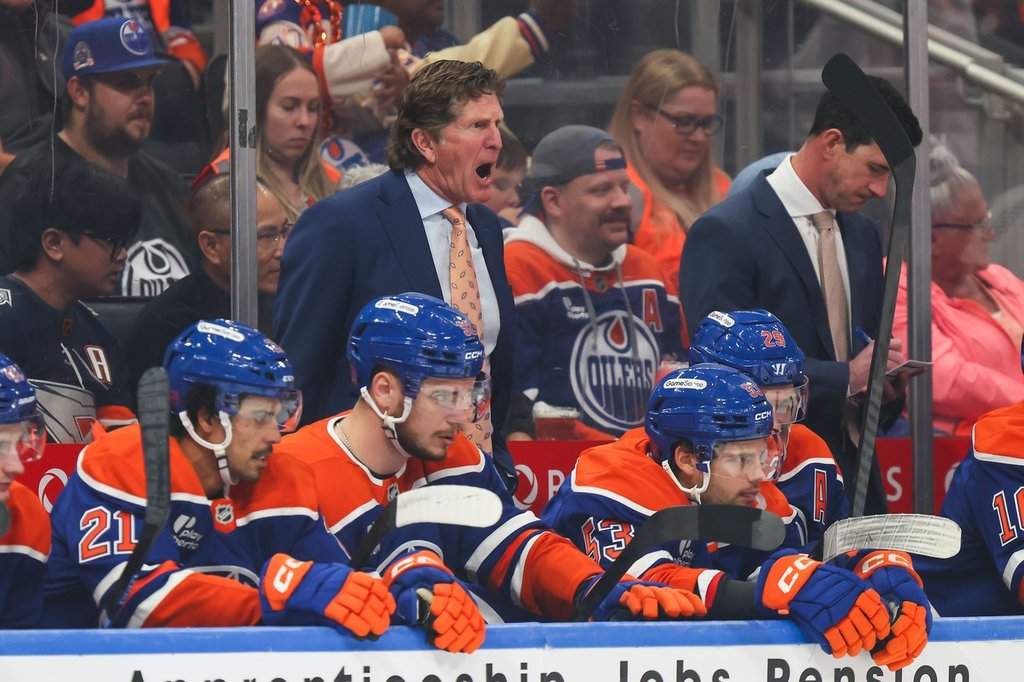
Hockey discourse loves a clean narrative. When a perennial contender suddenly stops leaking goals, analysts rush to crown the architect behind the bench, attributing the shift to pure tactical wizardry and iron-fisted accountability. In Edmonton, the early-season transformation under Mike Babcock has been hailed as a defensive masterclass. The Oilers are suppressing high-danger chances, limiting rush opportunities, and banking points at a historic clip.
Yet beneath the sparkling surface data lies a much more fragile reality. The underlying metrics tell a story of a team living on borrowed time, heavily propped up by extraordinary individual performances in the crease and an elite top line that continues to mask structural cracks.
The Mirage of Micro-Level Stability
To understand why the defensive numbers require a heavy dose of skepticism, one must look at how territory is being conceded. Under the current system, the Oilers have accepted a lower possession ceiling in exchange for lower-risk distributions in the neutral zone. On paper, goals-against averages have plummeted compared to previous campaigns.
The trouble begins when examining expected goals percentages during five-on-five play. Edges are being lost along the boards, and defensive zone exits frequently rely on chipping pucks out rather than clean, possession-based breakouts. When a team routinely concedes the shot clock and plays extended shifts trapped in its own end, regression is rarely a matter of if; it is a matter of when.
Take a hypothetical shift in the defensive zone: a tired group gets hemmed in for forty seconds, forced into tight man-to-man coverage because the low-slot support collapsed too early. Even if the shot eventually taken from the perimeter is blocked or safely gathered, the cumulative physical tax on the blueline compounds over sixty minutes, eighty-two games, and potentially four rounds of spring hockey.
Goaltending and the Margin for Error
No element has masked the defensive turbulence quite like the goaltending tandem. The combination of Tristan Jarry and Devon Levi has provided a safety net that previous editions of this roster could only dream of. High-danger save percentages have spiked into elite territory, turning what should have been multi-goal deficits into tight, winnable affairs.
Relying on a goaltender to consistently post saved-above-expected numbers well above league average is a dangerous long-term strategy. When goalies are forced to stand on their heads night after night against high-volume slot chances, minor injuries and fatigue inevitably creep in. If the goaltending regresses even slightly toward their career averages, the defensive deficiencies currently hidden by spectacular glove saves will instantly manifest on the scoreboard.
The Super-Star Tax
It is also impossible to evaluate Edmonton's defensive metrics without accounting for the distortion created by Connor McDavid and Leon Draisaitl. When the world's best players are simultaneously driving historic offensive outputs, opponents are forced to alter their own deployment, spending more time chasing the play and worrying about their own blue line than cycling in the offensive zone.
When the top line is off the ice, however, the structural vulnerabilities become glaring. Secondary scoring and depth defensive pairings have occasionally struggled to maintain territorial control, yielding momentum shifts that force the coaching staff to lean excessively on heavy minutes for their marquee forwards. Pushing star forwards past twenty-two minutes a night might win games in November, but it creates an unsustainable physical deficit come April.
The Hard Truth About Accountability
The friction in Edmonton is not about whether a strict voice can impose discipline. The locker room bought into the messaging because desperate teams welcome any framework that promises order over chaos. But systems must be measured by how they hold up against elite structural forechecks in hostile environments, not just early-season matchups against struggling opponents.
If the possession metrics do not improve and the reliance on goaltending heroics persists, the current trajectory will hit a hard wall. Structure without sustained puck control is merely a bend-and-break exercise waiting for the right opponent to snap it.