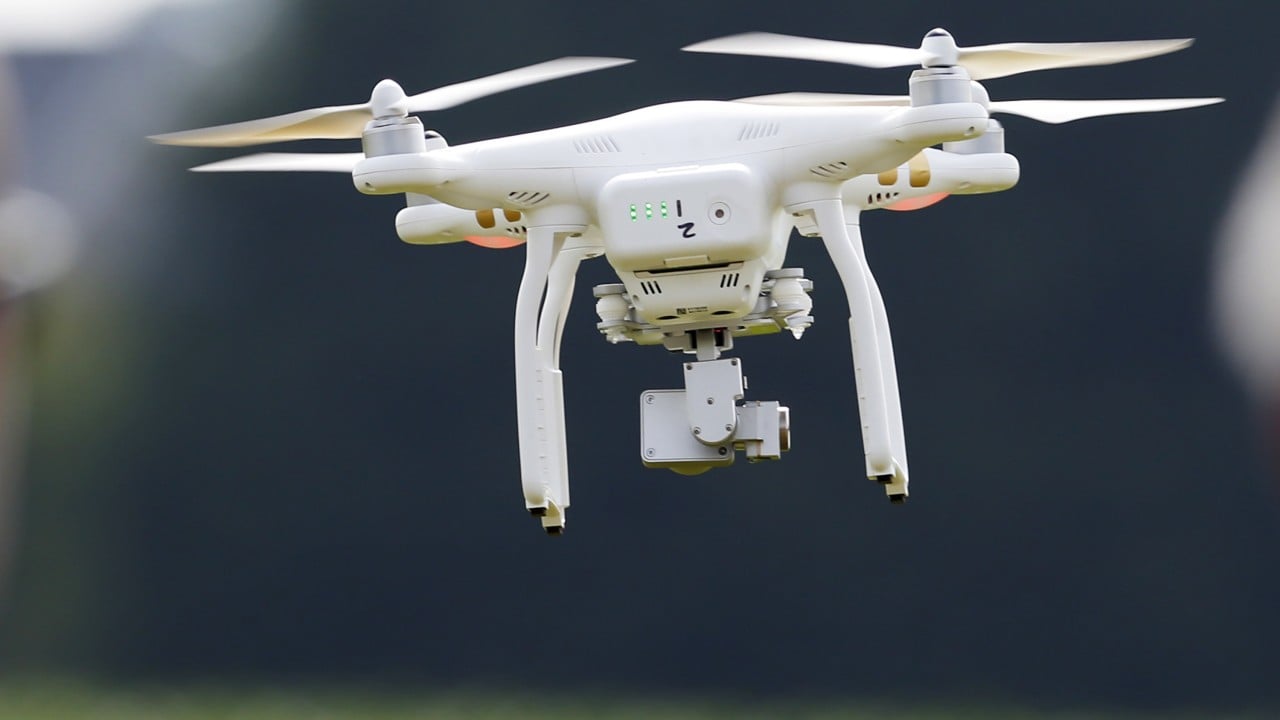
The white house proclamation invoking Section 232 of the Trade Expansion Act of 1962 to impose tariffs of up to 100 percent on unmanned aircraft systems fundamentally alters the operating calculus for commercial and defense-adjacent hardware supply chains. By targeting imports based on weight thresholds exceeding 25 kilograms, thermal-imaging capabilities, and specialized docking stations, the administrative framework attempts to sever dependency on Chinese manufacturing dominance. Yet, analyzing this intervention solely through the lens of protectionist nationalism ignores the mechanical realities of component-level sourcing, assembly arbitrage, and structural capacity constraints within domestic manufacturing ecosystems.
The underlying policy architecture rests on three distinct operational tiers. Heavy systems and platforms equipped with thermal sensors face the maximum 100 percent import duty, designed to penalize enterprise-grade and dual-use airframes. Consumer and light commercial platforms below the 25-kilogram threshold are subjected to a 25 percent levy. Simultaneously, the executive order introduces discriminatory allied tariff rates, setting a 15 percent duty for imports originating from the European Union, Japan, South Korea, Taiwan, Switzerland, and Liechtenstein, and a 10 percent duty for the United Kingdom, provided that underlying hardware and software originate entirely within those designated jurisdictions or the United States. In similar updates, we also covered: Why Indonesia Is Taking Total Control of Its Natural Resources.
This tiered structure creates a multi-layered compliance burden that goes far beyond simple border taxation.
The Mechanics of Supply Chain Laundering and Component Dependence
Prior regulatory actions, such as the Federal Communications Commission wireless authorization bans targeting specific foreign adversary manufacturers, created a regulatory wedge. However, those restrictions left a gaping operational loophole: domestic and non-restricted assembly firms could freely import millions of intermediate components—including brushless motors, electronic speed controllers, lithium-ion battery cells, and injection-molded airframes—and complete final integration within domestic facilities. The Economist has also covered this important issue in great detail.
The new Section 232 tariffs target this exact practice, which trade enforcement analysts characterize as supply-chain laundering. By penalizing raw parts and intermediate assemblies, the administration attempts to force a transition from final-assembly localization to deep-tier component onshoring.
The structural flaw in this mechanism lies in the asymmetry of the global supply base. China controls more than two-thirds of the global drone market and maintains an absolute chokehold on the refined rare earths, specialized polymer manufacturing, and high-density energy storage required for uncrewed flight. Domestic US alternatives for micro-motors and specialized optical payloads operate at significantly lower production volumes, resulting in unit cost multipliers that can exceed 300 percent compared to established Asian nodes.
When a municipal police department, agricultural enterprise, or industrial inspection firm faces a 100 percent tariff on a thermal-imaging drone, the immediate economic response is not an automatic shift to a higher-priced domestic alternative. Instead, it creates a capital rationing bottleneck. Organizations delay hardware refreshes, extend the operational life spans of aging legacy fleets, or absorb margin compression, which directly degrades operational readiness in sectors dependent on real-time aerial data.
The Allied Sourcing Paradox and Origin Verification Costs
The provisions granting preferential tariff rates to allied partners introduce complex verification hurdles. To qualify for the 10 percent or 15 percent brackets, importers must prove that substantially all hardware, software, and technology originate within the United Kingdom, the European Union, allied Asian economies, or the United States.
This requirement triggers massive tracing friction. Modern drone manufacturing relies on a sprawling sub-tier vendor network where silicon chips, passive electronic components, and firmware modules are cross-sourced from multiple continents. Tracing the provenance of a flight controller's semiconductor substrate or a sensor's printed circuit board requires forensic supply-chain auditing.
Many European and Asian component manufacturers also utilize sub-tier inputs or foundry services connected to Asian industrial ecosystems. If an allied supplier incorporates intermediate elements derived from non-qualifying jurisdictions, the entire shipment risks reclassification into the standard high-tariff tier. This ambiguity introduces legal exposure and compliance overhead that smaller specialized firms cannot absorb. Consequently, rather than stimulating secure allied trade, the rigid origin requirements risk discouraging smaller international suppliers from engaging with the American market altogether.
Capacity Deficits in Domestic Onshoring Programs
To offset these market shocks, the proclamation directs the Department of Commerce to establish an onshoring program designed to incentivize domestic manufacturing investments. While financial subsidies and capital expenditure grants can accelerate factory construction, they cannot bypass the multi-year engineering lead times required to build functional industrial clusters.
Manufacturing advanced uncrewed systems requires a specialized workforce, precision tooling, and chemical processing capabilities that have steadily eroded within the domestic industrial base over the past three decades. A factory shell can be built in twelve months, but qualifying domestic suppliers for aerospace-grade composite materials, secure flight-control firmware, and optical gimbals requires rigorous testing cycles.
During this transition window, domestic demand will chronically outstrip domestic production capacity. The volume gap between what American and allied factories can physically produce and what commercial and public-sector markets demand creates an artificial scarcity loop. Prices across all tiers will escalate, shifting the economic burden onto municipal agencies, utility providers, and emergency responders who rely on these systems for public safety workflows.
Strategic Allocation of Capital Under High-Tariff Realities
Organizations dependent on uncrewed aerial systems must transition away from simple procurement models and adopt a structured asset-mitigation framework.
- Audit existing inventory immediately to map component-level dependency, identifying precisely which sub-assemblies originate from restricted or high-tariff jurisdictions before September compliance deadlines take effect.
- Restructure fleet maintenance protocols to maximize the operational longevity of currently deployed assets, treating existing hardware as restricted capital equipment rather than disposable consumer technology.
- Engage directly with suppliers verified within the UK, EU, and designated allied tiers to secure pre-vetted bills of materials that satisfy strict origin thresholds before administrative enforcement tightens.
- Allocate discretionary capital toward modular software platforms capable of running on hardware-agnostic airframes, reducing exposure to single-source physical manufacturing shocks.