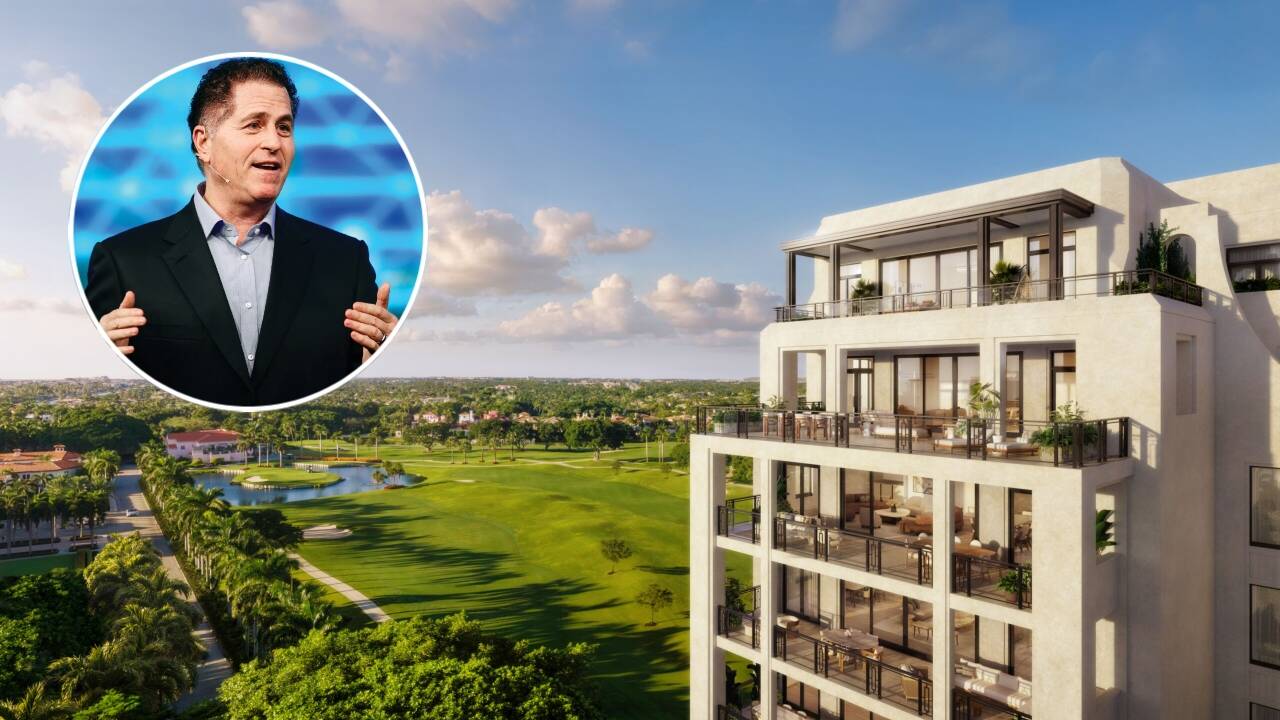
The conversion of high-performance hospitality assets into branded residential enclaves represents a structural shift in how institutional capital extracts yield from luxury real estate. When BDT & MSD Partners acquired the historic Boca Raton resort for $875 million in 2019, followed by substantial capital deployment for infrastructure upgrades and refinancing, the transaction signaled more than a standard asset turnaround. It laid the groundwork for an integrated monetization model where real estate sales subsidize property enhancement and lock in long-term high-margin club memberships.
Understanding the financial architecture of this strategy requires examining the mechanics of asset-backed residential integration, the pricing elasticity of ultra-prime markets, and the yield curves associated with hospitality-branded living.
The Capital Expenditure and Refinancing Loop
To evaluate the viability of luxury condo pricing floors starting near $9 million and scaling past $20 million, one must first analyze the capital expenditure cycle. Acquiring a legacy property requires an aggressive operational overhaul to reset the asset's Average Daily Rate (ADR) and RevPAR (Revenue Per Available Room).
The financial lifecycle of this strategy operates on three distinct phases:
- Acquisition and Debt Structuring: Securing massive asset bases via private capital consortiums allows sponsors to absorb short-term negative cash flows during renovation cycles. Subsequent refinancings, such as the billion-dollar-plus capital restructures tied to the property, lower the cost of capital while freeing up liquidity for vertical expansion.
The Economics of Ultra Luxury Real Estate Development
business, travel
The modern ultra-prime residential market operates on a financial logic that defies standard real estate economics. When luxury resort developments command eight-figure entry points, the underlying mechanics shift away from simple square-foot valuations toward exclusivity premiums, asset anchoring, and brand equity monetization. Analyzing projects developed by high-net-worth principals, such as Michael Dell's $875 million resort initiatives, reveals how ultra-luxury hospitality integrates residential components to mitigate development risk and maximize capital velocity.
Luxury residential development at the extreme high end relies on a triangular structure: brand equity, scarcity arbitrage, and service-layer capitalization. Traditional residential real estate depends on local median incomes, mortgage interest rates, and localized supply-demand curves. Ultra-prime branded residences, conversely, decouple entirely from local economic indicators. They tap into a global pool of hyper-liquidity, where buyers evaluate real estate not as a shelter asset or standard income-producing property, but as a portable status signal and a secure store of capital.
The economic engine driving these projects is the capitalization of the resort amenity set. Developing a world-class resort requires massive upfront capital expenditure with extended payback periods through transient room nights and food and beverage revenues. By layering ultra-luxury condominiums—priced at $20 million and upward—directly into the master plan, developers achieve a dual-phase financial optimization. The residential sales proceeds absorb a significant portion of the initial construction debt, while the permanent resident base guarantees baseline operational demand for the resort's high-margin amenities, including private aviation coordination, wellness infrastructure, and bespoke hospitality services.
Understanding this asset class requires examining the cost function and margin structures that govern $20 million tier properties. Standard developments operate on construction costs plus a target margin of fifteen to twenty percent. Ultra-prime properties invert this equation. Developers begin with the targeted psychological threshold of the global buyer, work backward to establish the maximum possible price per square foot, and then engineer the scarcity, architectural pedigree, and material finishes to justify that figure.
Land acquisition costs in prime coastal or trophy micro-locations represent a fraction of the total capital stack. The primary cost drivers are design complexity, bespoke structural engineering, and the execution of hyper-customized interiors that meet the exacting standards of ultra-high-net-worth individuals. To maintain valuation integrity, developers must enforce strict architectural controls that prevent over-customization by individual buyers while still offering a veneer of bespoke personalization. This creates an operational bottleneck: balancing standardization for construction efficiency with the absolute customization demanded by a buyer purchasing at the $20 million tier.
The integration of hospitality brands into residential real estate introduces a permanent revenue mechanism known as the branded residence premium. Properties affiliated with elite operators command a twenty to thirty percent valuation premium over non-branded equivalents in the exact same geographic corridor. This premium exists because the brand functions as an institutional trust proxy. Global buyers purchasing properties sight-unseen or utilizing them as secondary or tertiary assets require operational certainty. The brand guarantees property management, maintenance, security, and effortless rental management programs when the owner is absent.
Consequently, the developer transfers long-term operational liability to the management brand while capturing an immediate upfront premium on the gross development value. This financial structure mitigates the cyclic risk inherent in pure hospitality plays. If tourism dips due to macroeconomic headwinds, the residential component has already realized its capital return.
Evaluating the viability of such developments requires isolating three core risk vectors: execution velocity, macroeconomic liquidity shifts, and zoning or environmental friction. Luxury buyers are intensely sensitive to momentum. A project that stalls during foundational phases suffers from reputational degradation that is nearly impossible to reverse without significant price discounting—a fatal move in the ultra-prime segment where price stability is the primary product feature.
Furthermore, these projects depend on the liquidity of global wealth centers. When central banks tighten monetary policy or geopolitical tensions restrict cross-border capital flows, the buyer pool contracts sharply. Developers must structure their capital stacks with low leverage during the pre-construction phase to withstand extended absorption periods without triggering distress covenants.
Environmental and regulatory constraints represent the final structural hurdle. Ultra-prime locations are frequently situated in pristine ecological zones, coastal boundaries, or protected micro-climates. Obtaining entitlements requires navigating complex bureaucratic frameworks and mitigating environmental impact assessments. The cost of delays in this tier is catastrophic, as carrying costs on hundreds of millions of dollars in land and pre-development capital compound daily.
Market entrants attempting to replicate this model must abandon traditional comparative market analysis. Success in the ultra-luxury tier is a function of capturing irreplaceable geographic assets, securing elite institutional operating partners, and engineering a financial model where residential pre-sales de-risk the broader hospitality ecosystem before the first guest checks in.