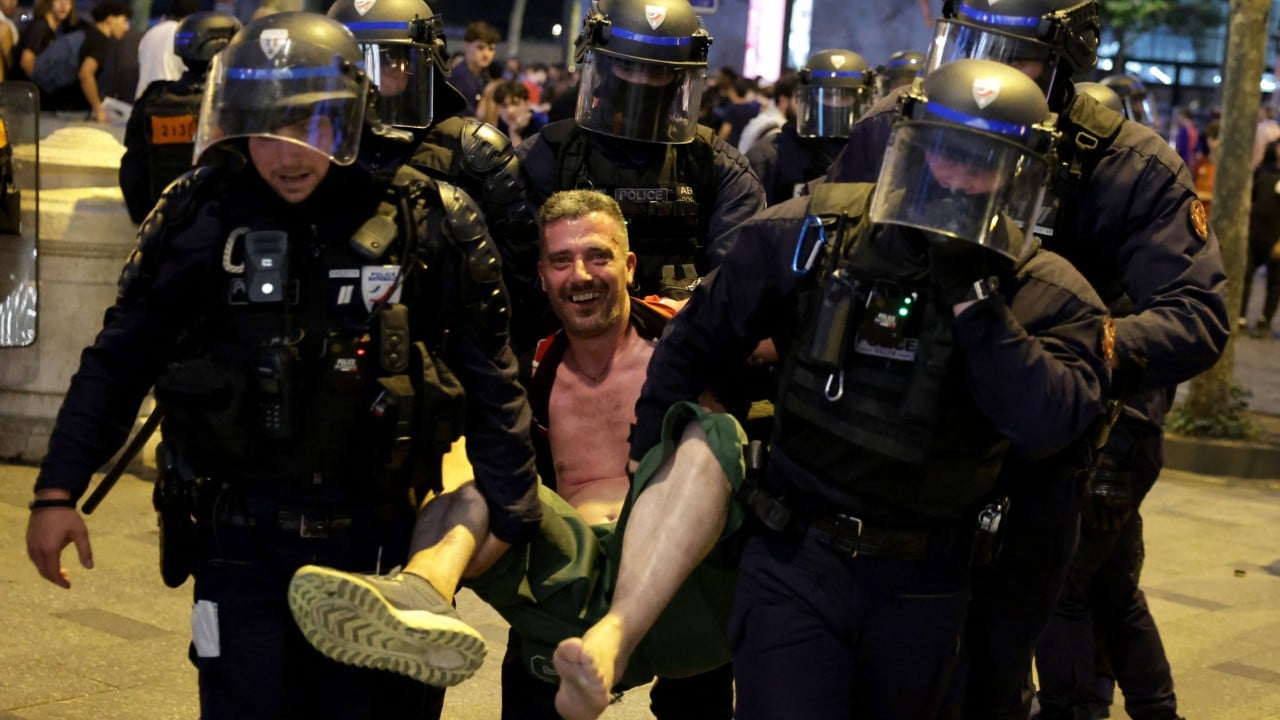
The convergence of elite sporting achievement and urban mobilization transforms a football club's continental success into a complex logistical and economic phenomenon. When Paris Saint-Germain (PSG) positions itself on the verge of a UEFA Champions League title, the narrative usually centers on sporting legacy or individual player brilliance. The actual mechanics of the event, however, rely on a highly coordinated deployment of municipal infrastructure, commercial monetization strategies, and security frameworks designed to manage mass fan assembly in Paris.
To evaluate the true impact of this sporting milestone, the situation must be stripped of emotional rhetoric and analyzed through three distinct operational vectors: municipal crowd-management dynamics, the monetization of fan sentiment, and the long-term structural valuation of the club’s brand equity.
The Tri-Sector Model of Urban Fan Mobilization
Managing hundreds of thousands of individuals assembling in the capital requires a coordinated response across three distinct sectors: public transit authorities, municipal security forces, and corporate stakeholders. A failure in any single sector disrupts the entire operational chain, turning a celebratory event into a logistical bottleneck.
1. Transport Network Elasticity
The primary operational challenge is handling the sudden spike in passenger volume on specific transit lines, particularly those servicing the Parc des Princes, the Champs-Élysées, and central transit hubs like Châtelet-Les Halles.
- The Surge Factor: Standard match-day operations accommodate roughly 48,000 spectators. Continental victory celebrations increase this demand by an estimated 300% to 500%, requiring immediate adjustments to train frequencies on Métro Lines 1, 9, and 10.
- The Dispersal Constraint: The efficiency of the dispersal phase depends on the throughput capacity of station turnstiles and platforms. If the inflow rate exceeds platform capacity, stations require immediate closures to prevent dangerous overcrowding, shifting the transit burden directly onto surface-level bus networks and pedestrian walkways.
2. The Civil Security Containment Function
Municipal authorities approach mass gatherings from a risk-mitigation perspective. The objective is to establish spatial containment zones that allow for celebration while protecting commercial property and public infrastructure.
- Perimeter Hardening: The installation of physical barriers along major avenues serves to guide crowd flow and separate pedestrian zones from vehicular traffic.
- Resource Allocation: Deploying mobile security units (such as the CRS) operates on a ratio tied to crowd density projections. Security forces must balance visibility—to deter property damage—with strategic withdrawal to avoid escalating crowd tensions.
3. Commercial Hospitality and Spatial Activation
The third sector involves local businesses, particularly hospitality venues, which must adapt their operations to handle immediate, high-volume demand.
- Supply Chain Pressures: Establishments within primary celebration zones face immediate inventory depletion, particularly of beverages and fast-moving consumer goods.
- Spatial Optimization: Venues often alter their physical layouts—removing seating to maximize standing room capacity—to increase peak hourly revenue, trading comfort for sheer volume throughput.
The Monetization of Sentiment: Capitalizing on the Victory Window
The period between securing a place in a major final and the actual event creates a highly profitable window driven by fan emotion. Sports franchises capitalize on this momentum through a structured hierarchy of revenue streams, turning abstract loyalty into measurable financial returns.
       [Fan Emotion / Anticipation Phase]
                       │
         ┌─────────────┴─────────────┐
         ▼                           ▼
[Immediate Monetization]    [Delayed Capture Streams]
 ├── Commemorative Merch     ├── Season Ticket Premiums
 ├── Hospitality Premiums    ├── B2B Sponsorship Tiers
 └── Digital Media Surges    └── Global Brand Licensing
Direct and Indirect Revenue Streams
The financial windfall from a Champions League campaign divides cleanly into immediate cash inflows and delayed, long-term revenue streams.
Immediate monetization relies on high-margin, low-production-lead items. Commemorative merchandise—such as limited-edition kits, scarves, and digital assets—experiences a massive demand spike. During this peak window, consumer price sensitivity drops significantly, allowing clubs and retailers to capture high profit margins. Simultaneously, official hospitality packages, public viewing access, and partner-sponsored fan zones generate substantial event-driven revenue.
Delayed revenue capture plays out over the following fiscal quarters. Winning a major continental title gives a club significant leverage to adjust ticket pricing structures. Season ticket renewals can be priced at a premium, and corporate hospitality boxes can be renegotiated at higher tiers. Furthermore, the club’s media channels see a surge in impressions, which directly translates into higher ad rates and more lucrative digital distribution partnerships.
The Dynamics of Sponsorship Uplift
For global partners like Nike or Qatar Airways, a title celebration acts as a major multiplier for their sponsorship investments. This return on investment occurs through two primary mechanisms:
- Global Media Impressions: The club's iconography is broadcast worldwide during peak viewing hours. The value of this exposure far exceeds standard media buys, as the brand is embedded directly into the emotional highlight reels of the sport.
- Association Premium: Aligning a corporate brand with a championship team repositions that sponsor from a mere financial backer to an elite enabler of success. This association allows sponsors to run highly targeted marketing campaigns that leverage the club's intellectual property in international markets.
Long-Term Capital Appreciation and Brand Positioning
While immediate revenue spikes are valuable, the true strategic goal of a Champions League title is the long-term upward shift in the club's underlying enterprise value. For a club like PSG, historically working to establish itself alongside Europe's traditional football elite, a continental trophy serves as the ultimate validation of its business model.
Shifting from Regional Dominance to Global Lifestyle Brand
Domestic dominance in Ligue 1 offers a stable financial floor, but it lacks the global reach needed to compete with brands like Real Madrid, Barcelona, or Manchester United. Winning the Champions League fundamentally alters this dynamic.
[Domestic Champion Status] ──(CL Trophy Catalyst)──► [Global Cultural Institutional Status]
  Lower Broadcast Multiplier                           Premium Broadcast Multiplier
  Regional Commercial Appeal                           Global Tier-1 Partner Attraction
  Standard Merchandise Margins                        Elite Lifestyle Brand Pricing Power
This transition unlocks non-traditional revenue streams. The club moves beyond sports retail and enters the lucrative world of premium lifestyle and streetwear collaborations. This expansion broadens the customer acquisition funnel, attracting consumers who may not follow weekly domestic fixtures but identify with the club's global cultural footprint.
Squad Valuation and Asset Optimization
The financial health of a modern football club is deeply tied to the balance-sheet value of its playing squad. Success on the European stage directly drives player capital appreciation.
- The Champion Premium: Winning major titles instantly inflates the market value of the squad. This appreciation strengthens the club's position regarding financial sustainability regulations, as player sales can generate higher capital gains.
- Talent Acquisition Leverage: Elite sporting success makes a club a preferred destination for top-tier talent. This leverage allows the club to negotiate favorable contract structures, offsetting high wage demands with the promise of sporting prestige and increased individual commercial opportunities for the players.
Operational Risk Factors and Structural Vulnerabilities
No high-yield strategy comes without significant operational risks. Executing a large-scale victory celebration and managing a sudden rise in brand status exposes several structural vulnerabilities that require careful management.
The Risk of Fan Disenchantment
The commercialization of a sporting triumph always risks alienating the core domestic fan base. If local fans feel priced out by rising ticket costs or feel the stadium experience is being sanitized for a global corporate audience, a club can lose its authentic atmosphere. This erosion of local fan culture ultimately degrades the unique environment that makes the brand valuable to international TV audiences and sponsors in the first place.
The Variable Performance Bottleneck
The financial and operational models detailed here depend heavily on on-field results—a variable that cannot be fully controlled or automated.
                       [High-Fixed-Cost Infrastructure]
                                      │
                 ┌────────────────────┴────────────────────┐
                 ▼                                         ▼
     [Scenario A: On-Field Win]                [Scenario B: On-Field Loss]
                 │                                         │
                 ▼                                         ▼
   System Functions as Intended               Severe Under-Utilization of Assets
   • Max Commercial Capture                   • Excess Merch Inventory Write-offs
   • Infrastructure Costs Justified           • Projected Revenue Deficits
   • Long-Term Brand Valuation Growth          • Brand Valuation Stagnation
A sudden exit in the knockout stages or a loss in the final creates immediate financial friction. Merchandise produced in anticipation of a win must be written off, promotional campaigns must be canceled, and projected revenue growth models must be sharply revised downward. Clubs that over-leverage themselves based on assumed sporting success face severe financial strain if those on-field results fail to materialize.
Strategic Recommendation for Club Leadership
To maximize the value of this competitive window, club executives must look beyond immediate merchandise sales and implement a coordinated strategy designed to lock in long-term gains.
- Convert Transnational Digital Surges into Permanent Assets: Do not rely on temporary social media impressions. Direct this influx of attention into owned digital ecosystems, such as premium membership apps and direct-to-consumer content platforms, securing first-party data that can be monetized regardless of next season's on-field results.
- Establish Multi-Year Commercial Partnerships Immediately: Leverage the peak valuation window to sign long-term sponsorship deals. Locking in higher baseline revenues now protects the club's finances against the inevitable volatility of future sporting campaigns.
- Stagger Ticket Pricing to Protect Core Fan Assets: Implement a tiered ticketing structure that keeps traditional fan sections accessible while aggressively maximizing revenue from corporate and premium hospitality zones. This approach preserves the authentic stadium atmosphere that drives the club's global media value, while fully capitalizing on corporate willingness to pay.