Mega-events like the Olympic Games operate under extreme capital concentration and rigid operational constraints. When organizing committees and professional franchises allocate complimentary access to local community organizations, the transaction is frequently misconstrued as simple philanthropy. In operational reality, this transfer represents a complex multi-variable optimization problem involving venue capacity management, public relations capital, municipal compliance, and stakeholder appeasement.
The announcement that the Los Angeles 2028 Olympic Committee and the Los Angeles Rams are distributing free tickets to local nonprofits exposes the underlying structural mechanics of modern mega-event planning. To understand this initiative, one must abandon sentimental narratives of civic generosity and instead evaluate the cold trade-offs of inventory management, tax incentives, community mitigation, and brand equity protection.
The Inventory Problem: Zero-Marginal-Cost Capacity
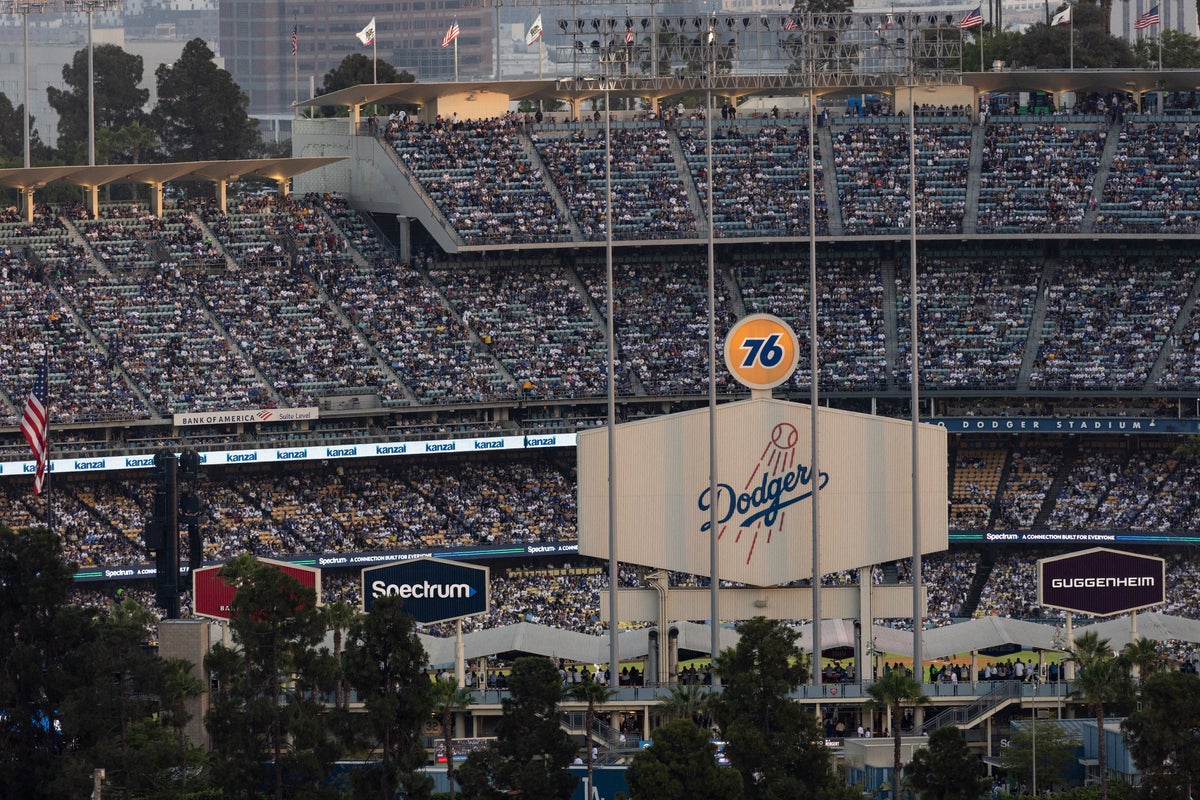
Every large-scale sporting venue operates on a fixed-capacity cost structure. Once a stadium or arena is built or retrofitted, the marginal cost of seating an additional spectator is near zero, while the opportunity cost of an empty seat is structurally damaging. Empty seats destroy atmosphere, degrade the visual product broadcast to global media rights holders, and signal a failure of demand forecasting.
However, organizers cannot simply dump excess inventory into open public markets without risking structural price erosion. Ticket pricing architectures depend entirely on maintaining perceived scarcity. If premium or upper-tier inventory is heavily discounted or given away indiscriminately, the primary market pricing model collapses, lowering the realized yield per seat across the entire tournament life cycle.
Nonprofit allocation functions as a controlled release valve for this excess inventory. By routing tickets through vetted community organizations rather than open secondary markets, the organizing committee achieves three distinct logistical objectives:
- Capacity Absorption: It fills seats that would otherwise sit vacant, preserving the visual integrity of the venue for television broadcasts.
- Scarcity Protection: It avoids public price-matching or deep discounting that devalues paid tickets held by corporate sponsors and retail consumers.
- Friction Reduction: It externalizes the administrative cost of distribution. Instead of vetting individual low-income recipients, the organizing committee delegates distribution logistics to established municipal nonprofits.
This structural mechanism transforms potential waste into social capital. The nonprofit sector acts as an outsourced logistical pipeline, absorbing tickets that have a high opportunity cost if left empty and zero marginal cost to produce, while generating positive externalities that benefit the host city's political ecosystem.
Public Relations Capital and the License to Operate
Hosting an Olympic Games within a major metropolitan area creates severe negative externalities for local residents. Traffic congestion, displacement, increased policing, and heavy municipal expenditure inevitably generate intense public friction. Civic opposition can manifest as protests, legal challenges, and political resistance that threaten the execution timeline of the Games.
To maintain a social license to operate, organizing committees must actively neutralize opposition from marginalized or lower-income communities who bear the highest burden of urban disruption while receiving the lowest direct economic benefit from international tourism.
Complimentary ticket distribution acts as a targeted mitigation tax. By transferring high-value access to youth groups, community development funds, and local charities, the organizers purchase localized goodwill. This form of capital distribution functions similarly to corporate social responsibility expenditures, but with a specific operational target: dampening civic unrest and securing municipal cooperation.
The inclusion of a major professional franchise like the Los Angeles Rams amplifies this dynamic. NFL franchises operate under strict municipal scrutiny regarding stadium use agreements, zoning variances, and community benefit mandates. Aligning with an Olympic committee allows the franchise to offset ongoing criticisms related to real estate dominance and gentrification in the local market. The tickets distributed are not merely seats; they are regulatory currency traded to ensure frictionless municipal operations.
The Principal-Agent Problem in Nonprofit Distribution
While the upstream logic of inventory absorption and political mitigation is sound, the downstream execution introduces classic principal-agent friction. The organizing committee acts as the principal, delegating ticket distribution to local nonprofits who act as agents.
Nonprofits operate under vastly different utility functions than event organizers. While the committee seeks global visibility, civic compliance, and brand protection, an individual nonprofit organization prioritizes internal stakeholder management, donor relations, and programmatic survival. This divergence creates three operational failure modes:
- Misallocation and Scalping: Without rigid auditing frameworks, physical or digital tickets transferred to charitable entities can inadvertently leak into secondary markets, undermining the scarcity preservation strategy of the primary organizer.
- Access Inequity: Nonprofits often service specific insular networks. The distribution mechanism risks bypassing the most vulnerable populations in favor of constituents who already possess high organizational connectivity.
- Logistical Friction: Low-income beneficiaries often face secondary financial barriers that prevent them from utilizing complimentary tickets. Transportation costs, parking fees, mandatory concessions, and lost wages from taking time off work transform a free ticket into a net expenditure for a working-class family.
To mitigate these risks, sophisticated event operators must mandate strict compliance metrics. The distribution channel requires cryptographic validation through secure ticketing platforms to prevent unauthorized transfer, alongside direct subsidization of transit and ancillary costs to ensure that the nominal value of the ticket matches its realized utility for the recipient.
Evaluating the Downstream Economic Impact
The long-term economic return of community-focused ticket allocations is frequently miscalculated by standard financial metrics. Traditional accountants look at the face value of the inventory and record it as a direct revenue forfeiture. This is an analytical error.
The true economic return is measured through three distinct variables:
- Sponsor Valuation Multipliers: Global corporate sponsors demand alignment with socially responsible initiatives. Showing measurable community integration enhances the activation value of sponsorships, allowing the organizing committee to command higher fees from Tier 1 partners.
- Municipal Concessions Value: Demonstrable goodwill among local government officials streamlines bureaucratic approvals for street closures, security permits, and temporary infrastructure deployment. The velocity of these approvals directly reduces capital expenditure overruns.
- Labor Force Retention: Mega-events rely heavily on local volunteer networks and temporary low-wage labor. Cultivating deep ties with community nonprofits creates an organic recruitment pipeline for event-time operations, reducing human capital acquisition costs.
When these variables are aggregated, the decision to surrender primary ticket revenue for zero-price distribution yields a positive net present value compared to the alternative scenario of empty seats and hostile civic environments.
Strategic Operational Execution
For organizing entities and franchise management teams executing similar large-scale community initiatives, success depends entirely on structural precision rather than generalized goodwill. The following execution framework must govern future allocations:
- Inventory Segmentation: Isolate perishable inventory that carries zero residual market value post-event, ensuring that high-demand finals and premium ceremonies are excluded from broad charitable dumps to protect core revenue streams.
- Cost-Friction Elimination: Pair every ticket distribution with mandatory transit subsidies and digital access support to neutralize the hidden costs of attendance for economically disadvantaged recipients.
- Compliance Architecture: Implement end-to-end digital tracking to audit the final destination of every distributed seat, eliminating leakage into secondary resale markets and protecting brand equity.
- Quantifiable KPI Tracking: Measure success not by the volume of tickets distributed, but by the reduction in local municipal friction, the stability of the event timeline, and the verified engagement rate of target demographic cohorts.
Mega-events are ruthless exercises in logistics, capital allocation, and risk mitigation. Treating ticket distribution as a strategic balancing mechanism rather than a philanthropic afterthought ensures that civic goodwill and economic efficiency scale in tandem.