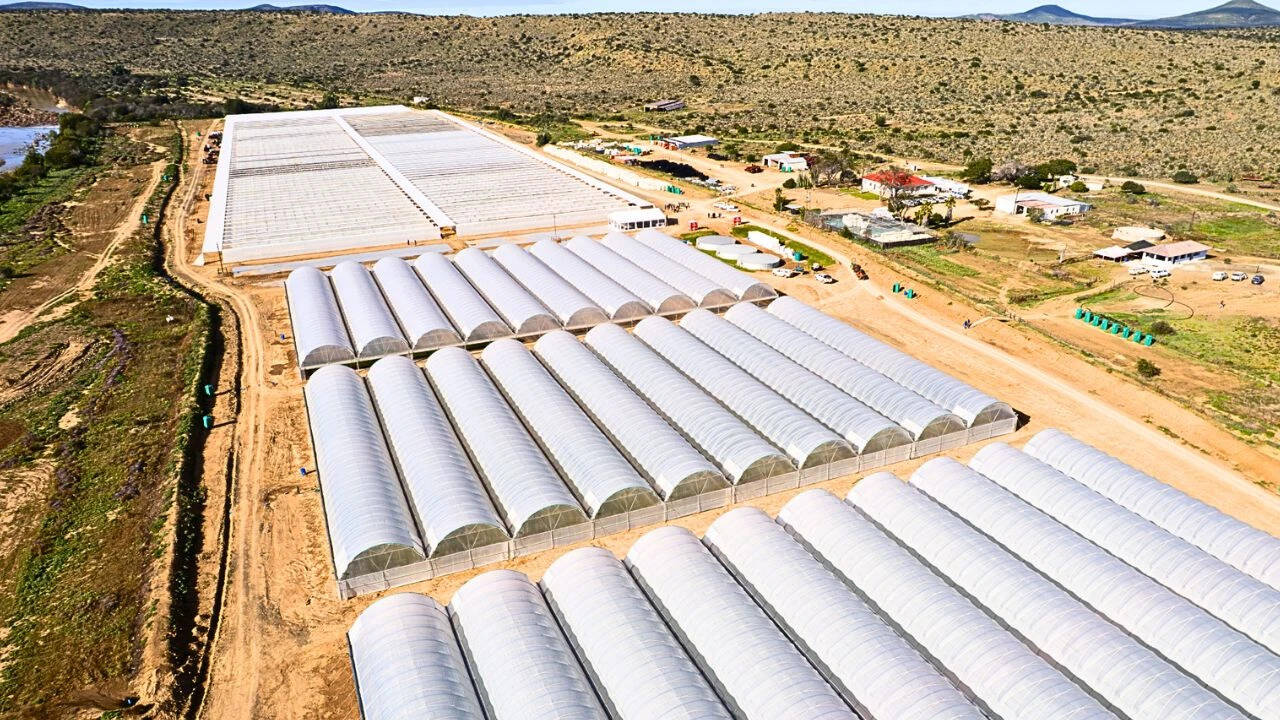
Decades of overgrazing, poor land management, and unchecked pastoralism have left large swaths of South Africa's Eastern Cape stripped of vegetation, vulnerable to severe soil erosion, and locked in chronic rural poverty. Into this bleak terrain steps an industrial-scale ecological intervention built around a humble, fleshy-leaved succulent known locally as spekboom (Portulacaria afra). Backed by major corporate offtake agreements, World Bank-backed outcome bonds, and private environmental capital, a massive campaign is underway to plant 180 million spekboom cuttings across more than 50,000 hectares of the degraded Albany thicket.
The financial and operational architecture behind this initiative tells a story far more complex than standard corporate greenwashing. Proponents project that the program will generate roughly 11,000 jobs by 2030 and inject over $500 million into surrounding communities through wages, landowner compensation, and local procurement. Yet behind the glowing press releases lies a high-stakes experiment in financializing dryland ecosystems, testing whether carbon markets can actually deliver permanent structural change to regions abandoned by traditional industrial economics. Meanwhile, you can find related events here: The Ghost Of Greenspoint And The Concrete Revival.
The Botanical Engine of the Albany Thicket
Spekboom is an ecological outlier. Unlike slow-growing indigenous canopy trees that require delicate nursery cultivation and constant irrigation, Portulacaria afra functions as an ecosystem engineer. A single broken branch or dropped leaf jammed directly into dry soil will root and thrive. In its natural dense state, the Albany thicket captures carbon at rates comparable to young tropical rainforests, despite existing in a semi-arid subtropical climate.
The mechanism relies on Crassulacean Acid Metabolism, allowing the plant to fix carbon efficiently under extreme heat and drought stress. When packed densely across eroded slopes, spekboom drops leaf litter that rapidly builds organic soil carbon, restores water infiltration, and cools local microclimates. To explore the complete picture, we recommend the detailed analysis by Bloomberg.
However, scaling this biology from a textbook theory to a landscape-spanning operation requires navigating immense logistical hurdles. The first phase, managed by restoration specialists Imperative, launched across 10,000 hectares with 30 million plants. Scaling that footprint fivefold requires millions of individual cuttings, meticulous manual planting schedules, and constant monitoring to prevent browsing livestock from devouring young shoots before they establish root systems.
Financial Engineering Meets Dryland Restoration
The economics of the Eastern Cape project rely on a sophisticated blending of private equity and development finance. Historically, large-scale land rehabilitation struggled to secure upfront capital because ecological returns take decades to materialize while expenses hit immediately.
To solve this liquidity crisis, the initiative utilized an innovative financial instrument: the World Bank's Spekboom Outcome Bond. By securing a decade-long purchase commitment from Amazon for nearly two million tonnes of high-quality nature-based carbon removal credits, the project established predictable future cash flows. This guaranteed offtake gave institutional investors the confidence to buy in alongside specialized climate funds like GenZero, Mirova, Rubicon Carbon, and Bregal Sphere.
Independent carbon rating agency BeZero Carbon assigned the project a high-tier rating, classifying it among the premier afforestation, reforestation, and revegetation initiatives globally. That stamp of approval matters in a voluntary carbon market frequently plagued by skepticism over permanence and additionality. If the plants survive and the soil carbon accumulates as modeled, corporate buyers secure verifiable removal units while the Eastern Cape receives hard currency.
The Human Equation Behind the Numbers
Projections of 11,000 jobs sound transformative in a province where official unemployment hovers near fifty percent. But turning those job numbers into reality requires direct community integration rather than top-down execution.
The labor involved is intensely physical. Workers must fence off parcels to control grazing pressure, clear invasive species, harvest cuttings from mother plantations, and plant millions of shrubs by hand across rugged topography. Beyond direct wages for planting crews, the program incorporates local enterprise development, training small businesses in fencing and nursery management, and distributing agricultural support to safeguard household food security.
Critics of corporate carbon offsetting often question whether local populations retain sovereignty over their lands or merely serve as cheap labor for multinational net-zero accounting. Project organizers have attempted to counter this by structuring landowner compensation models and community trusts directly into the financial flows of the outcome bond. Yet the true test will not be measured in the first three years of planting, but in whether these economic structures persist long after the initial capital deployment fades.
The Unforgiving Realities of Climate and Governance
Every landscape restoration project carries inherent biological risks. Climate change brings unpredictable rainfall patterns, prolonged droughts, and elevated temperatures that can stress even resilient succulents. If regional warming outpaces physiological adaptation, or if local grazing management collapses, survival rates for the 180 million cuttings could plummet.
Furthermore, long-term permanence depends entirely on institutional stability. Land tenure disputes, shifting local political dynamics, and economic shocks can disrupt decades-long conservation covenants. Carbon removal credits traded today assume that the carbon stored in the Eastern Cape's soil and biomass will remain locked away for generations. If a severe drought or accidental wildfire sweeps through the restored thicket twenty years from now, the baseline assumptions of the entire financial structure face immediate recalculation.
The bet on spekboom is ultimately a test of whether global market demand for carbon removal can be harnessed to repair badly broken rural economies without falling into the traps of extraction and neglect. As millions of new green shoots take root across the dry hills of the Eastern Cape, the success or failure of the project will set a critical precedent for how the developing world funds ecological survival.