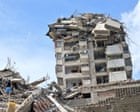
The silence that follows a massive earthquake is not peaceful. It is heavy, suffocating, and thick with pulverized concrete. If you have ever been inside a disaster zone, you know that the first thing that hits you isn't the sight of the wreckage. It is the smell of ruptured gas lines, ionized air, and the sudden, terrifying absence of everyday noise. No traffic. No birds. Just the sound of your own frantic breathing and the distant, agonizing groans of shifting rebar.
When the crust beneath Venezuela fractured, it did not care about political boundaries, economic crises, or infrastructure vulnerabilities. It simply tore through communities with a violent reminder of our own fragility.
The early wires from international media outlets read like financial reports or sports scores. They listed magnitude numbers, estimated casualties in the thousands, and mentioned the dispatch of international rescue teams as if they were moving pieces on a chessboard. But numbers do not bleed. Numbers do not claw at the rubble until their fingernails are gone, praying to hear a faint cough from beneath five tons of collapsed apartment complex.
To understand what is happening right now in Venezuela, we have to look past the sterile statistics of the international tickers. We have to look at the dirt.
The Anatomy of an Awakening Fault
Earthquakes are uniquely cruel because they give no warnings. A hurricane can be tracked for days. A volcano drops hints via seismic tremors and sulfur gas weeks before the peak blows. But a fault line is a secret kept by the planet until the exact second it decides to break.
Venezuela sits uncomfortably atop a complex tectonic boundary where the Caribbean and South American plates grind past one another. It is a slow-motion collision. For decades, these massive slabs of rock press against each other, locked in place by friction. The pressure builds. Every year, the strain accumulates, stored quietly deep within the earth like a tightly wound steel spring.
Then comes the failure point.
When the friction finally gives way, the release of energy is instantaneous and catastrophic. Shockwaves ripple outward through the bedrock, transforming solid ground into a fluid, rolling sea. In areas with modern, seismic-resistant engineering, buildings sway like trees, absorbing the energy. But in regions where decades of economic hardship have forced people to build with whatever materials are at hand—unreinforced cinder blocks, brittle mortar, and improvised corrugated roofing—the result is a catastrophic failure.
Consider a hypothetical family living on the steep hillsides of Caracas or in the older coastal towns. Let us call the father Alejandro. He spent ten years saving for the materials to add a second story to his home so his daughter could have her own room. He mixed the concrete by hand. He bought the best rebar he could afford. But without structural engineering oversight, that second story becomes a massive hammer when the ground begins to pitch. When the earthquake hits, the bottom floor crumples under the weight of the top.
This is the grim reality facing search and rescue teams. They are not just digging through rubble; they are navigating a labyrinth of collapsed, improvised architecture that is incredibly unstable.
The Race Against the Seventy-Two Hour Clock
In the disaster response world, there is a sacred, terrifying window known as the "Golden Hours." It spans roughly seventy-two hours.
During this initial three-day window, the human body can survive without water, even while trapped under heavy debris. If a victim is uninjured by the initial collapse, their chances of being pulled out alive are remarkably high. But as every hour ticks by, those odds drop exponentially. Dehydration sets in. Crush syndrome—a medical condition where muscle tissue damaged by severe pressure releases toxic chemicals into the bloodstream once the pressure is removed—becomes a lethal threat.
Right now, specialized urban search and rescue teams from across the globe are touching down at Venezuelan airfields. They are bringing heavy lifting equipment, listening devices capable of detecting a human heartbeat through ten feet of concrete, and search dogs trained to catch the scent of a living person buried deep underground.
But getting to the country is only the first hurdle. The real nightmare is logistics.
Imagine arriving in a country where the main highways have been split in half by fissures. Landslides have choked off the mountain passes. The local electrical grid, already fragile before the disaster, is completely dark. Water mains have burst, flooding low-lying areas and leaving survivors with nothing to drink.
Rescue workers cannot simply drive to the disaster site. They must hike in carrying fifty-pound packs of medical gear, or rely on scarce helicopters to drop them into tight, debris-strewn clearings. Every minute spent clearing a boulder from a road or waiting for a fuel shipment is a minute stolen from someone trapped in the dark beneath a fallen ceiling.
The Vulnerability of the Left Behind
It is a uncomfortable truth that natural disasters are rarely equal-opportunity destroyers. They target the vulnerable with surgical precision.
The wealthy often live in newer developments built to higher standards, situated on stable valley floors. The poor are pushed to the margins—clinging to steep hillsides prone to catastrophic landslides, or crowding into aging, unreinforced brick structures in historic city centers. When the earth shakes, the hillsides slide, taking entire neighborhoods down with them.
The scale of the feared casualties in Venezuela is a direct reflection of this systemic vulnerability. For years, the country has navigated severe economic turbulence. Infrastructure maintenance was deferred. Building codes were luxuries that few could afford to enforce when daily survival was the primary goal.
When you look at the drone footage of the destruction, you see a patchwork of survival and total ruin. One building stands entirely intact, its windows not even cracked, while directly next to it, an entire block has been reduced to a gray mound of dust.
The psychological toll on the survivors is something that rarely makes the evening news. The initial shock gives way to a profound, lingering terror. Because aftershocks are guaranteed. Every few hours, the ground trembles again. It might only be a magnitude 4.0 tremor, but to someone who just watched their home collapse, that slight vibration sends the adrenaline spiking through their veins. No one wants to go sleep indoors. Hundreds of thousands of people are sleeping in parks, on sidewalks, and in open plazas, wrapped in thin blankets, staring at the sky, waiting for the next shudder.
What Happens When the World Moves On
The international media has a short attention span. Right now, Venezuela is the top headline. Camera crews are capturing the dramatic moments—the pulling of a crying child from a narrow gap in the concrete, the arrival of foreign cargo planes, the dramatic statements from world leaders promising aid.
But the true crisis begins about two weeks from now.
The search and rescue teams will eventually pack up their gear and their dogs and fly home. The cameras will find another story. The initial wave of emergency funding will be spent. And the people of Venezuela will be left standing in the ruins of their communities, facing a reconstruction effort that will take a generation.
A shattered city cannot simply be rebuilt overnight. You have to remove millions of tons of contaminated debris before you can even pour a new foundation. You have to rebuild the water treatment plants, re-string miles of high-voltage electrical lines, and figure out how to house families who have lost absolutely everything.
The invisible stakes here go far beyond the immediate body count. This disaster threatens to permanently displace entire populations, fracturing the social fabric of communities that have already endured so much. The teachers, the doctors, the shopkeepers—if they cannot rebuild their lives, they will leave, accelerating a brain drain that the region can ill afford.
The international response cannot just be about the sprint of the first seventy-two hours. It must be about the marathon of the next ten years.
A woman sits on a plastic crate in a makeshift camp in a public park, just a few miles from the epicenter. She is holding a single, cracked ceramic mug—the only item she managed to salvage from her kitchen before the walls caved inward. She isn't looking at the rescue workers or the helicopters buzzing overhead. She is just staring at the dust on her shoes, waiting for a tomorrow that looks nothing like the yesterday she knew.


