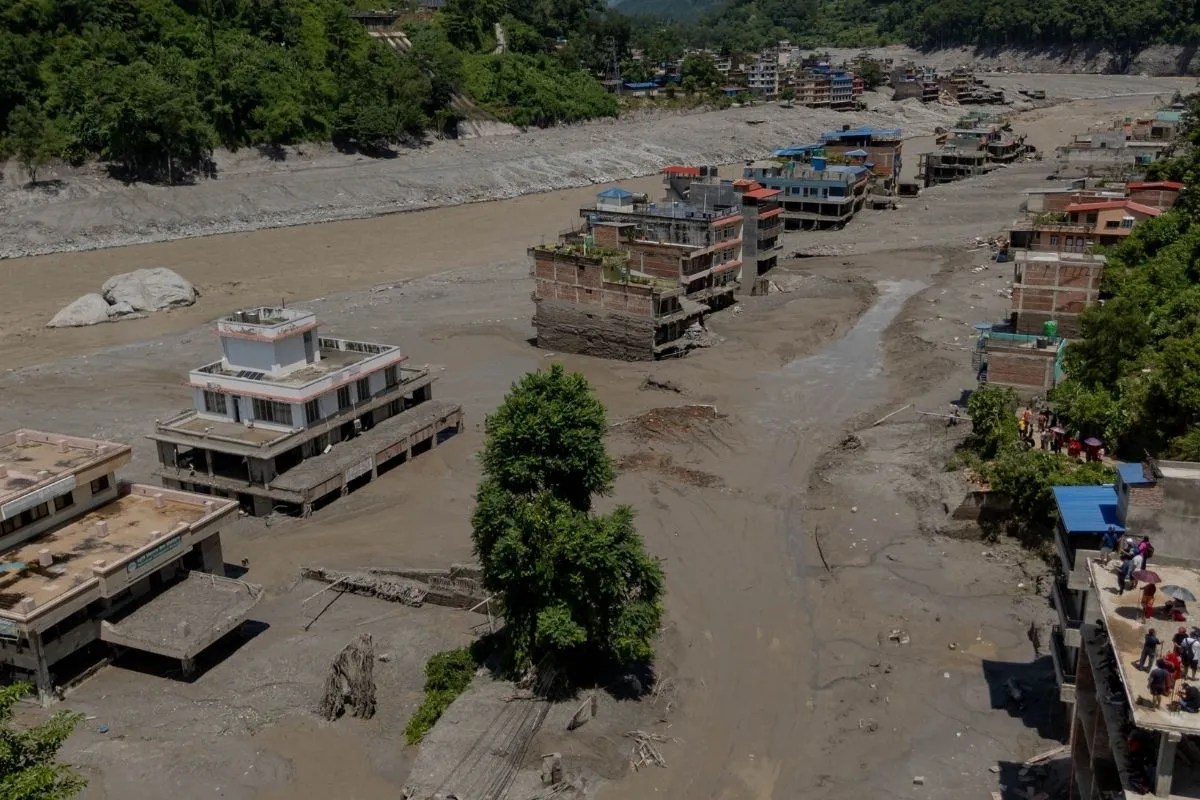
The United Nations has once again sounded the alarm. Millions of residents living in Kolkata and Mumbai face an immediate risk of displacement as accelerated global sea level rise collides with decades of unchecked urban planning, sinking water tables, and crumbling coastal defenses.
This warning is not a distant projection for the next century. It is a current crisis unfolding across two of South Asia's most vital economic engines. When international bodies flag an immediate risk to coastal populations, the immediate reaction from municipal authorities usually involves emergency press briefings, hollow promises of seawalls, and bureaucratic finger-pointing. Behind the glossy climate reports lie decades of poor zoning laws, rampant industrial water extraction, and political corruption that treats natural drainage basins as real estate waiting to be paved.
To understand why Kolkata and Mumbai are sliding toward disaster, you have to look past the generic climate headlines. The threat is geological, hydrological, and fundamentally human-made.
The Sinking Foundations Beneath the Tides
Water does not just rise from the ocean. Ground is dropping beneath the feet of millions.
In both Kolkata and Mumbai, rapid urbanization has triggered massive land subsidence. As municipal water supplies fail to keep pace with population growth, millions of private and industrial boreholes tap deep underground aquifers. Pumping water out of these subterranean layers acts like pulling the stopper from a bathtub. The sediment compacts, the ground sinks, and the relative sea level rises far faster than global climate models predict.
Mumbai sits on a fragmented archipelago of volcanic basalt islands retrofitted with sprawling land reclamation projects. Areas built on reclaimed mangrove swamps and loose landfill are settling at alarming rates. When heavy monsoon rains meet high astronomical tides, these compacted soils cannot drain. The water has nowhere to go.
Kolkata faces an entirely different hydrological nightmare. Situated on the vast Ganges-Brahmaputra delta, the city rests on soft, highly compressible deltaic sediments. The natural flow of silt that historically built and stabilized the delta has been choked off by upstream dams, barrages, and embankments. Without regular deposits of nutrient-rich sediment to offset natural compaction, the land surface drops relative to the Bay of Bengal year after year.
The Myth of the Quick Fix
Politicians love concrete. Seawalls, tidal gates, and drainage pumps offer visible proof of action. They make for great ribbon-cutting ceremonies before the next election cycle.
They also rarely work for long.
Engineering a rigid defense against a fluid, dynamic ocean operating on a sinking foundation is an exercise in expensive futility. When a seawall goes up, it often alters local current dynamics, accelerating erosion in adjacent unprotected zones. When massive drainage pumps clear stormwater inland, they can accidentally draw saline water further into shallow coastal aquifers, ruining local water supplies and destroying remaining patches of urban agriculture.
Furthermore, mega-infrastructure projects frequently bypass the informal settlements where the poorest residents live. Slum communities lining the tidal creeks of Mumbai or the low-lying eastern fringes of Kolkata are systematically ignored in master drainage plans. When floods arrive, these marginalized populations bear the brunt of the displacement while public funds flow toward protecting high-value commercial districts and luxury high-rises.
Mitigation requires changing how cities grow, not just building taller barriers against the water. That means halting construction on natural wetlands, restoring urban mangrove belts that act as natural storm buffers, and strictly regulating groundwater extraction.
The Economic Mirage of Coastal Growth
Real estate drives these economies. Developers continue to build luxury residential towers and commercial hubs directly on vulnerable mudflats and reclaimed coastal zones because the short-term profits are staggering.
Financial institutions share the blame. International and domestic banks routinely underwrite high-risk coastal developments without factoring in long-term climate vulnerability or systemic subsidence. Insurance markets in South Asia are largely unprepared for the scale of systemic property devaluation looming on the horizon. When property values finally crash in flood-prone zones, the shockwaves will ripple through the entire regional banking sector.
Urban planners face a profound moral and professional crisis. Continuing business as usual guarantees catastrophe. Halting coastal development means confronting powerful real estate lobbies and acknowledging that vast swaths of current urban centers are mathematically unviable in the long run.
Managed retreat is a phrase whispered in academic seminars but treated as political suicide in municipal offices. Relocating millions of people from low-lying neighborhoods involves logistical and financial hurdles that dwarf almost any public works project attempted in modern history. Who pays for the land? Where do the displaced communities work? How do you preserve social fabric when an entire neighborhood is dismantled?
The Unforgiving Timeline
The UN warnings are based on observational data that shows acceleration, not steady linear progression. Ice sheet instability in Antarctica and Greenland is tracking toward the worst-case scenarios outlined by climate scientists decades ago.
Every inch of sea level rise exponentially increases the frequency of extreme storm surges. A storm that once had a one-in-a-hundred-year probability of occurring can become a biennial event. For Kolkata and Mumbai, this means the window to pivot from reactive disaster management to proactive structural transformation is closing fast.
The water keeps rising, the ground keeps sinking, and the maps printed today will be obsolete tomorrow.