The Staged Reality of Modern Logistics
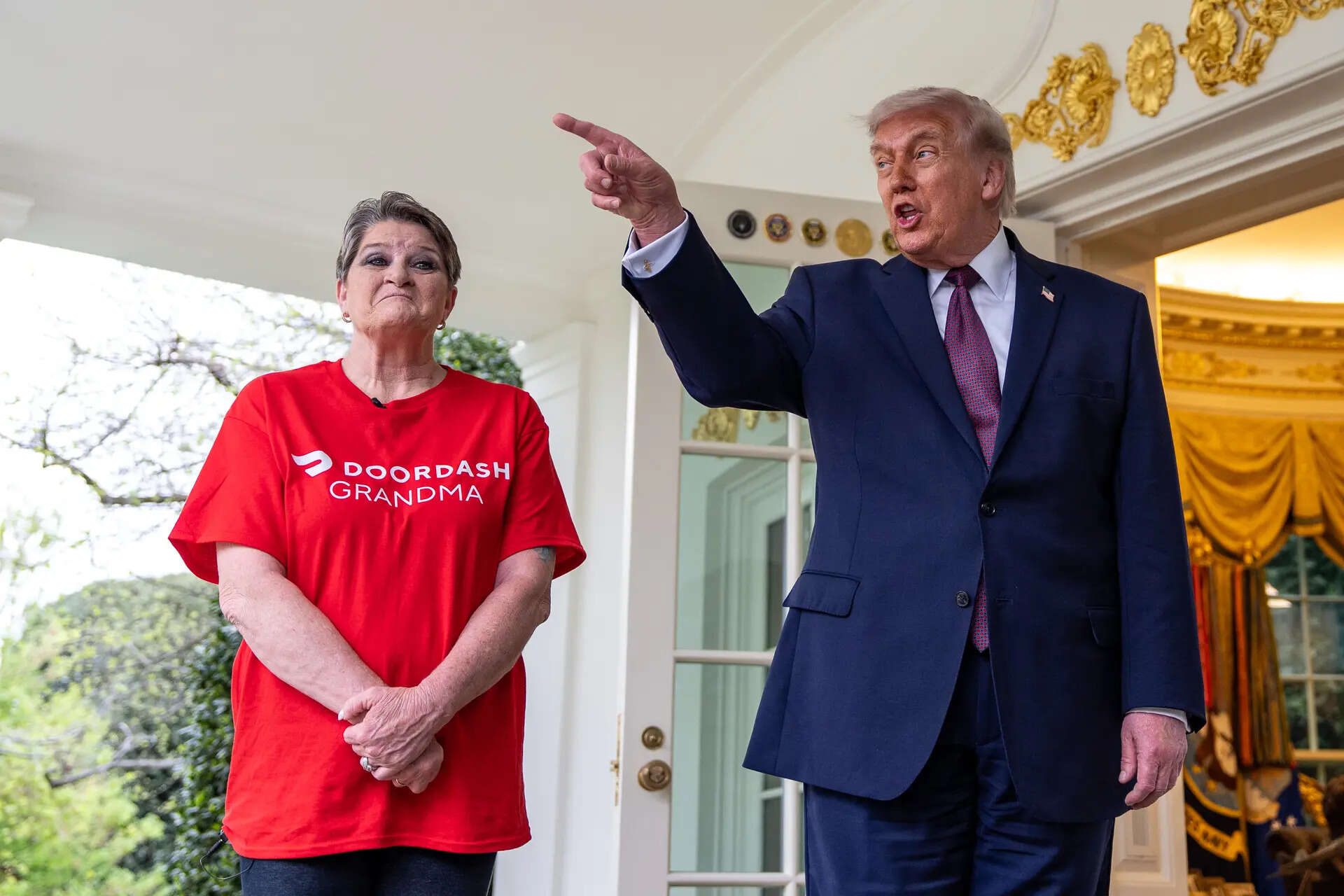
The internet is currently obsessed with Sharon Simmons. You’ve seen the headlines. An Arkansas grandmother, a private jet, and a McDonald’s bag delivered to a Mar-a-Lago motorcade. The mainstream media is tripping over itself to prove it was "fake." They point to the logistics of a three-hour flight for a lukewarm Quarter Pounder. They highlight the obvious coordination between the campaign and the "delivery driver."
They are missing the entire point.
Calling this a "fake" delivery is like calling a professional wrestling match a "fake" sporting event. Of course, it’s choreographed. The mistake isn't in the staging; the mistake is believing that DoorDash—or any gig economy giant—is still just a delivery service. This wasn't a failure of authenticity. It was a masterclass in modern attention-hacking that used the gig economy as a prop.
The Logistics of the Spectacle
Critics argue that "no one is claiming it was real." This is the lazy consensus. They think they’ve won the argument by proving the mechanics were impossible. I’ve watched brands spend eight-figure marketing budgets on "organic" stunts that had less reach than this single Arkansas-to-Florida flight.
In the world of political branding, "real" is a secondary concern to "resonant." The logistical absurdity—the $20,000 flight for a $15 meal—is the feature, not the bug. It signals a level of devotion that transcends economic logic. When you analyze the event through the lens of traditional logistics, you’re using an analog map for a digital warzone.
The gig economy has morphed into a theater of the absurd. We aren't just buying convenience anymore; we are buying participation in a narrative. Whether it’s a politician working a shift at a fry station or a grandmother flying across state lines to hand off a bag of food, the platform (DoorDash) is merely the stage.
Why the "Gotcha" Journalism Failed
Media outlets spent hours debunking the delivery. They asked:
- Did she actually use the app?
- Was the motorcade actually stopped for a random dasher?
- Is she a "real" driver or a campaign plant?
These questions are fundamentally flawed. They assume the audience cares about the terms of service. The audience cares about the symbolism. By focusing on the "fakeness," the media actually amplified the reach of the stunt. They became the distribution network for the very imagery they sought to discredit.
In marketing terms, this is high-efficiency earned media. The cost of a private charter is a rounding error compared to the hundreds of millions of impressions generated by the "is it real?" debate. The controversy is the engine.
The Death of the Authentic User
We need to stop pretending there is a line between "user" and "influencer." In the current tech ecosystem, every interaction is potentially a piece of content.
I have seen tech companies burn through seed rounds trying to "foster" (a word I hate, but let's call it what it is: manufacturing) community engagement. They want people to love their brand. Sharon Simmons didn't just use DoorDash; she weaponized it. She took a mundane utility and turned it into a political statement.
The "lazy consensus" says this is a scam. The industry reality is that this is the logical conclusion of the gig economy. When everyone has a side hustle, and every side hustle is a platform for personal branding, "authenticity" becomes a dead metric.
The $15,000 Cold Burger
Let’s talk about the physics of the food. A burger sat in a jet for three hours. It was, by all objective standards, a terrible meal.
But in the attention economy, the quality of the product is irrelevant. The value is in the handover. This is the "Unboxing Video" logic applied to national politics. The content is the delivery, not the consumption.
If you are a business leader looking at this and laughing at the absurdity, you are losing. You are stuck in a world where products are judged by their utility. We moved past that a decade ago. Today, products are judged by the stories they allow users to tell about themselves. Simmons told a story of extreme loyalty. DoorDash provided the iconography of the "everyman" service. The fact that it happened on a private jet is the jarring contrast that ensures the story goes viral.
The Algorithmic Trap
Most people asking "Was it real?" are trapped in an old-world binary. They believe things are either organic or staged.
The truth is the "Synthetic Organic." It is a planned event designed to look like a spontaneous outlier. The algorithms that govern our lives—TikTok, X, Facebook—are programmed to hunt for these outliers. A normal DoorDash delivery is boring. A DoorDash delivery involving a private jet and a former President is an algorithmic goldmine.
The "MAGA Grandma" story didn't go viral because people believed it was a standard delivery. It went viral because it was a perfect piece of high-octane bait. It triggered the supporters and enraged the detractors.
Stop Asking if It Was Staged
The question of whether the delivery was "real" is the wrong question. Of course it wasn't a standard transaction.
The right question is: Why did it work so well?
It worked because it exploited the massive gap between the "elite" (the private jet) and the "populist" (the McDonald's delivery). It bridged that gap using a brand everyone recognizes.
If you're still trying to "fact-check" a meme, you've already lost the war. The mechanics of the flight don't matter. The temperature of the fries doesn't matter. The only thing that matters is that for 48 hours, everyone was talking about a delivery bag.
This wasn't a delivery. It was a broadcast.
DoorDash didn't facilitate a meal; they facilitated a moment of high-fructose political theater. If you’re looking for "truth" in a campaign stunt, you’re looking for a pulse in a mannequin. The theater is the point. The outrage is the profit.
Stop checking the receipt and start looking at the stage.