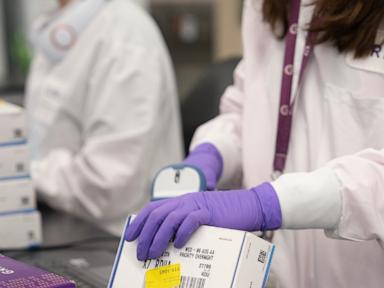
Public health campaigns usually rely on glossy brochures, targeted social media ads, and stern warnings broadcasted from urban offices. But when a highly contagious virus breaches a tight-knit rural community that rejects modern conveniences, brochures are useless. Billboards don't work down dirt roads where homes lack electricity. Twitter threads mean nothing to families living without smartphones.
That is why public health departments have to resort to something much more old-fashioned, personal, and exhausting. They put nurses on the road, walking up long driveways, knocking on wooden doors, and having hard conversations face-to-face.
Measles is terrifyingly efficient. If one person has it, up to ninety percent of unprotected people close to them will become infected. When it enters a community with low vaccination rates, it moves like wildfire. Yet, preventing disaster doesn't happen behind a desk. It happens when healthcare workers swap sterile clinics for front porches, muddy boots, and cups of coffee shared at kitchen tables.
The Anatomy of an Outbreak in Plain Communities
Most people do not understand how measles behaves until it is already tearing through a school or a neighborhood. We take herd immunity for granted. We assume that because vaccines have existed for decades, childhood diseases are relics of history.
They aren't.
When measles hit Ohio's Amish communities a decade ago, it triggered the largest outbreak the United States had seen in twenty years. Over three hundred people caught the virus. Schools closed. Local businesses suffered. Hospitals scrambled to isolate patients. It was a stark wake-up call for epidemiologists and local health officials.
The outbreak didn't happen because people wanted to get sick. It happened because of a confluence of factors unique to Plain populations. Geographic isolation plays a major role. While many Amish communities interact regularly with the modern world for commerce, their social fabric remains fiercely self-contained. Rumspringa, business partnerships, and farmers' markets bring them into contact with outsiders, but their core institutions—schools, churches, and family networks—are insulated.
When a rumor starts about vaccine safety, it spreads through community channels much faster than any official public health bulletin. And frankly, rural communities have every reason to be skeptical of top-down mandates from state capitals.
Why Traditional Public Health Fails Rural Populations
If you send a government health official wearing a business suit and carrying a clipboard to a farm, you have already lost the battle.
Bureaucracy breeds suspicion. For generations, Amish communities have valued self-reliance. They pay their own way, build their own barns, and take care of their own elderly. When a state health department swoops in with emergency declarations and press conferences, it feels less like help and more like an intrusion.
Most public health strategies are built for urban or suburban environments. They assume easy access to primary care physicians, reliable transportation, and constant internet connectivity. None of those assumptions hold true in rural settlements.
Think about the logistical hurdles. How do you notify a community that doesn't read the daily newspaper or watch local news broadcasts? How do you convince parents to vaccinate their children when their local bishop or church elders express reservations?
Standard health communication relies heavily on fear. Headlines scream about infection rates and death tolls. But fear rarely changes minds in tight-knit religious groups. In fact, it often causes them to circle the wagons tighter. When outsiders act panicked, insiders suspect an agenda.
Public health experts frequently make the mistake of viewing vaccine hesitancy through a purely political or anti-science lens. But within Plain communities, the hesitation is deeply cultural and religious. Concerns often center on vaccine ingredients, historical distrust of pharmaceutical companies, or the belief that health is ultimately in God's hands. Dismissing these concerns as ignorance is lazy and counterproductive.
The Power of Trusted Messengers
Real change happens when health departments stop talking at people and start listening to them.
Enter the visiting nurses. These are not clipboard-wielding bureaucrats. They are experienced public health nurses, often with deep roots in rural regions, who understand how to respect cultural boundaries while delivering critical care.
When a nurse walks up to an Amish farmhouse, she doesn't start by demanding compliance. She starts by asking about the family, admiring the quilt on the clothesline, or asking how the corn harvest is going. Building rapport takes hours. It requires patience that modern healthcare systems rarely afford.
In many cases, successful outreach relies on working with insiders who bridge the gap. Local bishops, traditional healers, and respected community members act as translators between modern medicine and traditional lifestyles. If a bishop understands the science and sees that the nurses respect church traditions, he might quietly signal approval to the congregation. That changes everything.
Nurses carry vaccines in coolers, traversing dusty lanes in cars or sometimes even horse-drawn buggies when roads get tight. They set up makeshift clinics in barns or community halls. They answer frantic questions about side effects without judgment. They acknowledge that fear is normal.
This approach takes extraordinary empathy. You cannot fake respect. If a nurse looks down on an unvaccinated family for their lifestyle choices, they will spot it instantly. Trust is earned drop by drop and lost by the gallon.
What Healthcare Workers Everywhere Can Learn
The door-to-door measles response in Amish country offers a masterclass in crisis communication that goes far beyond rural health.
Every industry dealing with public skepticism faces the same trap. Whether you are dealing with vaccine hesitancy, corporate compliance, or financial literacy, the instinct is always to double down on facts and figures. We assume that if we just shout louder, people will listen.
Data doesn't change minds. Relationships do.
When people feel cornered, they dig in their heels. When they feel heard, they soften. Nurses working in Amish country know they might get turned away from ten doors before someone invites them inside for tea. They don't take it personally. They understand that health outreach is an endurance sport, not a sprint.
Another critical lesson is the importance of meeting people where they are physically and mentally. Expecting vulnerable or isolated populations to navigate complex bureaucratic systems to receive care is a design failure. If access is difficult, people won't use it. By bringing the clinic to the front porch, public health workers eliminate friction.
Moving Beyond the Outbreak Cycle
Measles outbreaks in religious enclaves always spark sensational media coverage. Pundits pontificate about education levels or personal responsibility. Then the news cycle moves on, and the underlying structural issues remain unaddressed until the next crisis hits.
Stopping the cycle requires sustained investment in community health infrastructure. It means funding mobile health units and retaining nurses who specialize in rural outreach, long after the immediate threat of an outbreak fades from the headlines.
It also means shifting our cultural narrative around health. We tend to view healthcare as something that happens inside high-tech hospitals with gleaming white floors and million-dollar MRI machines. But the most important healthcare often happens on gravel driveways, under the shade of an oak tree, with a nurse holding a syringe in one hand and a cup of coffee in the other.
Public health is ultimately about human connection. When we remember that, even the most stubborn outbreaks can be contained, one conversation at a time.
Take a close look at how your own organization or community handles resistance. Are you shouting facts from a distance, or are you willing to put on comfortable shoes and walk down the road to listen? The answer usually determines whether you succeed or fail.