The heavy steel door does not just shut. It echoes.
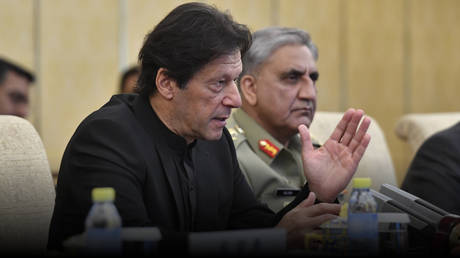
In the corridors of power, sound has weight. A door closing in Adiala Jail carries the collective breath of millions who watch a shifting political horizon from the outside looking in. When Imran Khan was moved back from a medical facility, stepping once more into the shadow of stone walls, the event was reported in dry bulletins. A checkup completed. A routine transfer executed. Vital signs stable.
Words on a screen.
Strip away the bureaucratic language, and you find a starkly different reality. You find a physical body bearing the accumulated friction of an entire nation's unresolved history.
Consider what happens when a leader becomes a symbol. Flesh and bone are easily forgotten. The medical checkup, brief and clinical, serves as a strange sort of punctuation mark in a sentence that has no intention of ending. Doctors check the pulse. They measure the pressure. They look into eyes that have stared down stadiums filled with roaring crowds and, later, empty interrogation rooms. Then, they sign the paper. The paper grants permission for the cycle to resume.
Back to the cell. Back to the silence.
I remember the smell of old iron and damp concrete from places where history is kept under lock and key. It clings to the walls. It enters your lungs whether you want it to or not. When a public figure of this magnitude is shuttled between a hospital bed and a prison cell, the movement is never just about health. It is about geography. It is about keeping a disruptive presence contained within a precise coordinate on a map.
Power in Pakistan has long danced a dangerous tango with incarceration. From the founding days to the current era, the courtroom and the cell have served as the ultimate testing grounds for political survival. This is not an abstract political science concept. It is a human drama played out in real-time, watched by a generation of young Pakistanis who have grown up scrolling through news alerts about bail hearings, medical boards, and sudden transfers in the dead of night.
Think of the young student sitting in a Lahore café, refreshing a live feed on a cracked smartphone screen. To that student, the news of Imran Khan returning to jail after a medical evaluation is not a simple administrative update. It is a barometer of hope and frustration. If the former prime minister can be moved this easily, what does that say about the rule of law? What does it say about the durability of a movement that refuses to dissolve, even under extreme pressure?
The state relies on routine. Bureaucracy is its favorite armor. By wrapping high-stakes political containment in the mundane language of medical checkups, the system attempts to normalize the abnormal. A hospital visit becomes an interruption, a brief pause before normalcy—defined here as detention—is restored.
Yet, routine fails to quiet the noise outside.
Crowds do not gather for medical reports. They gather because of what a person represents. Whether one views Imran Khan as a visionary reformer or a fallen populist, his current predicament exposes a deeper fracture in the country's institutional fabric. When the legal process moves behind closed doors, speculation rushes in to fill the vacuum. Every rumor about his health, every leaked detail from a brief consultation with physicians, becomes currency.
Uncertainty is heavy. I know this feeling well, the kind that settles in the chest when you realize the rules of the game are being written in invisible ink. You try to anchor yourself to facts, but the facts themselves feel slippery. Was the medical checkup thorough? Did he receive the care he required? Will the legal appeals pierce the stone walls this time?
Questions multiply. Answers remain locked away.
History teaches us that political incarceration rarely extinguishes a flame; often, it acts as a bellows. The harder the state pushes down, the more compressed the energy becomes beneath the surface. Yet, the human cost is immediate and visceral. Age does not pause for politics. Health deteriorates under the chronic stress of isolation. Every day spent behind bars is a day carved out of a lifetime, measured not in policy achievements, but in hours ticking away in a confined space.
When the convoy of armored vehicles transported him back from the medical facility, the streets lining the route told their own story. Heavy security. Barricades. The quiet tension of a city holding its breath. The authorities understand the magnetism of movement. Even a transit between a hospital and a jail becomes a security flashpoint, a moment where the physical presence of the prisoner threatens to disrupt the narrative of total control.
So the door shuts. The echo fades.
The news cycle moves on to the next headline, the next political maneuver, the next economic crisis gripping the nation. But in the quiet hours between dawn and dusk, the underlying question remains unresolved. A nation cannot indefinitely imprison its own political memory. Sooner or later, the physical body steps out of the cell, or the ideas it houses break through the stone. Until then, the checkups will continue, the bulletins will be filed, and the heavy iron will swing shut once more, waiting for the next time the world demands to know if he is still breathing.