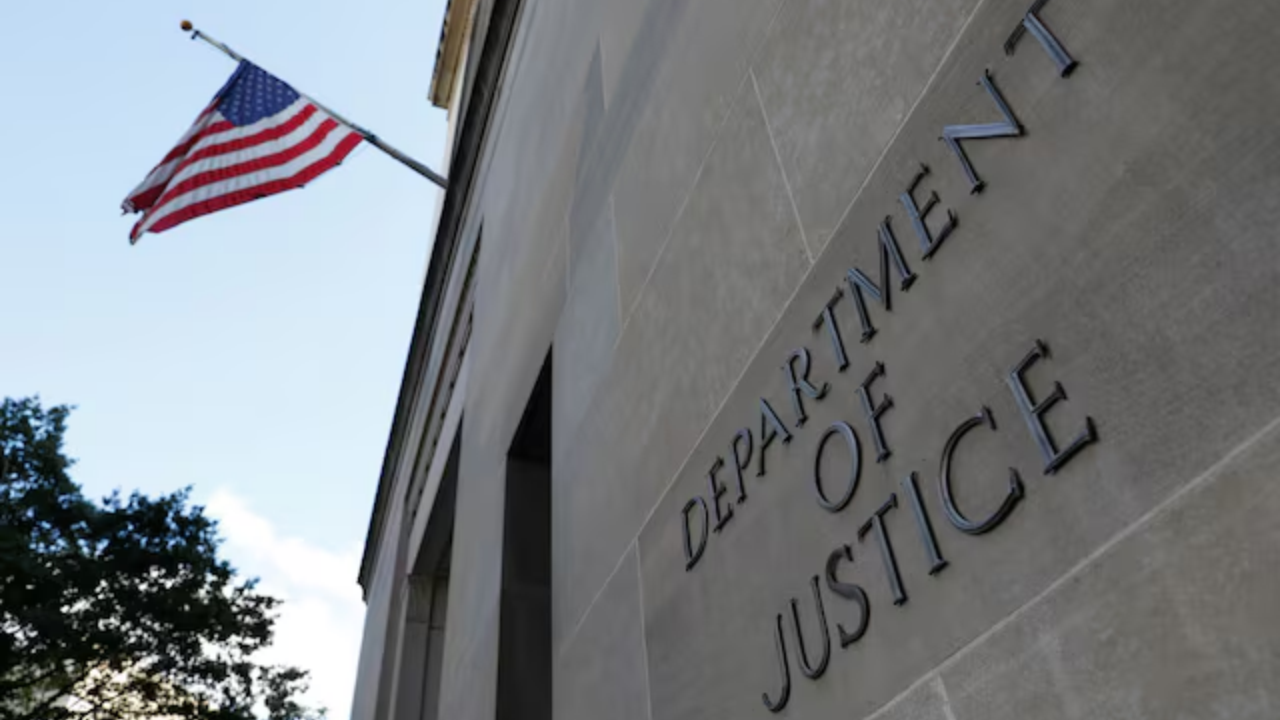
Twenty thousand suspected noncitizen voters. A federal lawsuit in October. A scramble to block mail ballots right before the 2026 midterms. And then, just days after the ballots were cast and counted, the Department of Justice voluntarily dropped its appeal and walked away.
Every standard headline about this clash treats it like a clean moral binary. One camp reads it as a heroic federal crusade to stop foreign nationals from diluting citizen votes. The other camp reads it as a ham-fisted partisan stunt designed to throw mail-in ballots into limbo and whip up midterm outrage. Also making headlines lately: The Real Reason Midterm Senate Debates Turned Into Street Brawls.
Both sides are staring at the decoy while the real structural rot sits untouched.
Here is the blunt truth neither side wants to admit during election season: fighting over unverified federal match lists at the eleventh hour is a terrible way to secure an election, and pretending California's automatic registration plumbing has zero edge cases is equally dishonest. Worse, obsessing over "20,000 suspected noncitizens" on mail ballots distracts voters and officials from far bigger operational vulnerabilities—bad database matching, late-stage ballot segregation chaos, and weak upstream identity verification at the DMV counter. Further details on this are covered by The New York Times.
The Lazy Consensus Around the 20,000-Ballot Headline
Read the typical coverage of the DOJ's October 2026 lawsuit against California, and you get a pre-packaged script. Either "20,000 illegal ballots" were about to swing races, or "DOJ's list was completely bogus."
Both claims skip the hard mechanics.
First, a "suspected" noncitizen on a database match is not a proven illegal voter. Federal citizenship records—like USCIS and SAVE databases—have long been notorious among election administrators and data scientists for name-transposition mismatches, middle-name omissions, naturalized citizens whose records haven't cleanly synced across agencies, and plain old clerical typos. Look at what happened in Nevada in September 2026 when federal officials turned over 185 names of people strongly suspected of being noncitizens: local election officials investigated and found every single one was a U.S. citizen. In Los Angeles County, officials pointed out in court filings that the DOJ's list of roughly 20,000 included a high percentage of people born in the United States.
Second, dismissing the entire issue just because massive fraud hasn't been proven is lazy thinking, too. Federal prosecutors did bring indictments and criminal charges in October 2026 against dozens of foreign nationals in California accused of falsely claiming citizenship to register or vote. When federal agencies charge 28 foreign nationals in a single wave of cases—including people accused of lying on registration forms or naturalization paperwork—you cannot brush off every single question about roll hygiene as pure fiction.
Still, scaling a few dozen prosecuted cases up into a blanket demand to freeze or segregate 20,000 mail ballots days before an election is bad law and worse engineering. Mail ballots in modern elections are processed through high-speed sorting, signature verification, envelope opening, and anonymization pipelines. Once a ballot is separated from its identifying envelope and tabulated, it is deliberately divorced from the voter's identity by design—the secret ballot depends on that wall. Ordering election workers to pull specific ballots out of active streams days before Election Day doesn't create surgical precision. It creates bottlenecks, litigation, and massive false-positive disenfranchisement.
No wonder federal judges—including U.S. District Judge David O. Carter and the U.S. Supreme Court—rebuffed late-stage efforts to force ballot segregation ahead of the vote, and the DOJ eventually dropped its appeal.
Are Voters Actually Asking the Wrong Question?
When a story like this hits People Also Ask boxes, the questions usually sound like: Can noncitizens vote in California? or Did 20,000 noncitizens vote by mail in the 2026 midterms?
Both questions frame the problem backward.
The real question isn't whether a small fraction of ineligible people slip through complex administrative systems—in a state with over 22 million registered voters, edge cases will always exist. The real question is: Why do we wait until ballots are already in the mail to argue about who belongs on the roll?
Imagine a scenario where an airline checks passenger citizenship only after the plane has already taken off and is halfway across the Atlantic. You wouldn't solve that mess by demanding the flight attendants guess which passengers belong in coach and throw their luggage out the door mid-flight. You would fix the boarding pass check before the gate closed.
Elections work the exact same way. Under the National Voter Registration Act (52 U.S.C. § 20507(c)(2)(A)), federal law sets a 90-day quiet period before a federal general election during which states are barred from conducting systematic voter roll purges. That rule exists for a practical reason: hurried pre-election purges using imperfect data routinely knock eligible citizens off the rolls right before they try to vote.
Fighting a courtroom war in mid-October to block mail ballots from people on a disputed spreadsheet is fighting at the wrong point on the timeline. If federal agencies have real citizenship data, the fight belongs in spring and early summer—shared transparently, audited against false positives, and reconciled well before the 90-day cutoff—not weaponized as an October surprise.
What About Mail Ballots Specifically?
Critics love to pair "noncitizen voting" with "mail ballots" as if mailing a piece of paper automatically turns a noncitizen into a voter. That conflates two separate mechanisms.
A mail ballot is a delivery method for someone already on the voter roll. If someone is improperly on the roll, they might receive a mail ballot—or show up at a polling place. Conversely, mail ballots have their own distinct verification hurdles: signature matching, barcode tracking, and voter roll cross-checks before tabulation. Attacking mail ballots in bulk because of a disputed voter-roll list is like blaming the postal truck for an address error in the directory.
Battle Scars From Fixing Broken Data Systems
I have spent years working around large-scale public registries, identity-matching pipelines, and high-volume verification systems. I've seen agencies and enterprises burn millions of dollars chasing "ghost records" with sloppy fuzzy-matching scripts—only to discover that 80% of their red flags were caused by hyphenated last names, junior/senior suffixes, outdated database extracts, or missing middle initials.
When you run a naive match between two massive databases—say, tens of millions of state driver/voter records and federal immigration or naturalization files—without strict deterministic keys and human/secondary verification, false positives explode. A 1% error rate across 20 million records isn't "tiny." That is 200,000 potential false alarms.
Precision matters more than bluster. In election administration, the two errors you can make are:
- False inclusion (type II-style administrative error): An ineligible person remains on a roll or casts a ballot.
- False exclusion (disenfranchisement): A legal citizen is flagged, blocked, or removed by mistake.
The DOJ's approach in October prioritized speed and volume over verification—demanding quick segregation of roughly 20,000 people's ballots without handing over transparent, verifiable proof for each case. California's leadership, meanwhile, stonewalled data requests and framed every federal inquiry as an attack on democracy, even as federal prosecutors were charging dozens of actual foreign nationals with registration and voting crimes.
Both postures are politically convenient. Neither one builds trust.
What Heavy Hitters in Election Law and Data Actually Agree On
Strip away cable-news theatrics, and serious election-law scholars, nonpartisan election administrators, and data engineers largely converge on a few bedrock rules:
- Voter rolls are living databases, not static snapshots. People move, die, change names, or naturalize every single day. A clean roll requires continuous, year-round maintenance—not sporadic pre-election raids.
- List maintenance must be transparent and auditable. When an agency claims someone is ineligible, the underlying matching logic and evidence must be inspectable so election workers can verify accuracy rather than guess.
- Last-minute ballot freezes break chain of custody. Courts across the political spectrum—from district judges to the Supreme Court—repeatedly push back against eleventh-hour ballot-holding orders because late disruptions risk chaos and wrongful disenfranchisement.
The U.S. Supreme Court's quick rejection of the DOJ's bid to force California to set aside those 20,000 suspected ballots wasn't an endorsement of sloppy record-keeping. It was a refusal to let late-stage litigation blow up active ballot processing on contested data.
Where My Contrarian Take Can Backfire
Let's be honest about the downside of arguing for calm, upstream roll hygiene instead of dramatic pre-election interventions.
First, slow administrative reform doesn't satisfy people who feel urgent alarm right now. If someone believes their vote is diluted today, telling them "fix the database syncs in April" sounds like kicking the can down the road.
Second, giving states total unchecked discretion over voter rolls can also create blind spots if officials drag their feet on obvious data discrepancies. "Trust the process" only works when the process is actually audited and transparent—not when officials treat every question about roll accuracy as heresy.
Third, in polarized media ecosystems, nuance loses oxygen fast. Explaining database matching error rates, NVRA quiet periods, and mail-ballot anonymization rules takes three paragraphs; shouting "20,000 ballots!" takes three words.
Actionable Moves That Actually Fix the Problem
If you care about both election integrity and lawful voter access—instead of just scoring partisan points—here is what actually works:
- Mandate early, auditable data sharing before the 90-day window. Require federal and state agencies to exchange citizenship and registration data months ahead of general elections, complete with clear matching standards and error-audit logs.
- Require proof before ballot holds, never rumors. Never segregate or block mail ballots based on unverified lists that haven't cleared citizen-verification checks. If a discrepancy is real, resolve it through proper notice and verification—not courtroom ambushes days before the count.
- Lock down registration at the source. Tighter, clearer prompts and verification steps at motor-vehicle and agency registration touchpoints prevent accidental or fraudulent sign-ups before a record ever hits the active voter file.
- Prosecute proven offenders quietly and thoroughly. When investigators have hard evidence that a noncitizen registered or voted illegally, charge and try those specific individuals—and publish clear data on actual convictions versus raw database flags.
Stop letting courtroom theatrics over disputed spreadsheets trick you into thinking the whole system is either completely broken or completely untouchable. Fix the upstream pipes, audit the data in daylight, and keep the ballot count boring.