The human body is a machine designed entirely for falling. Every bone, every valve in your veins, every tiny calcium crystal floating in your inner ear is built to fight a relentless, invisible downward pull. We do not think about this while walking to the grocery store or making coffee.
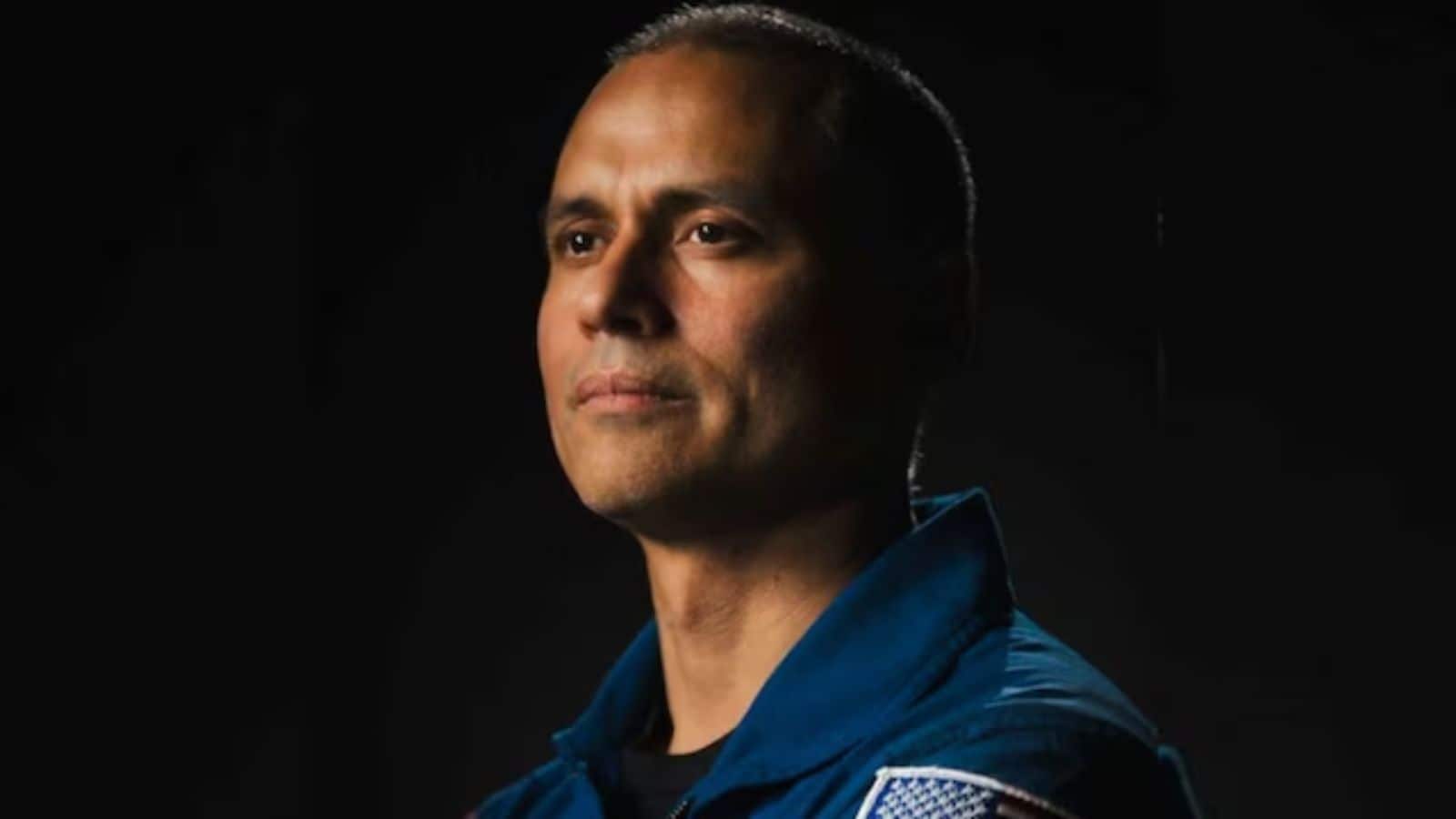
Anil Menon thinks about it constantly. He has to.
For years, Menon was the guy who stayed on the ground, watching other people leave the planet. As an emergency medicine physician and SpaceX’s first flight surgeon, his job was to worry about the meat and bone inside the metal. He knew exactly what happens when you turn gravity off. He knew how the blood climbs into the chest, tricking the brain into thinking the body has too much fluid. He knew how the spine stretches, how the muscles begin to quiet down, and how the eyes can slowly flatten under the pressure of a shifting skull.
Now, he is the one strapped to the bomb.
An eight-month mission to the International Space Station is not an adventure. Not really. It is a slow, controlled biological tax. When Menon climbs into the spacecraft, he isn't just launching a piece of machinery into low Earth orbit; he is volunteering his own physiology for a grueling, long-term experiment in survival.
The Weight of Leaving
To understand why a doctor would leave the safety of a hospital floor for the hard vacuum of space, you have to look at how he got here.
Menon is the son of immigrants, born to a Ukrainian mother and an Indian father. His life has been a series of sprints into chaotic, high-stakes environments. He did not sit in quiet laboratories. He went to Haiti after the devastating 2010 earthquake. He rushed to Nepal when the ground tore itself apart in 2015. He spent years in emergency departments, where decisions are measured in heartbeats and a single mistake means a life ends.
In those places, you learn to trust the ground. Even when the earth shakes, it is eventually there to catch you.
But space offers no such comfort.
Consider what happens the moment the main engines cut out and orbit is achieved. The transition is instantaneous. One moment, three times your own body weight is pressing down on your chest, making it hard to draw a full breath. The next, nothing.
You float.
It feels like falling, forever. The brain panics. The vestibular system, which uses tiny rocks in your ears to tell you which way is down, suddenly realizes the rocks are floating too. The stomach rebels. For the first few days, almost every astronaut suffers from space adaptation syndrome. It is a polite term for a violent, disorienting sickness.
Menon, who has treated hundreds of patients in the throes of sudden trauma, will have to diagnose his own body as it attempts to rewire its entire sensory map. He will have to look at his hands and remind himself that up and down are merely opinions he left behind in Florida.
The Quiet Dissolution of Bone
We like to think of our bones as solid steel girders. They are not. They are dynamic, living tissues that constantly tear themselves down and rebuild based on the stress we put on them.
On Earth, every step you take sends a signal to your femur: Keep going. We need you.
In orbit, those signals stop.
Without the constant thud of gravity, the body decides that keeping a heavy skeleton around is a waste of resources. It begins to dissolve itself. Astronauts can lose up to one percent of their bone density every single month they spend in space. The calcium from those melting bones enters the bloodstream, filtering through the kidneys, dramatically raising the risk of agonizing kidney stones.
To fight this, Menon will spend hours every single day strapped to specialized exercise equipment.
He will run on a treadmill while bungee cords pull him down to simulate weight. He will lift weights on a machine that uses vacuum cylinders to mimic the resistance of iron. It is a daily, sweaty, exhausting battle against his own biology. If he stops, even for a few days, his body will gladly throw away the structure that took a lifetime to build.
There is also the matter of the eyes.
On Earth, gravity pulls fluid down into your legs. In space, that fluid migrates upward. It pools in the head, increasing pressure behind the eyes. For some astronauts, this causes permanent vision changes—a condition known as Spaceflight-Associated Neuro-ocular Syndrome.
As a medical expert, Menon knows these risks better than almost anyone else who has ever flown. He isn't going up with the blind romanticism of an early explorer. He is going up with the cold, clinical understanding of a doctor who has read the charts. He knows the toll. He is paying it anyway.
The Eight-Month Wall
Time is different up there.
On the space station, the sun rises and sets sixteen times a day. You do not mark the passing of time by the changing of leaves or the cooling of the air. You mark it by the schedule on your screen, chopped up into five-minute increments of maintenance, science, and exercise.
An eight-month stay is a long, psychological marathon.
The initial thrill of floating wears off within weeks. The food, mostly dehydrated and squeezed from pouches, begins to taste bland because the fluid shift in the head blocks the sinuses, dulling the sense of smell and taste. The air is always a little stale, humming with the constant, irritating drone of life-support fans that keep carbon dioxide from pooling around your head while you sleep.
And then there is the isolation.
The world continues to spin below. Children lose baby teeth. Birthdays pass. Friends gather. From the cupola, the Earth looks like a brilliant, fragile blue marble, close enough to touch but entirely unreachable. You can see the weather patterns moving across continents, but you cannot feel the wind. You can see the oceans, but you cannot smell the salt.
For Menon, this will be the ultimate test of endurance.
He is used to being the fixer, the one who steps into a room and takes control of the chaos. But on the station, you are part of a massive, rigid system. You are a biological component in a metal tube hurting through a vacuum at seventeen and a half thousand miles per hour. You cannot step outside for a breath of fresh air when the walls feel like they are closing in.
Instead, you find solace in the work.
The station is a world-class laboratory, and Menon will be performing experiments that could pave the way for humanity's eventual journey to Mars. If we ever want to send humans to the red planet—a trip that will take years, not months—we have to solve the mysteries of the human body in microgravity. We need to know how to keep people healthy, sane, and strong when the Earth is nothing but a tiny speck in the rearview mirror.
Every drop of blood Menon draws from his own arm, every cognitive test he performs, and every hour he spends on the resistance machines is a data point for that future. He is the bridge between the medicine of today and the survival of tomorrow.
The Return to Weight
Eventually, the eight months will end.
The spacecraft will undock, and the long, fiery plunge back through the atmosphere will begin. The gravity that Menon spent nearly a year escaping will return with a vengeance, pulling at his chest with four times the force of Earth.
When the capsule splashes down and the hatch is opened, the air will smell different. It will smell of salt water, damp earth, and life.
But Menon will not stand up. He won't be able to.
His brain will have forgotten how to coordinate his muscles. His blood, settled comfortably in his upper body for months, will rush down to his legs, making him dizzy and faint. He will have to be carried from the spacecraft, his body heavy, clumsy, and weak, like a newborn learning to exist in a world it doesn't understand.
It will take months of physical therapy to rebuild what the vacuum stole. His bones will slowly harden again. His balance will return. He will walk down the street, feeling the pavement beneath his feet, and he will know exactly how hard the Earth is pulling to keep him there.
We look at astronauts and see heroes of steel and fire, rising above the clouds on pillars of smoke. But the real story is much quieter. It is written in the slow loss of bone, the quiet determination of a daily workout, and the stubborn refusal of the human spirit to let go of the earth, even when there is nothing left to hold onto.