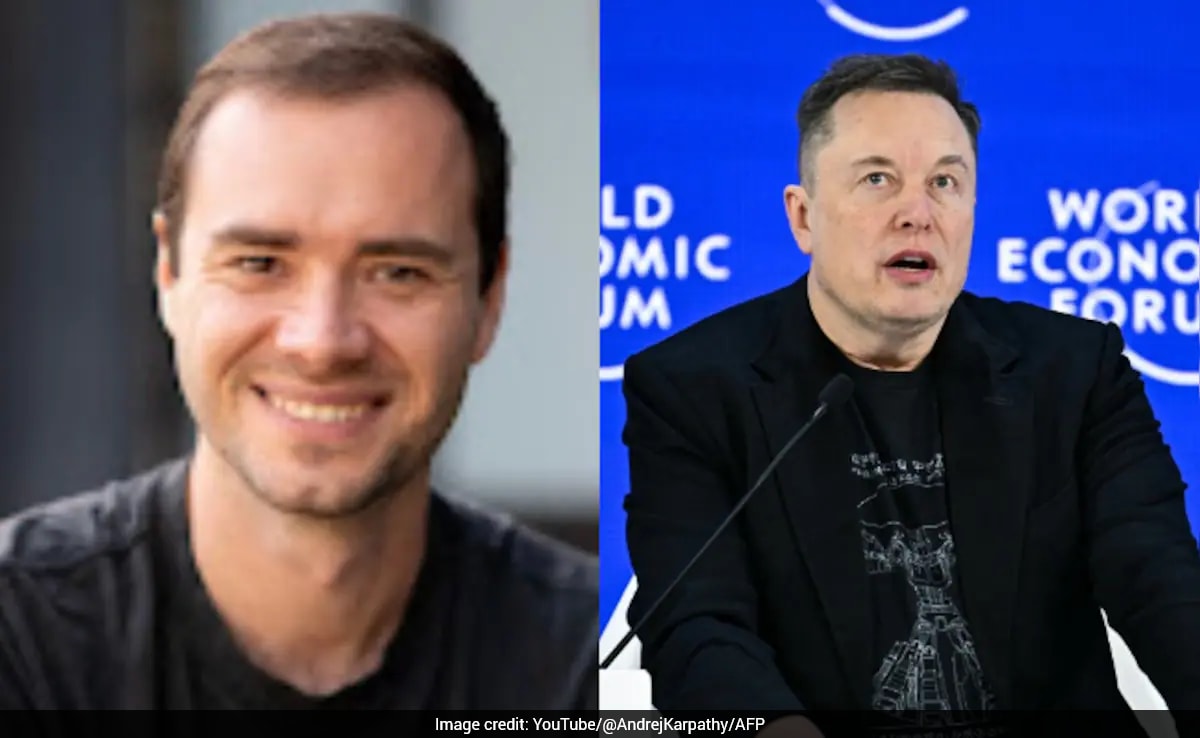
The modern labor market is currently being dismantled and reassembled by a handful of people in San Francisco and Austin who view your career as a legacy data point. When OpenAI co-founder Wojciech Zaremba categorizes professions by their vulnerability to automation, he isn’t just offering career advice. He is sketching the blueprints for an economic structural shift that most governments are woefully unprepared to manage. At the same time, Elon Musk dangles the carrot of Universal High Income, a polished rebranding of basic income that suggests a future of leisure rather than a collapse of purpose.
The reality is far messier than these clean projections suggest. The transition from a labor-based economy to an intelligence-based one will not be a smooth handoff. It will be a jagged, decades-long friction between human biological limits and the exponential scaling of silicon.
The Hierarchy of Erasure
Zaremba’s internal ranking of job risk isn't based on physical labor versus office work. That is an outdated metric. Instead, the risk is now measured by the predictability of the cognitive path. If your daily output can be mapped as a series of repeatable logical steps, you are in the immediate path of the storm.
We are seeing a reversal of traditional career stability. For decades, the "safe" path involved high-level white-collar roles—coding, legal research, and mid-level data analysis. These are precisely the roles that large language models ingest with the greatest efficiency. The irony is sharp. The more digital your work product, the easier it is for a machine to replicate.
Physical trades and roles requiring high-stakes human empathy remain the last outposts. A plumber’s environment is too chaotic, and a surgeon’s margin for error is too thin for current hardware to navigate profitably. However, for the millions sitting behind monitors, the clock is ticking. The "risk" isn't just about losing a paycheck; it is about the devaluation of specialized knowledge that took a lifetime to acquire.
The Universal High Income Mirage
Elon Musk’s vision of Universal High Income (UHI) sounds like a utopian solution to the displacement problem. The theory posits that as AI drives the cost of goods and services toward zero, the surplus wealth generated can be distributed to everyone. You don't just survive; you thrive.
It is a seductive story. It is also an unproven economic theory that ignores the fundamental mechanics of power and inflation.
If the cost of production drops, the savings rarely trickle down to the consumer in a vacuum. They are captured by the owners of the compute power. To achieve UHI, a government would need to tax the productivity of non-human entities at a rate that has no historical precedent. We are talking about a total overhaul of the global tax code.
Furthermore, "High Income" is a relative term. In an economy where AI generates everything, the value of the currency itself becomes a moving target. If everyone has a high income, the price of scarce resources—land, premium real estate, and hand-crafted goods—will simply scale to match the new floor. You might have more digital credits in your account, but your purchasing power for things that actually matter may remain stagnant or even decline.
The Hidden Cost of Cognitive Ease
We are currently trading our cognitive sovereignty for convenience. Every time a professional uses AI to draft a contract, write code, or diagnose a medical issue, they are training their replacement. They are also atrophying their own skills.
Think of it as functional obsolescence. When a pilot relies too heavily on autopilot, their ability to handle a manual emergency degrades. In the broader workforce, we are seeing the "junior role" vanish. Companies no longer want to pay for the three years it takes to train a novice when an AI can perform at a senior-associate level for pennies. This creates a ladder with no bottom rungs. If we don't train the next generation of experts because AI is "good enough" for the basics, we will eventually face a catastrophic talent gap when the systems fail or encounter a "black swan" event they weren't trained on.
The Great Decoupling of Meaning and Money
For most of human history, work has been the primary source of identity and social structure. Musk and Zaremba focus on the financial mechanics—the risk of the job and the income to replace it. They rarely address the psychological vacuum that follows.
When you remove the necessity of labor, you don't automatically get a society of philosophers and artists. Historically, when large populations are suddenly disconnected from meaningful contribution, the result is social volatility, not a golden age of hobbies. The "risk" Zaremba identifies isn't just a loss of salary; it is a loss of agency.
The Sovereignty Pivot
If you want to survive this transition, the strategy isn't to compete with the machine. You will lose that race. The goal is to move into areas of extreme edge-case complexity.
AI thrives on the average. It is a statistical engine that predicts the most likely next step based on a massive corpus of existing data. It struggles with the "one-of-one" scenario.
- Hyper-local Expertise: Knowledge that isn't on the internet can't be scraped.
- Accountability Risk: AI cannot go to jail or face a professional board. Roles that require a human to "sign off" on a high-consequence decision will remain protected by legal and ethical frameworks long after they are technically automatable.
- Physical-Digital Hybridity: The "atoms" side of the economy is much harder to disrupt than the "bits" side.
The transition to a post-labor economy is being treated as an inevitability by those who stand to profit from it. They speak of Universal High Income as a foregone conclusion to quiet the nerves of a nervous public. But there is no law of physics that says the gains from AI will be distributed fairly.
The struggle of the next decade won't be about the technology itself. It will be a raw, political fight over who owns the sun—or in this case, who owns the chips that process the data. If the infrastructure of "intelligence" remains in the hands of a few, the "High Income" promised by the tech elite will look less like a dividend and more like a subscription to your own survival.
Stop looking at AI as a tool to make your current job easier. That ease is the sound of the floor being polished before it's pulled out from under you. Instead, start identifying the parts of your industry that are too messy, too human, or too legally complex for a server farm in Iowa to handle. That is where the only real safety resides.