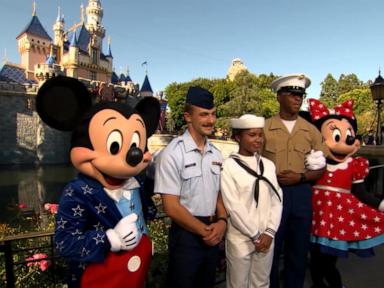
The corporate PR machine loves a uniform, but nobody loves it quite like The Walt Disney Company.
Every late May, the annual Los Angeles Fleet Week kicks into gear, and right on cue, the entertainment press fawns over the spectacle of active-duty Sailors, Marines, and Coast Guardsmen marching down Main Street, U.S.A. The lazy consensus among lifestyle bloggers and theme park enthusiasts is that throwing a handful of young service members onto the Mark Twain Riverboat and flying F/A-18E Super Hornets over Sleeping Beauty Castle is a grand, selfless salute to the military.
It is not. It is a highly calculated, sterile marketing exercise designed to extract maximum brand equity from the concept of American patriotism while shielding a multinational media empire from genuine critique.
I have spent over a decade analyzing how massive entertainment properties manage public relations. I have watched corporations burn through millions of dollars constructing artificial "feel-good" moments that do nothing to solve real-world systemic issues, but succeed wildly in generating positive press. When Disney’s CEO hands an American flag to military leadership in Town Square, it is an exercise in brand curation, not service. It reduces the harsh realities of maritime defense and geopolitical readiness to a colorful background asset for the launch of new, patriotic-themed Mickey Mouse merchandise and plastic popcorn buckets.
The Sanitized Reality of Corporate Military Tributes
The traditional coverage of Fleet Week at Disneyland focuses entirely on the superficial. Articles breathlessly describe the thunderous roar of the Navy jets from Strike Fighter Squadron 94 flying at 1,000 feet over Anaheim. They highlight the Navy Band Southwest performing a flag retreat ceremony.
What these articles completely miss is the structural transaction taking place.
Military flyovers and public march-pasts are deeply rooted in recruitment strategies and civil-military public affairs. But when transposed into a private, commercialized space like Disneyland, the nature of that interaction shifts. The theme park environment strips the military of its inherent gravity. The service members become a traveling attraction, slotted neatly between a scheduled appearance by Peter Pan and the afternoon parade.
Imagine a scenario where a defense contractor invited active-duty troops to march through a corporate manufacturing facility while employees waved tiny flags. The public would immediately see it for what it is: a blunt corporate alignment with the state to validate business operations. Put those same troops in front of a fairytale castle, however, and the public loses all critical faculty.
The immediate downside of pointing this out is obvious. Critics will argue that the service members themselves genuinely enjoy the day off, the free park admission, and the rides. They absolutely do, and they deserve every bit of recreation they can get. But conflating a corporate perk with genuine structural support for veterans and active-duty personnel is a dangerous conflation.
Dismantling the Theme Park Punditry
If you look at the queries surrounding these events, the public usually asks variations of the same basic questions: How does Disneyland support the military? or Can you see the Fleet Week flyover without a park ticket?
These questions address the logistics while ignoring the core premise. The right question to ask is: Does the monetization of military imagery by a massive entertainment ecosystem dilute the meaning of actual service?
Consider the mechanics of the event:
- The "Disney Celebrates America" Initiative: This program ties military appreciation directly to the multi-year marketing push for the country's upcoming 250th anniversary. It frames the military as part of a historical intellectual property catalog rather than a living, strained institution facing recruitment crises and modern geopolitical threats.
- The Merchandise Tie-in: The introduction of new, patriotic outfits for costumed characters and the rollout of themed collectibles demonstrate that every piece of corporate gratitude must ultimately clear a retail margin.
- The Public Relations Shield: By heavily promoting their historic ties to the armed forces, entertainment companies establish an emotional immunity against criticisms regarding labor disputes, pricing structures, or corporate governance.
True institutional support does not look like a staged photo op with a costumed mouse. It looks like sustained, unglamorous investments in veteran housing, mental health resources, and post-service career transitions—initiatives that do not necessarily make for a viral, high-definition video package on the local news.
The Mechanics of Empty Spectacle
When a fighter jet streaks over an amusement park, it triggers an visceral reaction. It is loud, impressive, and inherently dramatic. Entertainment executives rely on this biological response to bypass the intellect.
By inserting high-performance military hardware into an environment dedicated strictly to fantasy and consumerism, the harsh, messy, and often tragic nature of military service is completely erased. The defense of global trade routes and the preservation of national security are reduced to a aesthetic choice, a brief moment of high-decibel entertainment meant to spice up an afternoon of waiting in line for the Jungle Cruise.
This aesthetic co-optation is a masterclass in corporate survival. In a fragmented cultural landscape, patriotism remains one of the few broad-spectrum consensus builders. Aligning a consumer brand with the military during a high-visibility holiday weekend like Memorial Day allows the corporation to absorb that goodwill without taking any actual risks.
Stop treating these orchestrated corporate PR stunts as acts of genuine altruism. The sailors marching down Main Street are providing Disney with priceless, unpurchasable authenticity. Disney isn't doing them a favor by letting them into the park; the military is doing Disney a favor by validating their corporate stagecraft.
The next time you see a highly produced clip of a military band marching past a churro cart, do not just blindly applaud the spectacle. Look past the crisp uniforms, the perfectly timed jet engines, and the corporate executives smiling for the cameras. Recognize it for what it truly is: a highly effective commercial for a multi-billion-dollar entertainment enterprise, wrapped tightly in the flag.