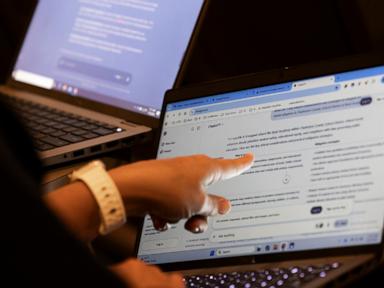
The desk is laminate, scarred by the initials of someone who graduated a decade ago. On top of it sits a piece of glass and aluminum, glowing with an artificial dawn. A twelve-year-old stares into that light, typing out an essay about the migration of monarch butterflies, unaware that every hesitant keystroke, every erased sentence, and every redirected curiosity is being quietly logged, indexed, and stored in a server room three states away.
We built our classrooms on promises. We told ourselves that digitizing education meant equalizing it. Every student would have a window to the sum total of human knowledge, neatly packaged into school-issued accounts and cloud-syncing notebooks. But windows cut both ways. While students look out at the curriculum, someone else is looking in. You might also find this similar article interesting: Inside the Grid War The Real Power Struggle Behind Artificial Intelligence Infrastructure.
For years, the bargain was silent. You want the free tools? You surrender the metadata. You want the automated grading assistant, the smart spellcheck, the predictive writing aid? Hand over the behavioral blueprint of a developing mind.
Then Microsoft drew a line in the sand. As highlighted in detailed articles by Ars Technica, the implications are worth noting.
Under sweeping new artificial intelligence privacy commitments for educational institutions, the company announced that student data processed through its AI tools in schools will no longer be used to train foundational models. No more feeding teenage writing styles, study habits, and late-night research queries into the corporate machine to make the next commercial product smarter.
It is a monumental shift. And it raises an immediate, uncomfortable question: why was this happening in the first place?
To understand the weight of this change, we have to look past the corporate press releases and remember what it feels like to be a teenager. adolescence is an experimental theater. It is a messy, beautiful, erratic laboratory of self-invention. You write poetry you will cringe at five years later. You search for things you are too embarrassed to ask a teacher about. You test boundaries in search histories, trying on identities the way you try on thrift-store jackets.
Now imagine every single one of those hesitant, formative explorations being harvested.
When educational technology companies use student interactions to train their algorithms, they are capturing more than just academic performance. They are capturing cognitive development in real time. They are learning how a young mind solves a problem when it is frustrated, how it reacts to stress, how it frames its worldview.
For a long time, the tech industry treated schools like any other consumer market. Students were users. Classrooms were data farms. The justification was always efficiency. The software needed to learn to teach better. But learning requires safety. True intellectual growth cannot happen under the watchful, calculating eye of a commercial surveillance apparatus.
When Microsoft pledged to wall off student data from commercial model training, they acknowledged an essential truth: schools are not testing grounds.
Consider the alternative. If artificial intelligence is going to be embedded in every textbook, every assignment portal, and every tutoring chatbot, we cannot allow the price of admission to be a child's digital privacy. We cannot let corporate profit margins be subsidized by the psychological profiles of minors.
Yet, the announcement brings a new tension into focus. If one tech giant can draw this boundary, what about the others?
The market is watching. Educational technology is a massive, highly lucrative ecosystem. Companies fight tooth and nail for district-wide contracts, embedding their software deep into the administrative and academic plumbing of school districts. When a company voluntarily disarms itself by refusing to use student inputs for model training, it sets a new baseline. It changes the moral calculus of the entire industry.
Will competitors follow? They will have to. Or they will have to explain to millions of parents why their children's most vulnerable developmental years are being monetized by Silicon Valley.
Parents are waking up. For a long time, school technology was viewed with a naive optimism. If the school district handed out the laptop, it must be safe. If the teacher assigned the app, it must be vetted. But as stories of data breaches, algorithmic bias, and intrusive tracking mount, that trust has eroded. Families are beginning to demand the same digital sovereignty for their children at school that they expect in their living rooms.
The policy change from Microsoft is not an act of charity. It is a response to a shifting cultural tide. It is an acknowledgment that the public is no longer willing to trade privacy for convenience, especially when the vulnerable are involved.
But rules on paper are only as good as their execution. Privacy commitments must be audited, verified, and transparent. A promise made in a boardroom can easily become a footnote in a terms-of-service update if we stop paying attention. The real work begins now, in the friction between corporate ambition and public accountability.
The classroom should remain a sanctuary of mistakes. It should be a place where a student can write a terrible paragraph, delete it, rewrite it, and leave no trace behind. It should be a space where curiosity is protected from monetization, and where growth is allowed to happen in the dark, away from the glaring lights of data centers.
The digital backpack we handed our children was too heavy. It carried things it never should have held. With this shift, perhaps some of that weight is finally being lifted.
The bell rings. The screen goes dark, reflecting only the face of a kid trying to figure out who they are, entirely unaware of the invisible architecture trying to figure them out first.