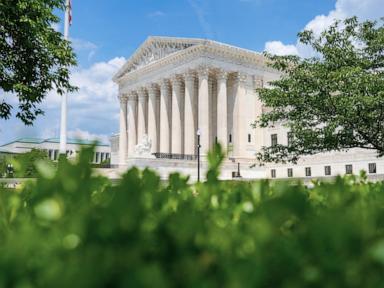
Categorical disarmament by administrative decree is no longer a viable framework for federal firearm restrictions. In its unanimous June 18, 2026, decision in United States v. Hemani, the Supreme Court dismantled the Department of Justice’s expansive enforcement of the Gun Control Act of 1968 regarding "unlawful users" of controlled substances. The ruling marks a structural shift from categorical status-based disarmament to individualized risk-based proof, forcing a total recalibration of federal prosecutorial strategies.
By ruling 9-0 that the federal government cannot automatically strip citizens of their Second Amendment rights based solely on casual or regular marijuana consumption, the Court exposed a profound logical friction within current executive policy. The executive branch cannot simultaneously lower the regulatory classification of cannabis and widely tolerate its commercial distribution while maintaining that every individual consumer is inherently violent and dangerous. This decision structurally reorganizes the intersection of state-level drug normalization and federal firearm enforcement.
The Tri-Partite Typology of Disarmament Under Hemani
To understand the operational mechanics of the ruling, the court’s decision must be broken down into three distinct legal and behavioral tiers. The historical 1968 statute applied a single blanket prohibition to anyone who "is an unlawful user of or addicted to any controlled substance." United States v. Hemani splits this monolithic definition into three distinct operational vectors:
- Tier 1: Casual or Regular Consumption (Protected Status): Individuals who consume cannabis without compounding indicators of violence or active impairment. Under the Hemani standard, the state cannot infer dangerousness from the mere presence of THC or an admission of routine use.
- Tier 2: Present Intoxication (Actionable Threshold): The acute state of behavioral impairment. The Court explicitly left intact the state’s authority to restrict firearm access to individuals actively under the influence, treating temporary intoxication through the same structural mechanism as founding-era laws governing acute public drunkenness.
- Tier 3: Clinical Addiction or Public Safety Threat (Prosecutorial Burden): Severe substance dependence or behavioral patterns that yield verifiable dangerousness. To achieve disarmament in this tier, prosecutors must present individualized empirical proof of danger to self or others rather than relying on a categorical status check.
The case originated when federal agents recovered a 9mm handgun and 60 grams of cannabis during an August 2022 raid on the Texas home of Ali Danial Hemani. Because Hemani was not accused of any violent crime, brandishing, or being actively intoxicated while possessing the weapon, the state's case relied entirely on his admission of using cannabis "about every other day."
Justice Neil Gorsuch, writing for the majority, identified this as a critical structural failure. The government attempted to construct an equivalence between modern cannabis users and founding-era "habitual drunkards." The Court rejected this analogy by pointing out a distinct variance in structural intent: historical laws targeting habitual drunkards did not strip individuals of their firearms to protect the public from mass violence. Instead, those laws operated as a form of state guardianship designed to protect the individuals from personal financial ruin and safeguard their families from asset depletion.
The Asymmetry of Federal Tolerance and Enforcement
The analytical core of the Hemani decision addresses an institutional paradox: the federal government's dual role as both an engine of cannabis normalization and its primary criminal prosecutor. The friction between these two administrative postures is detailed below.
+----------------------------------------+     +----------------------------------------+
|          State-Level Realities         |     |          Federal Adjustments           |
|----------------------------------------|     |----------------------------------------|
| Half of US states have legalized adult |     | Medical cannabis reclassified to lower |
| recreational use; widespread medical   | --> | schedule; widespread enforcement       |
| frameworks exist.                      |     | tolerance of commercial markets.       |
+----------------------------------------+     +----------------------------------------+
                                    |
                                    v
+---------------------------------------------------------------------------------------+
|                               The Executive Paradox                                  |
|---------------------------------------------------------------------------------------|
| The Department of Justice attempts to maintain a blanket presumption that millions of |
| legal state consumers are categorically dangerous under 18 U.S.C. § 922(g)(3).        |
+---------------------------------------------------------------------------------------+
                                    |
                                    v
+---------------------------------------------------------------------------------------+
|                                Supreme Court Resolution                               |
|---------------------------------------------------------------------------------------|
| The 9-0 ruling in United States v. Hemani rejects the categorical presumption.        |
| Government must provide individualized proof of dangerousness to disarm a user.      |
+---------------------------------------------------------------------------------------+
The executive branch cannot rationally maintain that a behavior is both an acceptable commercial enterprise and an automatic indicator of severe criminal threat. This administrative dissonance is what Justice Gorsuch described as leaving the government "awkwardly positioned." The executive branch cannot argue that an entire group is uniquely predisposed to violence when its own regulatory agencies are actively managing the industry’s integration into the mainstream economy.
The Bruen Test and the Collapse of Status-Based Restrictions
The legal architecture of this ruling is a direct consequence of the doctrine established in New York State Rifle & Pistol Association v. Bruen (2022). The Bruen framework eliminated the traditional two-step balancing test previously used by lower courts, which weighed public safety metrics against individual rights. It replaced that mechanism with a single, highly stringent standard: any modern firearm regulation must demonstrate a direct line of descent from the nation’s historical tradition of firearm regulation, specifically looking at the founding era around 1791.
When subjected to this historical filter, the federal government’s defense of the 1968 drug-user ban collapsed due to three structural missing links:
- The Absence of Founding-Era Substance Bans: The founders did not impose civilian gun bans based on the consumption of unregulated botanical substances. Widespread use of substances—including alcohol, which was consumed at rates far exceeding modern averages—did not trigger total, lifetime disarmament.
- The Specificity of Misuse Over Status: Historical regulations focused strictly on the act of weapons misuse while impaired, rather than the status of being a consumer. Laws penalized firing weapons in public spaces while intoxicated, but they did not strip an individual of gun ownership rights during periods of sobriety.
- The Individualized Proof Requirement: Founding-era disarmament was reserved for explicitly political or behavioral threats—such as individuals refusing to swear allegiance to the state or those shown to be actively plotting violence. The historical record contains no precedent for disarming millions of citizens based on a routine, non-violent personal habit.
The Hemani decision underscores that the Second Amendment cannot be circumvented by administrative categorization. If the government wishes to strip an individual of their constitutional right to bear arms, it must enter a courtroom armed with specific, individualized evidence proving that the specific person's substance use directly undermines public safety.
Operational Realignment for Federal Law Enforcement
The downstream effects of United States v. Hemani require an immediate overhaul of federal law enforcement and prosecutorial behavior. Standalone charges under 18 U.S.C. § 922(g)(3) against non-violent drug users are functionally dead. To secure convictions moving forward, the Department of Justice must shift its resources away from simple database matching and confession-based tracking toward a complex, evidence-heavy model.
The first critical adjustment impacts the Bureau of Alcohol, Tobacco, Firearms and Explosives (ATF) Form 4473—the mandatory questionnaire filled out by every consumer purchasing a firearm from a Federal Firearms Licensee (FFL). Question 21(f) historically asked if the buyer is an unlawful user of, or addicted to, marijuana or any other controlled substance, explicitly warning that state legalization does not alter federal status. Following Hemani, the continued use of this question as a categorical trap for casual users is constitutionally untenable. The ATF must redesign its compliance frameworks to distinguish between routine state-legal use and active clinical addiction or immediate intent to operate firearms while impaired.
The second shift alters prosecutorial discovery. In future cases involving the intersection of firearms and controlled substances, federal prosecutors will be forced to build a robust evidentiary chain. This strategy must rely on clear metrics:
- Toxicological Data: Documented blood-THC concentrations captured at the exact time of firearm possession or an associated incident, establishing acute intoxication rather than residual metabolites.
- Behavioral Diagnostics: Direct law enforcement testimony, dashcam footage, or medical evaluations indicating a profound loss of motor control or cognitive function.
- Contemporaneous Violence Indicators: Evidence of secondary criminal acts, domestic disputes, threats of violence, or ties to illicit trafficking networks that establish an independent baseline of dangerousness.
This structural shift effectively ends the era of easy, status-based convictions. It forces federal authorities to allocate investigative resources based on actual, observable risk rather than relying on an outdated statutory blanket. While the decision leaves open the possibility of prosecuting individuals with severe clinical addictions or those who cause immediate public harm while intoxicated, it successfully isolates the millions of peaceful, state-compliant cannabis consumers from federal criminal liability under the Second Amendment.