The outrage machine has found its latest target, and it is entirely aimed in the wrong direction.
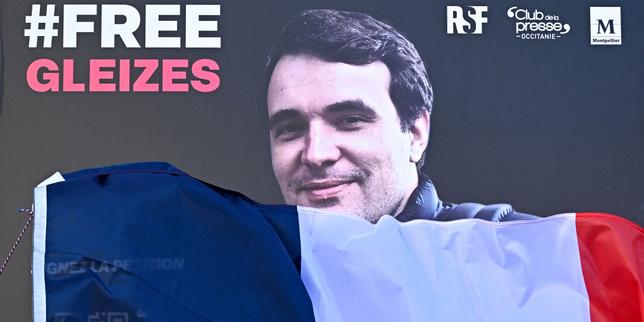
When French journalist Christophe Gleizes was detained in Algeria, the immediate response from his inner circle and media commentators followed a predictable, tired script. They looked at the massive cultural footprint of French football stars—men with tens of millions of followers—and demanded to know why they remained silent. The underlying premise is simple, seductive, and deeply flawed: because a athlete possesses a massive megaphone, they have a moral obligation to use it as a geopolitical battering ram.
This expectation is not just naive. It is a fundamental misunderstanding of modern sports diplomacy, corporate leverage, and the harsh realities of international relations.
Expecting elite athletes to moonlight as human rights ambassadors does nothing to free detained citizens. In fact, it often achieves the exact opposite.
The Myth of the Influencer Diplomat
The lazy consensus dominating newsrooms suggests that if a global superstar tweets about an arbitrary detention, the offending regime will suddenly cave to the pressure of public relations.
This view completely ignores how authoritarian states operate. Regimes do not alter their judicial or geopolitical strategy because a forward from Paris Saint-Germain posted an Instagram story. When external pressure is applied via Western celebrities, it frequently hardens the stance of the detaining government. It transforms a legal or diplomatic dispute into a high-stakes standoff where backing down looks like a capitulation to Western cultural elites.
Having spent years analyzing the intersection of sports washing and state power, I have watched organizations waste millions trying to leverage celebrity voices for complex political outcomes. The results are almost universally disastrous.
Consider the mechanics of international diplomacy. When a citizen is detained abroad, consular officials engage in delicate, behind-the-scenes negotiations. These talks rely on nuance, face-saving compromises, and strict confidentiality.
Dropping a chaotic element into this environment—like a sudden social media campaign powered by millions of football fans who cannot locate the country in question on a map—shatters that delicacy. It forces the detaining state to adopt a nationalist defense posture to save face domestically.
Why Footballers Stay Silent
- The Illusion of Total Autonomy: Fans look at a player’s bank account and assume they answer to no one. The reality is a web of complex corporate sponsorships, state-backed club ownership, and strict image rights contracts. A single unscripted political statement can trigger massive financial penalties or breach-of-contract clauses.
- The Complexity Asymmetry: A professional athlete spends their life mastering tactical systems and physical conditioning. Expecting them to possess a comprehensive understanding of North African political dynamics or the intricate relationship between Paris and Algiers is absurd. Forced statements read as hollow, scripted, and insincere.
- Geopolitical Realities: Modern football is heavily funded by capital from the Middle East and North Africa. Players are well aware that their current employers, future transfer destinations, or post-career business ventures are deeply tied to these regions. Moral clarity rarely wins against systemic economic reality.
Dismantling the Premise of the Public Demands
When the public asks, "Why aren't our sports heroes standing up for free speech?" they are asking the wrong question entirely. The real question should be: "Why have our traditional diplomatic institutions become so ineffective that we are forced to beg athletes for help?"
Shifting the burden of human rights advocacy onto footballers is a symptom of institutional abdication. It is far easier for the public and media elites to villainize a twenty-something athlete for their silence than it is to hold governments accountable for their diplomatic failures or commercial compromises.
Let us look at a thought experiment. Imagine a scenario where a top-tier French international speaks out aggressively against the Algerian judiciary. The immediate consequence is not the release of the journalist. The consequence is an immediate diplomatic incident, a potential boycott of French sports brands in North Africa, and a massive security risk for the player’s extended family or business partners in that region.
The downside is entirely localized on the individual athlete, while the commentators cheering from the sidelines risk absolutely nothing.
The True Cost of Forced Activism
| Actor | Action Expected | Real-World Consequence |
|---|---|---|
| The Athlete | Public condemnation of a foreign regime | Commercial blacklisting, security risks, breach of club contracts. |
| The Detaining State | Caving to celebrity pressure | Hardening of political stance to avoid looking weak domestically. |
| The Detained Journalist | Benefiting from international spotlight | Becoming a high-value political pawn, extended detention. |
The Danger of Selective Outrage
The demand for athlete intervention is never applied consistently. It is highly selective, driven by prevailing media narratives rather than a coherent ethical framework.
Why should French footballers be expected to solve a press freedom crisis in Algeria, but remain silent on corporate supply chains in Asia, or domestic housing crises in their own cities? When everything becomes a priority for an athlete, nothing is a priority. The currency of their influence is completely devalued through over-saturation.
Furthermore, this obsession with celebrity validation actively damages the cause of journalism. It reduces a serious human rights issue to a trending topic or a sub-plot in the sports entertainment cycle. The story stops being about the journalist's work, safety, or the legal merits of their detention. Instead, it becomes a meta-narrative about which athlete liked a post or who refused to comment in the mixed zone after a match.
Move Beyond the Celebrity Savior Complex
If the goal is genuinely to support detained journalists and protect press freedom, the strategy must pivot entirely away from the cultural elite.
Stop looking at the VIP boxes at the Stade de France for moral leadership. They are businesses, not human rights organizations.
Instead, pressure must be directed squarely at state mechanisms, trade agreements, and formal diplomatic channels where actual leverage exists. If a government values a trade partnership or an arms deal more than a media narrative, that is the lever that needs to be pulled.
The belief that sports stars can fix the broken machinery of international diplomacy is a comforting delusion. It allows the public to feel engaged without doing the heavy lifting of political organizing. It treats global politics like a public relations campaign that can be won with enough retweets and celebrity endorsements.
It cannot.
The silence of French football stars isn't a betrayal. It is the only rational response to a system that wants to exploit their fame for a public relations victory while offering them zero protection from the fallout. Stop demanding that athletes fight battles that the state itself is too timid to wage.