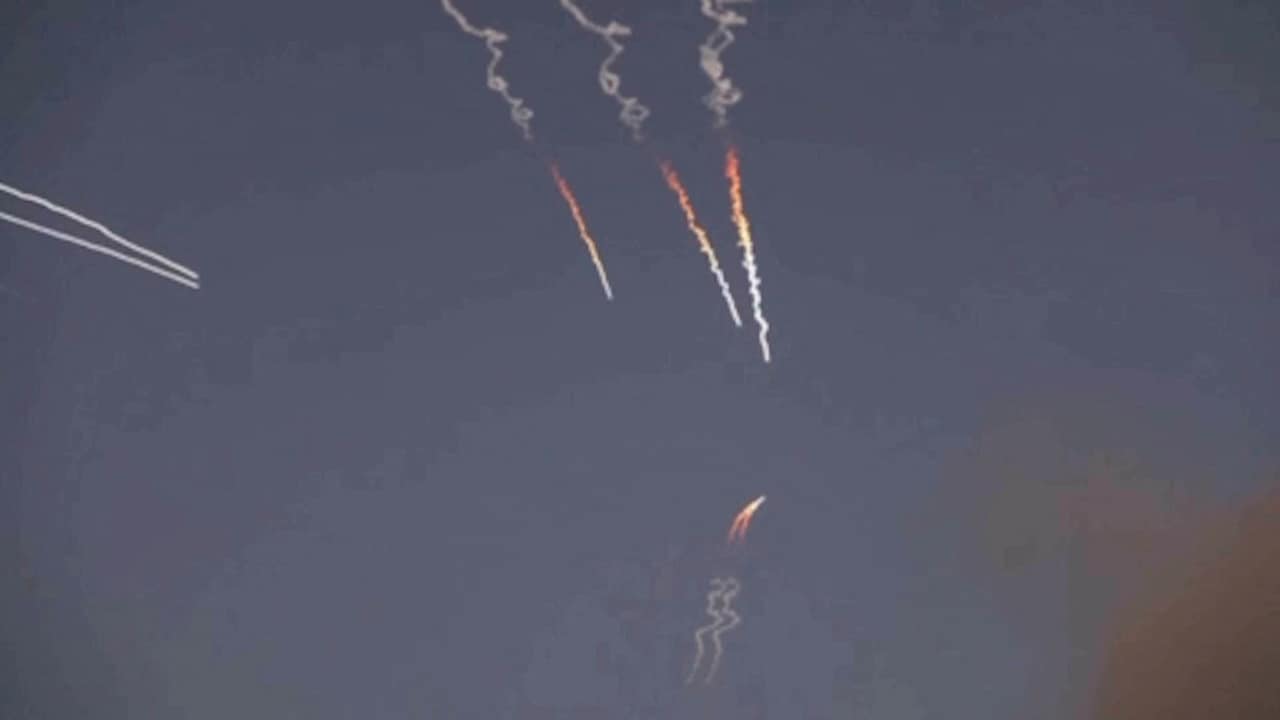
Washington is trapped in a loop. Two service members die in a tragic, predictable rocket attack in Iraq or Syria. The Pentagon immediately activates a pre-approved menu of targets. B-52s or MQ-9 Reapers strike back within forty-eight hours. The administration issues a press release packed with optics-tested verbs: swiftly punish, degrade capabilities, and deter future aggression.
It is a comforting narrative for a domestic audience. It is also an absolute lie.
The lazy consensus dominating mainstream foreign policy coverage treats these retaliatory cycles as effective military strategy. The media regurgitates the Pentagon briefing rooms, framing each airstrike as a definitive, isolated event that somehow re-establishes a broken equilibrium.
They are wrong. These strikes do not deter. They subsidize the exact behavior they are meant to stop.
The Operational Fallacy of the Kinetic Reaction
For decades, national security analysts have pointed out the geometric asymmetry of the Middle East conflict ecosystem. When the United States launches a multi-million-dollar ordnance package to destroy a warehouse full of unguided Katyusha rockets, it is losing the economic war.
A standard drone strike or Tomahawk cruise missile costing upwards of $1.5 million is deployed to eliminate cheap, mass-produced hardware and low-level proxy fighters. This is not strategic deterrence; it is a resource sink.
[US High-Cost Munitions] ---> Destroy ---> [Low-Cost Proxy Hardware]
       ^                                              |
       |________________ Recycles Conflict ___________v
The premise that a targeted strike swiftly punishes Iran assumes a traditional, state-versus-state framework that simply does not exist here. The Islamic Revolutionary Guard Corps (IRGC) operates via a decentralized network. They do not care about the physical structures or the expendable militia personnel targeted in these retaliatory waves. To Tehran, those assets are built to be spent.
When the US strikes back, it satisfies the immediate political need to "do something" in Washington. But on the ground, it merely validates the proxy network's raison d'être, fueling recruitment and solidifying local anti-American sentiment.
The Flawed Premise of People Also Ask
The public regularly searches for straightforward answers to complex geopolitical standoffs. The problem is that the questions themselves are built on flawed assumptions.
- Does the US strike deter Iran? No. Deterrence requires the target to believe that further action will result in unacceptable systemic loss. Because the US explicitly signals the limited, retaliatory nature of its strikes to avoid a wider war, the IRGC calculates the exact cost of doing business. They know precisely how much pressure they can apply without triggering a regime-threatening response.
- Why doesn't the US just cut off the network completely? Because you cannot bomb a supply chain that relies on deeply entrenched local political integration. Militias in Iraq and Syria are not foreign occupying forces; they are woven into the state security apparatus, holding parliamentary seats and controlling legitimate economic sectors.
I have spent years analyzing the data patterns of these engagements. Every single time the US executes a "punitive" strike campaign without a fundamental shift in its broader diplomatic and economic posture, the frequency of proxy attacks increases or plateaus within ninety days. It never drops permanently.
The High Cost of Predictability
Predictability is the death of strategy. By adhering to a rigid protocol of proportional retaliation, US foreign policy has become entirely legible to its adversaries.
Imagine a scenario where a corporate competitor knows your exact response to every market move you make. They will exploit that predictability to bleed your resources dry while keeping their core operations safe. This is exactly what is happening in the theater of conflict.
The downsides of breaking this cycle are real. Moving away from standard kinetic responses requires a level of political risk that modern administrations are terrified to take. It means acknowledging that temporary inaction might be superior to an ineffective action. It means focusing on the unsexy, invisible work of financial interdiction, cyber disruption, and leveraging regional diplomatic realignments.
But as long as Washington prefers the illusion of kinetic dominance over the reality of strategic patience, the bodies of American service members will continue to return home in flag-draped coffins, followed immediately by the same useless, predictable explosions in the desert.
Stop calling these strikes a punishment. They are a receipt.