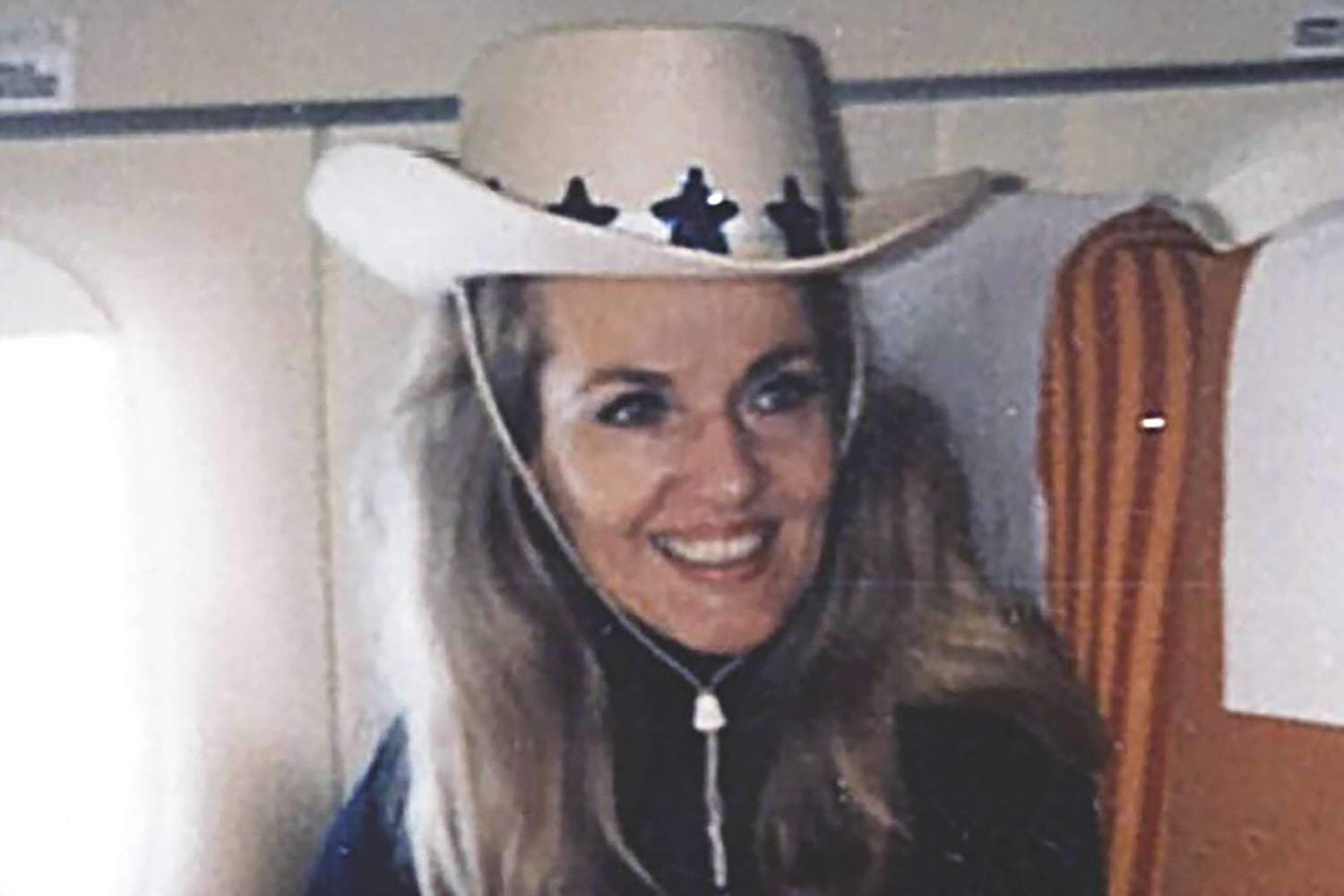
When Dee Brock passed away at the age of ninety-six, the media machine immediately whirled into gear with predictable obituaries. They called her the founder of the Dallas Cowboys Cheerleaders. They mentioned the iconic white boots, the stellar choreography, and the global pop-culture phenomenon that transcended sports. But in reducing her life to a neat footnote about America's Sweethearts, mainstream chroniclers entirely missed the structural blueprint of who Dee Brock actually was.
She was never just a sideline manager. She was an academic, a television pioneer at PBS, a trailblazing educator who helped found El Centro College, and a pragmatist who navigated the hyper-masculine corridors of the National Football League in the 1960s with clinical precision. Long before the multi-season docuseries and global auditions, Brock constructed the foundation of a cultural institution out of sheer organizational grit and administrative survival.
To understand the reality of what Dee Brock built, one has to strip away the gloss of modern sports entertainment and look back at the chaotic gridiron landscape of the early 1960s. General manager Tex Schramm wanted a gimmick. Faced with plummeting attendance and a lukewarm local fan base at the Cotton Bowl, Schramm looked for ways to juice ticket sales. His initial instinct was to hire professional models to stand passively on the sidelines as decorative window dressing.
Brock, who was then teaching high school English and history in Dallas while occasionally working commercial modeling gigs, intercepted that raw pitch and completely re-engineered it. Instead of passive models imported for flash, she proposed utilizing local high school students from regional districts to form a co-ed squad. Operating under a meager annual stipend of six hundred dollars, she christened them the Cowbelles and their Beaux.
This was not simply a matter of organizing a spirit squad. It was an administrative hurdle of massive proportions. Brock managed practices, coordinated transportation, dealt with school boards, and set a standard of discipline that required academic accountability from participants. She treated performance as a professional obligation rather than an afterthought.
By the end of the decade, Brock recognized that the co-ed high school model had hit a ceiling. The game was evolving, television was changing how sports were consumed visually, and the expectations of the audience were shifting. In 1969, she made the decisive, ruthless call to drop the male members from the program, transforming it into an all-female squad.
Simultaneously, Brock tackled the deep racial divides of the era head-on. In 1965, during a period of profound social upheaval across the American South, she pushed the Cowboys front office to integrate the roster. She brought in educator Frances Roberson to help recruit a diverse group of performers. By 1971, through deliberate recruitment rather than passive tokenism, nearly half of the squad was Black. Brock operated under a simple administrative axiom: talent was talent, and logistics superseded systemic barriers. When the Cowboys reached Super Bowl V and VI, and management initially refused to fund travel expenses for the squad, Brock bypassed traditional channels entirely, appearing on local television stations to secure independent corporate sponsorships so the performers could make the trip.
The turning point of the organization arrived in 1972 with the move to Texas Stadium. Brock realized that a larger venue demanded a complete operational overhaul. She sat down with Schramm to blueprint a radical pivot. The age demographic shifted upward, moving from teenagers to women between eighteen and the mid-twenties. The performance style pivoted away from standard high school sideline chants toward sophisticated, synchronized dance routines. To execute this vision, Brock brought in choreographer Texie Waterman, famously splitting her own modest salary to ensure Waterman was compensated.
This was also the era when the physical identity of the franchise crystallized. Brock was instrumental in developing the early iterations of the uniform that would eventually become a globally recognized trademark. Yet, unlike modern entertainment executives who lean into the cult of personality, Brock viewed her work through the lens of structural education and project management.
When she stepped away from the director's chair in the mid-1970s—handing the reins to Suzanne Mitchell, who would accelerate the brand into its global stratosphere—Brock did not slow down. She pivoted entirely back to her first love: education and institutional building. She moved into public broadcasting, serving as senior vice president of educational programming and director of adult-learning programming at PBS in Washington, D.C. She developed pioneering distance-learning telecourses that broadcast college-level instruction directly into living rooms, long before the internet made remote learning ubiquitous.
The conventional narrative often treats Dee Brock's tenure with the Dallas Cowboys as a colorful prelude to the modern entertainment machine. That perspective fundamentally misreads history. The precision, the high physical standard, the insistence on rigorous public representation, and the strict operational discipline that define the organization today were baked into its DNA by a former English teacher who understood how to build systems from the ground up.
Her grandson recounted that in her final moments, surrounded by family, Brock reflected simply on her trajectory. She did not dwell on the corporate resistance she fought in the front offices of the NFL, the television broadcasts she engineered, or the millions of viewers who watched her creations on Sunday afternoons. She noted that she had been given opportunities, and she had taken them. For Dee Brock, the work was never about seeking the spotlight. It was about constructing the framework so others could perform within it.
Dallas Cowboys Cheerleaders Founder Dee Brock Dies at 96
This video provides additional context regarding Dee Brock's life, career, and her foundational role in shaping the Dallas Cowboys Cheerleaders.