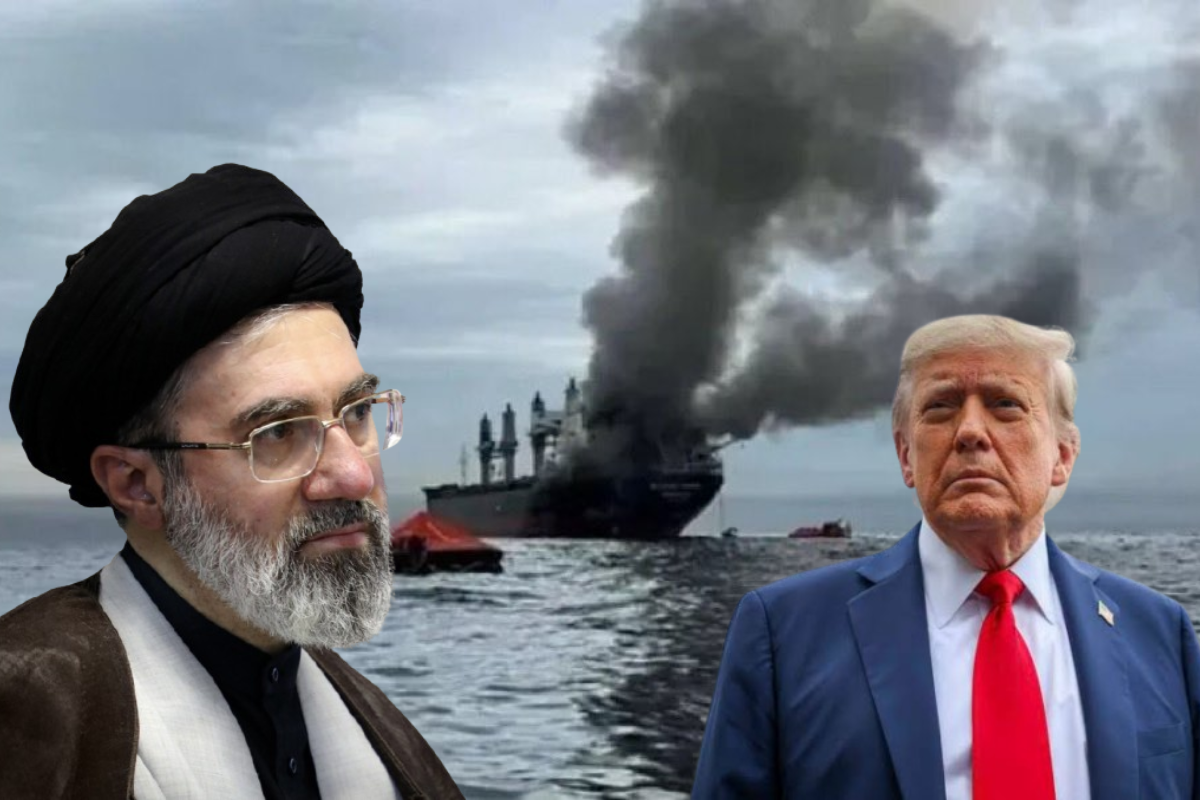
Geopolitical crisis communication follows predictable behavioral patterns, yet public consumption of these signals remains remarkably unsophisticated. When a government issues an emergency travel advisory urging citizens to evacuate a sovereign state, retail observers interpret the directive as a binary indicator of imminent military engagement. Statecraft operates through more complex matrices of signaling, deterrence architecture, and domestic legal protection. Analyzing the recent United States Department of State directive instructing personnel and citizens to vacate Iran requires stripping away sensationalist media framing to evaluate the structural mechanics of state-level escalation control.
The Mechanics of State Department Exit Directives
Emergency evacuation advisories issued by foreign ministries function as risk mitigation instruments rather than countdown timers for kinetic conflict. Three distinct variables drive these institutional decisions. First, liability management dictates that a government must establish a clear legal record of warning before diplomatic infrastructure degrades to a point where consular rescue operations become impossible. Second, preemptive force protection seeks to minimize human shields or high-value hostages in adversarial jurisdictions, thereby freeing the strategic command to exercise military options without asymmetric domestic political constraints. Third, signaling an evacuation serves as a non-kinetic pressure vector, signaling to the host regime that diplomatic channels are near terminal exhaustion.
Conflating an administrative evacuation order with a definitive operational timetable for airstrikes ignores the friction inherent in military mobilization. Kinetic operations of significant scale require months of logistical positioning, carrier strike group deployment, tanker aircraft alignment, and regional partner alignment. An emergency citizen advisory can be executed within forty-eight hours through existing commercial and charter corridors; a major campaign requires a protracted buildup. Treating the former as definitive proof of the latter fundamentally misreads the temporal asymmetry between diplomatic risk management and military operations.
The Escalation Ladder and Deterrence Failure Points
To evaluate the probability of direct military conflict between Washington and Tehran, analysts must map the current posture against the standard escalation ladder. Deterrence theory relies on raising the anticipated costs of hostile actions above any potential gains for the adversary. When deterrence begins to fracture, both states navigate a series of threshold crossings.
[Diplomatic Friction] -> [Economic Sanctions] -> [Proxy Interception] -> [Proportional Kinetic Retaliation] -> [Threshold of Direct Engagement]
The current friction points are not novel; they represent the chronic baseline of modern Middle Eastern security architecture. Proxy network activity, maritime choke point harassment, and cyber operations form a continuous theater of conflict. A qualitative shift occurs only when proxy attribution breaches a political threshold that forces domestic retaliation, or when kinetic actions result in mass casualties of service members or citizens abroad.
The structural risk lies in miscalculation rather than pre-planned escalation. In congested operational spaces such as the Persian Gulf, tactical encounters between naval assets or air defense batteries leave minimal reaction time. When communication backchannels degrade, local tactical errors can cascade into strategic conflicts that neither central leadership initially desired.
Economic and Logistical Shockwaves
An accurate assessment of regional risk must account for second-order economic consequences. Iran commands a critical geographical bottleneck through the Strait of Hormuz, a maritime transit corridor carrying a substantial percentage of global petroleum liquids. Any credible threat of sustained military engagement instantly rewrites the risk premium on global energy markets, manifesting as immediate spikes in Brent crude futures and elevated marine war risk insurance premiums.
Energy market volatility affects global supply chains well before the first military asset is deployed. Insurance syndicates adjust rates based on perceived loss probability, altering shipping economics and forcing commercial vessels to reroute or pause transits. This creates an economic attrition war fought through financial instruments and supply chain disruption long before traditional military forces engage in direct combat. Corporations with regional exposure must therefore evaluate inventory buffers, alternative logistics nodes, and currency hedging strategies immediately upon the issuance of high-tier security alerts, treating geopolitical instability as a quantifiable supply chain variable.
Intelligence Gathering Versus Public Posturing
Differentiating between intelligence-driven urgency and political posturing remains the primary challenge for external observers. Governments possess proprietary signals and human intelligence regarding imminent threats that cannot be publicly disclosed without compromising sources and methods. Consequently, public advisories often appear abrupt or uncontextualized.
At the same time, governments occasionally weaponize threat messaging to achieve broader deterrent effects, altering the adversary's calculus without incurring the costs of actual military deployment. This creates a signal-to-noise ratio problem where tactical positioning is masked by strategic ambiguity. Decision-makers must rely on verifiable indicators—such as the repositioning of medical evacuation units, the movement of specialized electronic warfare platforms, and the drawdown of non-essential diplomatic staff globally—rather than public rhetoric alone to gauge the authenticity of an escalation threat.
Strategic Allocation and Resource Hardening
Organizations operating within high-risk jurisdictions must transition from reactive crisis management to systematic resilience frameworks. Relying on government evacuation warnings as a primary trigger is an operational failure; by the time an advisory is made public, commercial transit options are frequently constrained, airspace may be restricted, and ground infrastructure can become congested or volatile.
Effective continuity planning mandates continuous monitoring of leading economic and diplomatic indicators rather than lagging announcements. Enterprises must establish decentralized operational command structures with clearly defined tripwires for personnel relocation, asset hardening, and data sovereignty preservation. Geopolitical instability is a permanent operating condition characterized by fluctuating volatility bands. The objective is not to predict the exact timing of a kinetic event, but to build operational architectures capable of absorbing systemic shocks without catastrophic failure.