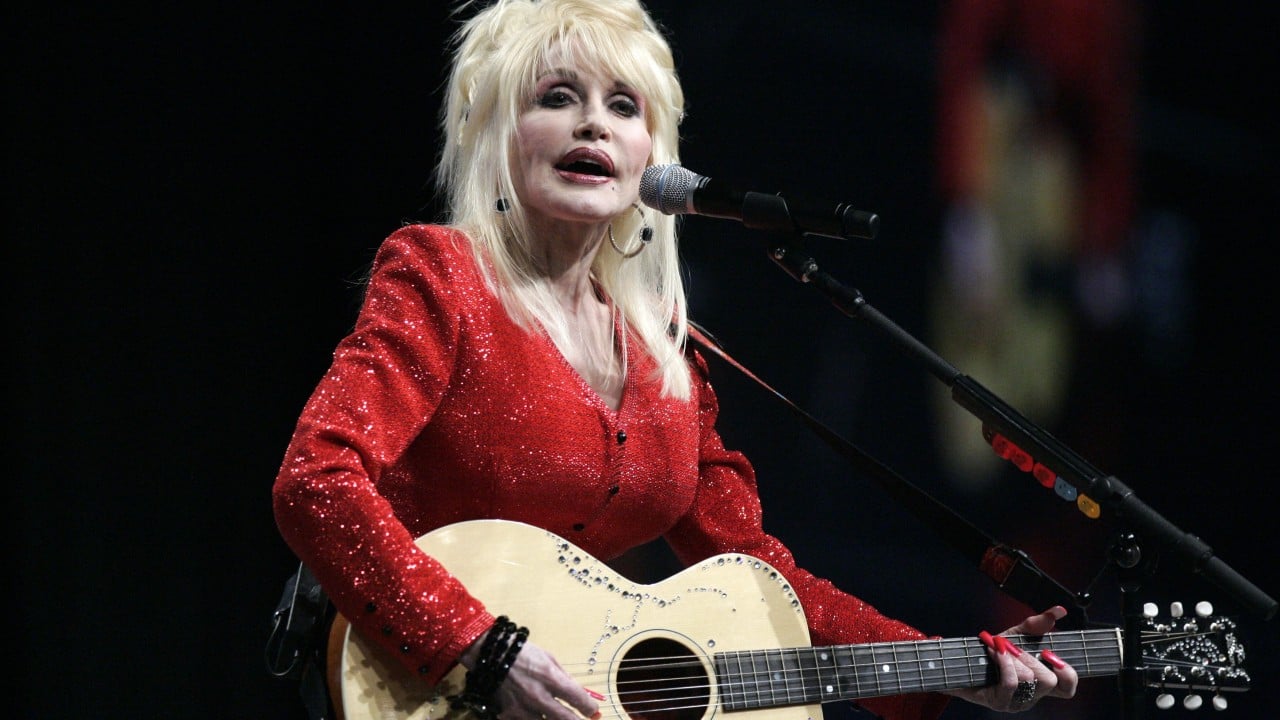
There are certain fixtures in the American sky that you simply assume will always burn. You glance up during your darkest commutes, your loneliest kitchen clean-ups, your most triumphant kitchen-table celebrations, and she is there. A rhinestone constellation. A voice wrapped in sugar and gravel. A relentless engine of pure, unadulterated joy operating under the guise of a small-town girl from Sevier County who just happened to possess the vocal cords of an angel and the business acumen of a titan.
At eighty years old, Dolly Parton has left the physical stage.
The headline flashes across screens in cold, sterile Helvetica, reducing decades of glittering contribution to a past-tense verb. Died at 80. Just like that. The ticker tape rolls on, but for millions who grew up hearing her name whispered with reverence across kitchen tables in East Tennessee and chanted in crowded stadiums from London to Sydney, time has momentarily ground to a halt.
We knew this day had to come. Mathematics dictates it. Biology demands it. Yet knowing the arithmetic of mortality does nothing to blunt the blunt-force trauma of its arrival.
Consider what happens next: the tributes will pour in. Archival footage will replay the gravity-defying hair, the self-deprecating wit about how much money it costs to look this cheap, the effortless plucking of a banjo. News anchors will trot out the standard superlatives. Country music legend. Actor. Philanthropist.
Labels. Categories. Boxes meant to contain a force of nature that never could be neatly filed.
None of those titles quite capture the smell of sulfur and wet pine after a summer storm in the Smokies—the exact sensory memory her high tenor always managed to evoke. None of them explain why a truck driver in Nebraska and a CEO in Manhattan could weep to the exact same bar of "Coat of Many Colors." Her genius was never just her songwriting, though penning "I Will Always Love You" and "Jolene" in the exact same afternoon ought to qualify her for secular sainthood. Her genius was radical, disarming empathy.
Imagine sitting on a worn-out porch in Sevier County back in the 1940s. Twelve kids. No indoor plumbing. A father who paid the doctor with a sack of cornmeal when Dolly was born. Poverty is not a romantic thing; it is a quiet, grinding erosion of human dignity. It smells like woodsmoke and grease. It feels like cardboard slipped into the soles of shoes to keep out the mountain slush.
Most people who claw their way out of that kind of scarcity pull the ladder up behind them. They become protective. Bitter. Guarded.
Dolly did the exact opposite. She weaponized her success into an open invitation.
When she built Dollywood, she didn't just drop an amusement park into Pigeon Forge to line her pockets. She looked at her home county—a place where generations of families had struggled to find stable work—and she gave them an economy. She employed thousands of her neighbors. She built a theme park that smelled of funnel cakes and felt like a family reunion where nobody brings up politics. She remembered every single person who had ever traded a kind word with a little girl in a flour-sack dress.
And then there was the reading.
It started quietly. The Imagination Library. An idea so simple it feels obvious only in hindsight: mail a book every single month to a child from the day they are born until they start school, completely free of charge. No means testing. No bureaucratic hoops to jump through. Just a book in a mailbox with a child's name on it.
I remember talking to a mother in a rust-belt town a few years ago who told me about her son's face when the mail carrier handed him an oversized envelope. That boy didn't care about quarterly GDP reports or literacy statistics. He cared that a package arrived with his name on it, carrying a story about a little engine that thought it could. By the time Dolly's program crossed the threshold of sending over two hundred million books worldwide, it wasn't just a charity. It was a global literacy movement fueled by the fierce, protective love of a woman who knew what it felt like to look at a closed door and wish for a key.
People often asked her about her legacy. They expected her to talk about the Grammys, the Country Music Hall of Fame, the blockbusters, the Oscar nominations, the wigs, the staggering catalog of over three thousand recorded songs.
She would laugh that high, chiming laugh and talk about something else entirely. She would talk about kindness.
We live in a cultural moment that treats kindness like a liability. We are told to be sharp, to guard our borders, to win at all costs, to view our neighbors as ideological combatants across an unbridgeable digital trench. Dolly rejected that premise entirely for eight decades. She was famously apolitical not out of cowardice, but out of a radical refusal to let division eclipse connection. She loved the sinner, she loved the saint, she loved the outcast, and she loved the quiet person sitting in the back row.
Her public persona was a brilliant, shimmering armor. She knew exactly what people thought of a woman who looked like a cartoon pin-up doll, and she used their underestimation as camouflage while she quietly bought up publishing rights, built empires, funded medical research, and gave away fortunes.
"It costs a lot of money to look this cheap," she would joke. But underneath the rhinestone facade was a steel girder.
Now, the silence she leaves behind feels deafening.
Walk outside tonight. Look at the horizon. The world spins on, indifferent to our grief, yet somehow a little colder without that particular brand of sunshine operating in real-time. Radio stations will play "9 to 5" on repeat. Documentaries will be rushed into production. Statues will be polished.
Yet the true monument to Dolly Parton is not cast in bronze. It is living, breathing, and reading.
It is found in the millions of children who grew up believing that a book was a passport out of anywhere. It is found in the queer kids in small towns who heard her voice and understood they were worthy of love. It is found in every human being who ever felt the crushing weight of the world, put on a record, and decided to try just one more day.
She didn't just entertain us. She taught us how to bear the weight of being human with a wink, a smile, and a spine made of pure titanium.
The music stops, but the echo remains.
And somewhere, just beyond the ridge, the coat of many colors is still catching the morning light.


